
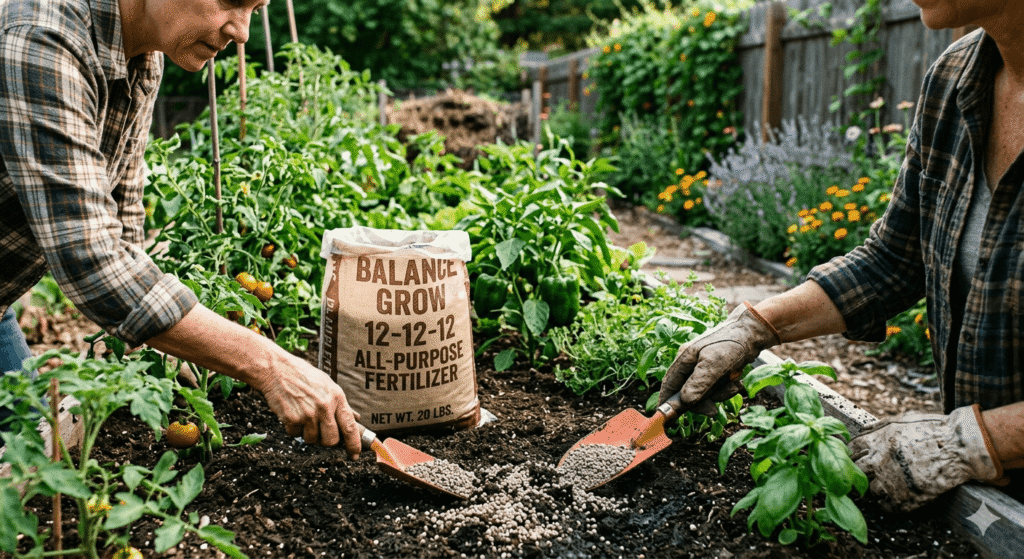
My First Experience Using 12-12-12 Fertilizer
When I first bought a bag of 12-12-12 fertilizer from my local nursery, I already had 15 years of experience with different fertilizers. I had used specialty blends, slow-release products, and organic options. Because of that, I felt skeptical.
Many experienced gardeners see balanced NPK fertilizers as too basic. They work, but they often lack precision. However, after using it for one full season, my opinion changed.
Understanding What 12-12-12 Means
The numbers on a fertilizer bag show the percentage of three main nutrients: nitrogen (N), phosphorus (P), and potassium (K). A 12-12-12 fertilizer contains 12% of each.
This balanced mix works well when you don’t know your soil condition. It also helps when plants need all nutrients at the same time. For example, it works great for new garden beds, lawns, or early-season vegetable plots.
I tested it on a raised bed that I had not used for two years. The soil was weak because of heavy crops from the past. I had not added anything to improve it. In short, it was a perfect test.
Application: What I Learned
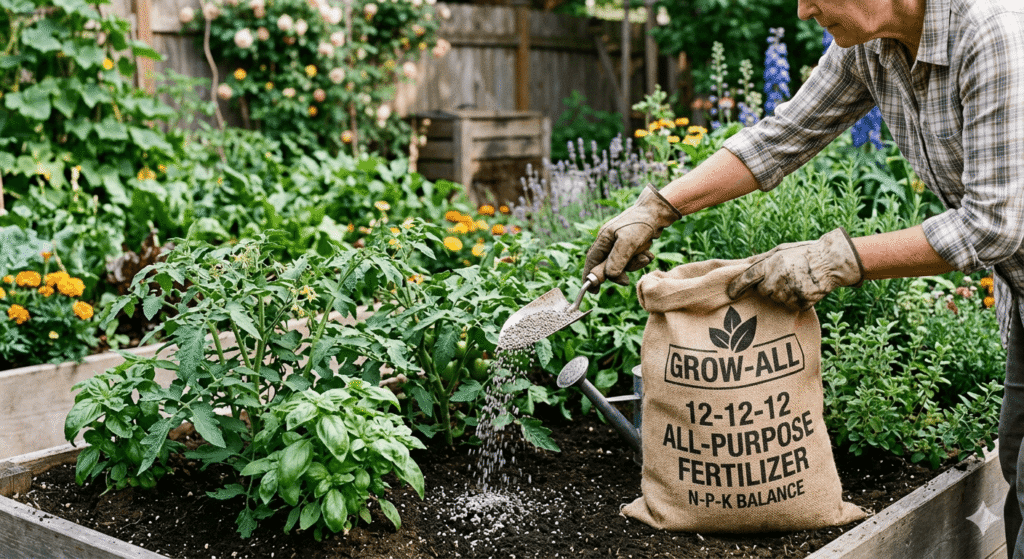
Most fertilizer bags tell you to spread 5 to 10 pounds per 1,000 square feet and water well. This advice is correct, but it is not complete.
Soil temperature matters a lot. Soil microbes break down fertilizer, and they work slowly in cold soil. Below 10°C (50°F), their activity drops.
I made a mistake. I applied the fertilizer when the soil was still cold. After two weeks, I saw almost no results.
Later, when temperatures increased, things changed quickly. Plants turned deep green, and growth improved fast. That taught me an important lesson: timing is just as important as the fertilizer.
What Worked Well
Tomatoes grew very strong. Their roots developed faster than usual. They also started flowering about 10 days earlier than normal.
Phosphorus helped both roots and flowers. The results were clear.
Peppers also performed well. They grew more branches and showed no leaf burn. This usually happens with too much nitrogen, but not in this case.
Leafy greens surprised me the most. Lettuce, spinach, and chard usually need high nitrogen. I thought this fertilizer would not be enough.
I was wrong.
The potassium helped improve leaf quality. The plants looked stronger and had fewer problems, especially tip burn during hot weather.
Where 12-12-12 Has Limits
This fertilizer is not perfect.
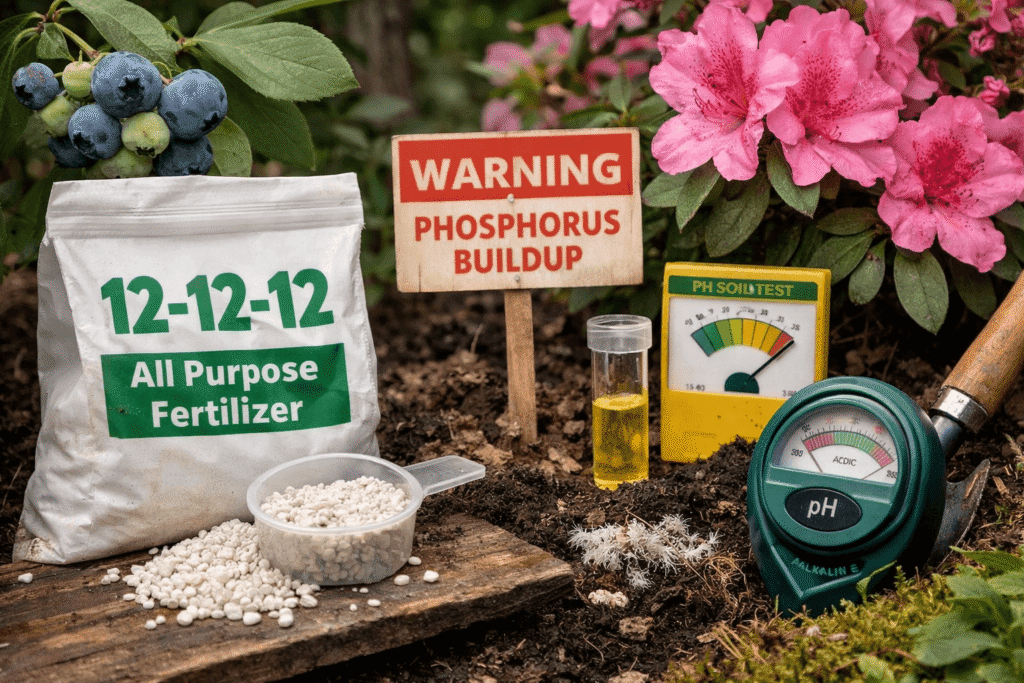
In older gardens, phosphorus can build up over time. Adding more can harm beneficial soil fungi. These fungi help plants absorb nutrients.
That is why a soil test is important before using it in mature beds.
Also, acid-loving plants like blueberries and azaleas do not respond well to 12-12-12. These plants need special soil conditions. A balanced fertilizer can block important nutrients like iron and magnesium.
For these plants, use a specialized fertilizer instead.
Final Results After One Season
I used 12-12-12 three times during the season:
- Once in spring
- Once in mid-summer
- Once lightly in late summer
The results were clear.
Tomatoes and peppers produced more. Leafy greens looked healthier. The soil also improved. Organic matter broke down better, which shows strong microbial activity.
In the end, my opinion changed.
12-12-12 fertilizer is not a perfect solution, but it is very reliable. It works best when starting a new garden or when soil quality is unknown. If you use it at the right time and follow basic rules, it can give excellent results.