
Best 13-13-13 Fertilizer (2026): What Actually Works and the Mistake That Costs You a Whole Season

Three years ago I dumped an entire bag of 13-13-13 around my tomato plants because the label said “all purpose” and I figured more nutrients meant bigger tomatoes.
Two weeks later I had dark green plants that were seven feet tall with almost no fruit on them.
That mistake cost me most of a growing season, and it is the exact reason I want to walk you through what 13-13-13 fertilizer actually does before you spread a single handful of it.
Why 13-13-13 Is Not as Simple as “All Purpose”
The three numbers on the bag stand for nitrogen, phosphorus, and potassium, in that order. 13-13-13 means the fertilizer is 13 percent nitrogen, 13 percent phosphorus, and 13 percent potassium by weight. The other 61 percent is filler material, usually a clay based carrier, that helps you spread the nutrients evenly instead of dumping pure chemical powder on your soil.
Because all three numbers match, growers call this a balanced fertilizer. It works reasonably well across a huge range of plants, which is exactly why it gets misused. People assume balanced means safe for everything, and that is not quite true. Established, flowering, or fruiting plants often want less nitrogen than 13-13-13 delivers, not more. If you want the full breakdown of how synthetic blends like this one behave compared to organic options, our chemical fertilizers guide covers that in more depth.
Top 3 Best 13-13-13 Fertilizers (Quick Answer)
Best Overall — slow release formula, works on flowers, vegetables, and shrubs
Best for Vegetable Gardens — includes calcium and micronutrients
Best for Containers — with fritted trace elements
How 13-13-13 Compares to Other Common Blends
People get 13-13-13 confused with 10-10-10 and 20-20-20 all the time, so here is the actual difference.
| Fertilizer | Nutrient Strength | Best For |
|---|---|---|
| 10-10-10 | Lower concentration | Gentle feeding, potted plants, beginners |
| 13-13-13 | Medium concentration | Vegetable gardens, lawns, general landscaping |
| 20-20-20 | High concentration, usually water soluble | Fast growing crops, greenhouse use, quick correction |
The higher the numbers, the less product you need per square foot, but also the easier it is to burn your plants if you eyeball the amount instead of measuring it. I learned to measure after burning a row of bell peppers with 20-20-20 that I applied like I would have applied 10-10-10.
When to Use 13-13-13 (And When Not To)
Vegetable Gardens at Planting Time
I mix it into the soil about two weeks before I put seedlings in the ground. Working it in early gives the granules time to start breaking down so the roots are not sitting right next to a hot pocket of raw fertilizer. If you are growing in pots rather than open ground, our guide to fertilizing tomatoes in containers covers why that setup needs a different approach than a garden bed.
Established Lawns in Spring
A lot of lawn care companies use straight 13-13-13, or something close to it, for the first spring feeding because grass needs a balanced push after winter dormancy.
Trees and Shrubs During Active Growth
I use it on my citrus trees in early spring, right as new growth starts to show. Applying it too early, while the tree is still dormant, just means the nutrients sit in the soil and leach away before the roots can use them.
The 3 Best 13-13-13 Fertilizer Products
After using and comparing a lot of options across lawns, vegetable beds, and gardens, these three kept coming out on top for their specific use case.
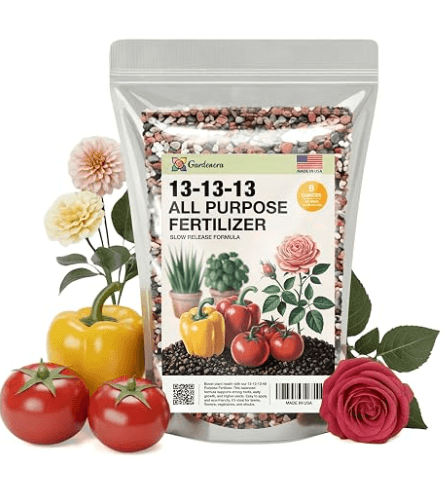 Best Overall
Gardenera 13-13-13 All Purpose Fertilizer
Slow release formula for flowers, vegetables, and shrubsThis is the one I would grab if I only wanted to buy one bag. It is a slow release formula, so the nutrients feed steadily over weeks instead of dumping all at once, which keeps burn risk low. The bag calls out roses, tomatoes, peppers, and general shrubs, so it covers most of what a home garden actually grows.
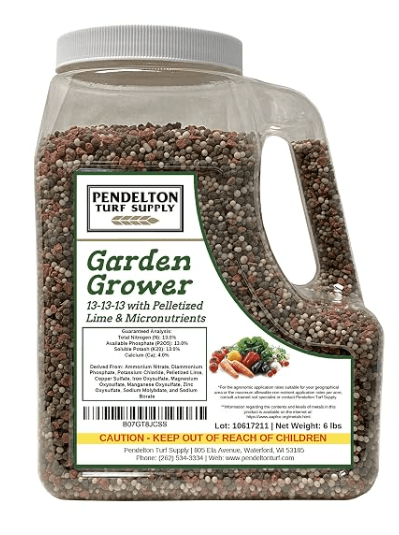 Best for Vegetable Gardens
Garden Grower 13-13-13 with Pelletized Lime and Micronutrients (6 lbs)
Includes calcium, iron, manganese, zinc, and boronThe guaranteed analysis on this one is exactly 13-13-13, plus 4 percent calcium from pelletized lime and a full micronutrient package. The added lime helps buffer acidic soil, and the micronutrients fill in gaps that a plain three number bag leaves behind, which matters most in a vegetable bed that gets planted year after year.
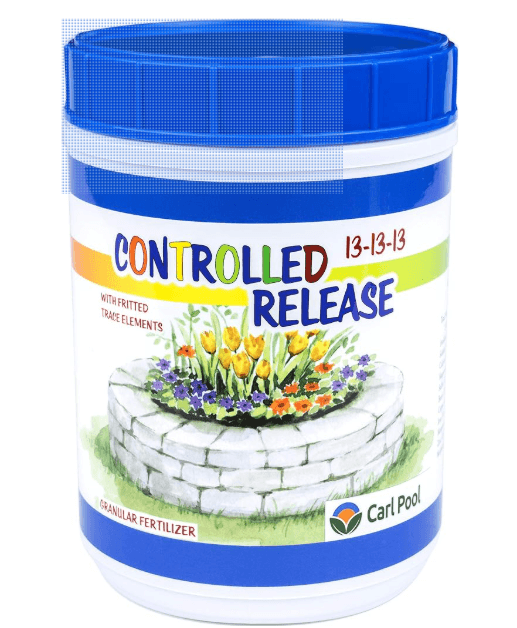 Best for Containers
Carl Pool Controlled Release 13-13-13 with Fritted Trace Elements
Feeds potted plants and beds for monthsCarl Pool has been a trusted name in controlled release fertilizer for a long time, and the fritted trace elements are the detail that sets this one apart. Fritted means the trace elements are fused into glass like particles that release slowly, so container plants get a steady trickle of micronutrients instead of a one time dump.
Side-by-Side Comparison Chart
| Product | Format | Best For | Burn Risk |
|---|---|---|---|
| Gardenera 13-13-13 All Purpose | Slow release granular | All purpose | Low |
| Garden Grower 13-13-13 with Lime | Granular with micronutrients | Vegetable gardens | Medium |
| Carl Pool Controlled Release 13-13-13 | Controlled release granular | Containers, potted plants | Low |
How to Apply It Step by Step
Watch: Applying 13-13-13 the Right Way
The Mistakes That Cost Me a Season
Mistake 1: Using It on Everything
Not every plant wants equal parts of the three nutrients. Root vegetables like carrots and potatoes actually do better with lower nitrogen and higher phosphorus, since too much nitrogen gives you huge leafy tops and small roots. Our vegetable fertilizer guides break down what each crop actually wants.
Mistake 2: Applying It Right Before a Heavy Rain
I ignored the forecast once and applied a full dose the day before a storm. Most of it washed straight through the soil before the roots could absorb it, and I basically fertilized the storm drain instead of my garden.
Mistake 3: Assuming More Is Better
This is the mistake that got me with my tomatoes. Fertilizer does not work like a multivitamin where extra just gets flushed out harmlessly. Excess nitrogen pushes soft, weak growth that attracts aphids and disease.
What NPK Numbers Actually Mean for 13-13-13
| Nutrient | Role | For 13-13-13 |
|---|---|---|
| N — Nitrogen | Leaf and stem growth | 13 percent, moderate, good for general foliage |
| P — Phosphorus | Root development, flowering | 13 percent, supports establishment and root growth |
| K — Potassium | Overall health, disease resistance | 13 percent, helps stress tolerance |
Realistic Costs: What to Expect to Spend
| Product Type | Approx. Cost | Coverage |
|---|---|---|
| Granular 13-13-13, 40 lb bag | $20 – $35 | 4,000 to 5,000 sq ft of lawn |
| Granular 13-13-13, 4 to 6 lb bag | $12 – $20 | Small garden bed or several containers, one season |
| Water soluble 13-13-13 | Higher per pound | Less product needed per application |
Do not expect overnight results. Granular 13-13-13 is slower acting than a liquid feed, so you are usually looking at 1 to 2 weeks before you see a visible difference in color or growth.
Advanced Tips Most Guides Skip
Split Your Application
Instead of putting down the full recommended amount once, I split it into two smaller applications about a month apart. This reduces burn risk and gives plants a steadier nutrient supply.
Pair It With Organic Matter
13-13-13 feeds the plant, but it does nothing for soil structure. Working in compost alongside it improves how well the soil holds moisture and nutrients. If you want to lean more organic going forward, our organic fertilizer guides cover options that build soil health at the same time.
Check the Filler Ingredients
Cheaper 13-13-13 products sometimes use urea as the nitrogen source, which can volatilize into the air if left on the surface in hot, dry conditions instead of getting watered in.
The Takeaway
13-13-13 is a solid, dependable choice when you genuinely need a balanced feed and your soil is not already overloaded on any one nutrient. It is not a magic fix for every plant, and it is definitely not something to apply heavier just because a plant looks like it needs help.
Test your soil when you can, measure instead of guessing, and water it in properly, and you will get the steady, even growth this fertilizer is actually good at producing.