
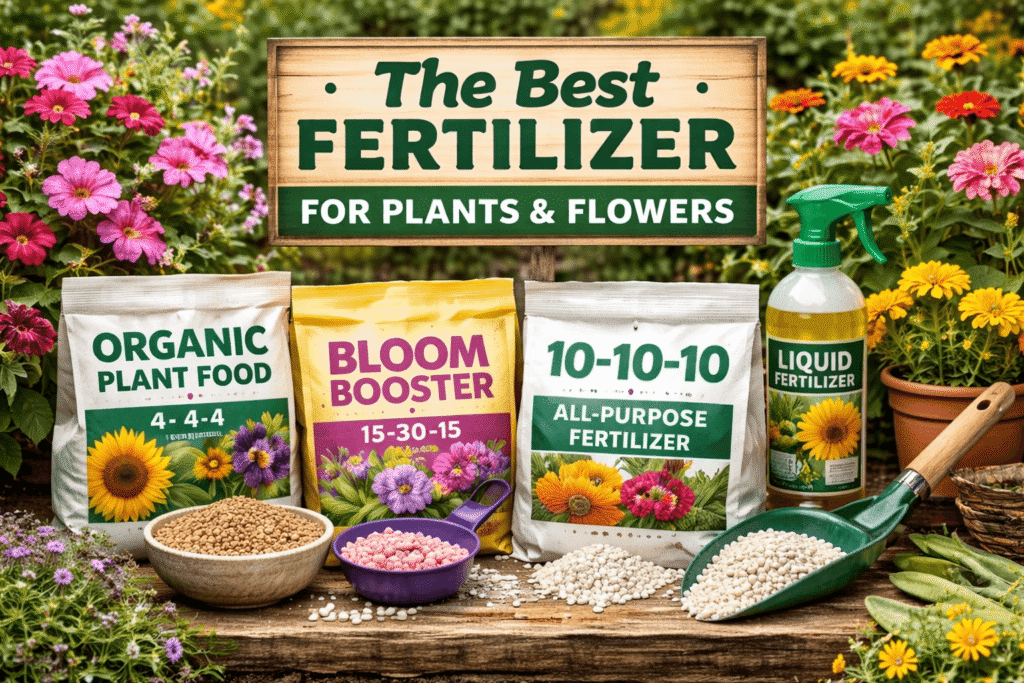
Nearly two decades of professional growing will teach you things no textbook covers. I have amended clay soil in the Pacific Northwest, coaxed blooms out of nutrient-stripped desert plots in Arizona, and managed fertilization programs for botanical garden display beds that needed to perform flawlessly twelve months a year. Yet for the first several years of my career, I made at least three fundamental fertilizer mistakes. Worse, I see those same mistakes repeated by home gardeners every single season.
This article is the honest account I wish someone had handed me early on. It covers what the best fertilizer for plants and flowers actually means, why that answer is more nuanced than any product label admits, and what the garden eventually forced me to learn about timing, formulation, and the soil beneath our feet.
The Question Nobody Actually Answers: What Does ‘Best’ Mean?
Every gardening publication, every hardware store display, and every well-meaning neighbor offers a different answer when you ask which fertilizer is best for plants and flowers. No single correct product exists. What does exist is a correct way of thinking about the question — one that will lead you to the right choice for your specific garden.
Fertilizer quality is not about brand or price. It is about matching the nutrient profile of the product to the nutritional needs of your plant at a specific growth stage, in a specific soil type, at a specific time of year. A fertilizer that produces stunning results in one bed can actively harm plants in another. Once I internalized this principle, my results transformed almost immediately.
“The best fertilizer is not the one with the highest numbers on the bag. It is the one that addresses what your soil and plants are actually missing.”
Understanding NPK: The Foundation of Every Fertilizer Decision
The three numbers printed on every fertilizer bag — the NPK ratio — represent the percentage by weight of nitrogen (N), phosphorus (P), and potassium (K). These are the three primary macronutrients that plants require in the largest quantities. Understanding what each one does will permanently change how you shop for fertilizer.
Nitrogen drives vegetative growth. It produces the deep green color of healthy foliage and accelerates stem and leaf development. Phosphorus supports root development, cell division, and — critically for flowering plants — the formation of buds, blooms, and fruit. Potassium regulates water movement within plant tissue, strengthens cell walls, and builds overall stress resistance and disease tolerance.
For most flowering plants and ornamentals, the middle number — phosphorus — matters most when bloom performance is your goal. Dedicated bloom fertilizers carry a higher middle number for exactly this reason, such as 10-52-10 or 15-30-15. When I stopped defaulting to balanced all-purpose formulas and started selecting fertilizers based on what my plants were actively trying to accomplish, the difference in flower production was dramatic.
Organic vs. Synthetic: My Honest Experience With Both
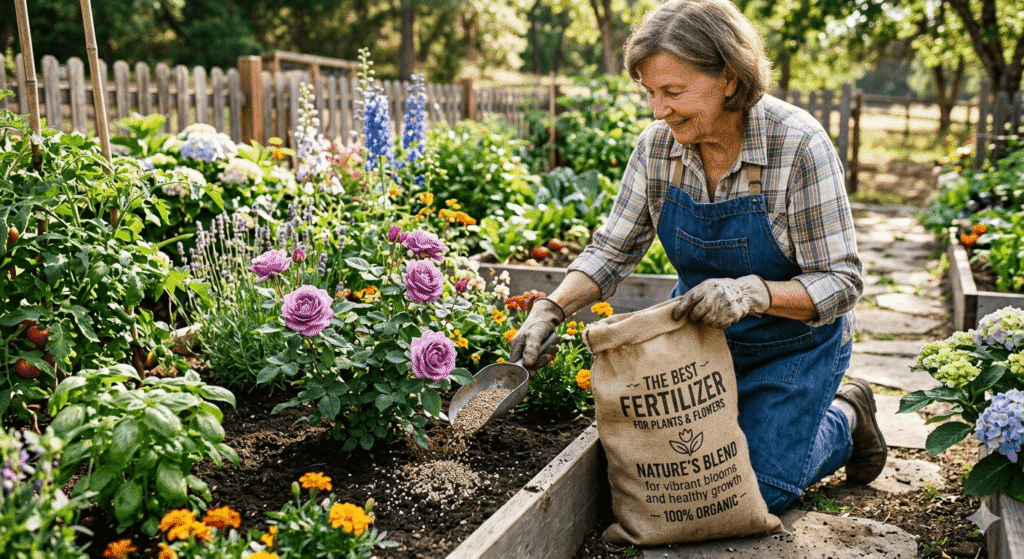
I have used both extensively, and I will not pretend one is categorically superior. They operate differently, serve different purposes, and the best programs typically incorporate both.
Synthetic fertilizers are fast-acting and precise. When a plant shows symptoms of nitrogen deficiency in midsummer — yellowing older leaves, stunted growth — a soluble synthetic fertilizer can deliver measurable results within days. Container plants with limited soil volume benefit especially well from high-quality water-soluble synthetics, since organic decomposition is slow and inconsistent in those confined spaces. I still use them routinely in my container and hanging basket programs.
Organic fertilizers — compost, fish emulsion, bone meal, blood meal, kelp meal — work more slowly but deliver something synthetics cannot replicate: they feed the soil ecosystem, not just the plant. Healthy soil biology improves water retention, suppresses certain root pathogens, and makes nutrients already present in the soil more bioavailable. The first time I ran a proper side-by-side comparison between a purely synthetic program and an integrated organic-synthetic approach over a full season, the organically amended beds showed consistently more resilient plants through heat stress and drought — even when the synthetic beds had technically received more total nitrogen.
For long-term garden health, organic amendments build the foundation. For in-season precision and rapid correction, targeted synthetics fill the gaps.
The Best Fertilizers I Have Used for Flowering Plants, by Category
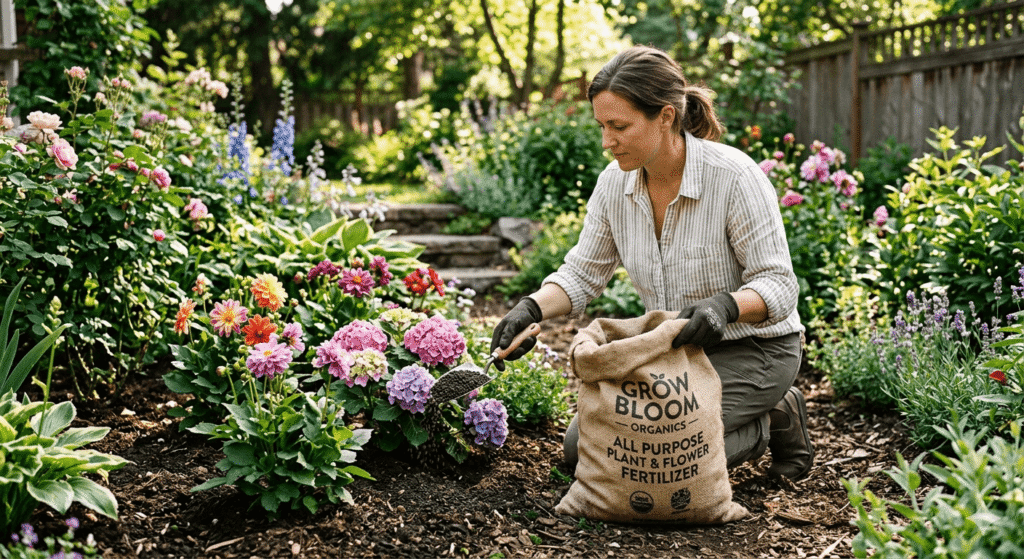
After years of field testing across dozens of plant families, these are the fertilizer types that have consistently delivered the strongest flowering results in my programs:
- Bone meal (3-15-0): Exceptional for spring bulbs, roses, and perennials. The slow-release phosphorus supports deep root establishment and prolific bloom. Work it into the planting hole at installation and top-dress established beds every fall for best results.
- Fish emulsion (5-1-1): My preferred quick-boost nitrogen source for foliage-heavy ornamentals and container annuals in early spring. The smell dissipates quickly outdoors. The micronutrient content gives it a genuine advantage over most synthetic nitrogen sources.
- High-phosphorus bloom formulas (e.g., 10-30-20): The workhorse of my flowering annual and perennial programs from bud set through peak bloom. Applied every two weeks as a liquid drench, these formulas have reliably extended bloom windows by three to four weeks compared to untreated controls.
- Slow-release granular coated fertilizers (e.g., Osmocote 14-14-14): Invaluable for container plantings and large annual display beds where frequent liquid feeding is impractical. A single application at planting provides consistent low-level nutrition for three to four months. Use these as a baseline and supplement with liquid bloom fertilizers as needed.
- Compost (variable NPK, typically 1-1-1 to 2-2-2): Nothing glamorous here — but nothing I have ever used produces healthier, more consistently floriferous plants than beds amended annually with mature compost. The modest NPK numbers understate its value entirely. What compost delivers in soil structure, microbial activity, and long-term fertility is irreplaceable.
The Timing Mistakes That Cost Me Two Full Seasons
Timing is everything. If I had to name the single most common fertilizer error I observe in home gardens, it would not be choosing the wrong product — it would be applying the right product at the wrong time.
Nitrogen-heavy fertilizers applied to flowering plants after bud set redirect the plant’s energy back toward vegetative growth. This lesson cost me a full rose bed in my second year of professional work. After applying a balanced 10-10-10 formula in late June — just as the plants were entering their second flush of bloom — I ended up with magnificent new cane growth and almost no flowers. The nitrogen had simply outcompeted the bloom cycle.
The rule I now follow without exception: feed for roots and foliage in early spring with a balanced or nitrogen-forward formula, then transition to a high-phosphorus, lower-nitrogen bloom formula as soon as buds begin to form. For annuals like petunias, impatiens, and zinnias, that transition typically happens six to eight weeks after transplanting. Perennials and shrubs follow their natural bloom schedule rather than any calendar date.
Knowing when to stop matters just as much. Late-season nitrogen applications on woody ornamentals promote soft new growth that cannot harden off before the first frost, leaving plants vulnerable to cold damage. For most temperate gardens, I suspend all nitrogen feeding six weeks before the expected first frost date and allow the plant to begin its natural dormancy preparation.
What a Soil Test Taught Me That No Fertilizer Could
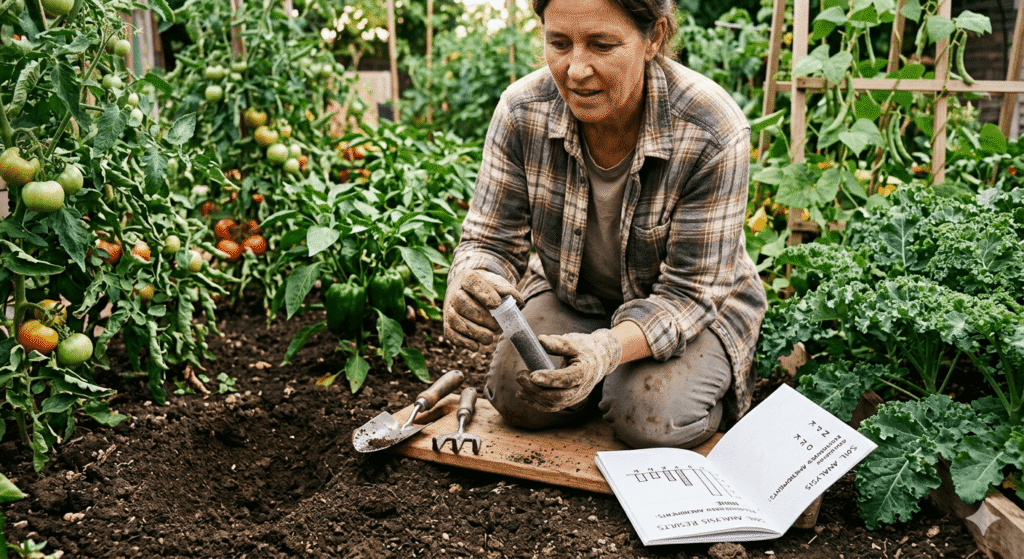
Three years into my professional practice, I finally ran a comprehensive soil test on my primary display garden. The results stopped me cold. My phosphorus levels sat in the high range — the result of years of well-intentioned bone meal applications — and my soil pH registered at 7.4, well above the 6.0 to 6.8 range where most flowering plants absorb nutrients most efficiently.
All the fertilizer I had been applying was partially locked out by soil chemistry. My plants were not nutrient-poor. They were nutrient-inaccessible. Lowering the pH with elemental sulfur over the following two seasons improved bloom performance more than any fertilizer change I had made in the prior three years combined. That single adjustment changed everything.
This is the insight I pass on to every gardener I consult with: the best fertilizer program in the world delivers marginal results in soil with the wrong pH. Before you invest in any fertilizer — organic or synthetic, granular or liquid, budget or premium — spend fifteen dollars on a soil test from your local cooperative extension service. It is the only tool that will tell you what your garden is actually asking for.
Soil pH is the gatekeeper of nutrient availability. Even abundant nutrients become largely inaccessible when pH strays outside the optimal range for your plants.
Special Considerations for Container Plants and Hanging Baskets
Container gardening demands more from a fertilizer program than any other growing situation. Plants in containers have no access to the broader soil ecosystem — no deep root exploration, no microbial networks pulling nutrients from decomposing organic matter, no buffering capacity when conditions go wrong. They depend entirely on what you provide.
My container fertilizer program has three components. First, I use a premium potting mix with incorporated slow-release granules at planting. Second, I begin weekly liquid feeding with a balanced formula two weeks after transplanting, then switch to a high-phosphorus bloom formula once the plants show their first flower buds. Third — and most gardeners skip this step — I flush the containers with plain water every three to four weeks to prevent salt accumulation from fertilizer residues. That buildup is almost universally the reason container plants decline in late summer.
Hanging baskets deserve special attention. Evaporation and drainage losses are highest in baskets, so I feed at half the label rate twice per week rather than at full strength once per week. The more consistent supply of lower-concentration nutrients produces steadier growth than the boom-and-bust cycle of infrequent heavy feeding.
My Final Recommendation: Build a Program, Not a Single Purchase
One product will not transform your garden. The best results I have ever achieved — and the best results I see in the gardens of my most successful clients — come from a layered program rather than a single purchase.
Start every season by amending your beds with two to three inches of mature compost worked into the top six inches of soil. That is your foundation. Choose a slow-release granular formula suited to your plants’ season — balanced in spring, bloom-forward as summer arrives — and apply it at the recommended rate. Supplement with liquid feeding on a biweekly schedule when your heavy-feeding ornamentals are actively flowering. Get a soil test every two years and correct your pH before you adjust your fertilizer.
Above all, observe your plants. Yellowing leaves, poor bloom set, and slow growth are communications, not failures. Your plants tell you exactly what they need — your job is to listen. After nearly twenty years of professional horticulture, that combination of a smart program and close observation is what has never let me down.The author holds a B.S. in Horticulture Science and is a certified landscape consultant with nearly 20 years