
I have been growing tomatoes in containers for over fifteen year
The number one thing that separates a struggling plant from a thriving one is the feed you give it.
Store-bought fertilizers are fine. However, once I started making my own, the difference in flavor, yield, and plant health was impossible to ignore.
Growing tomatoes in pots means the soil loses nutrients much faster than in the ground. Because of this, feeding them often is not optional, it is very important.
Let me walk you through exactly what I use, why it works, and how I apply it through the season.
Why Pots Make Fertilizing More Demanding
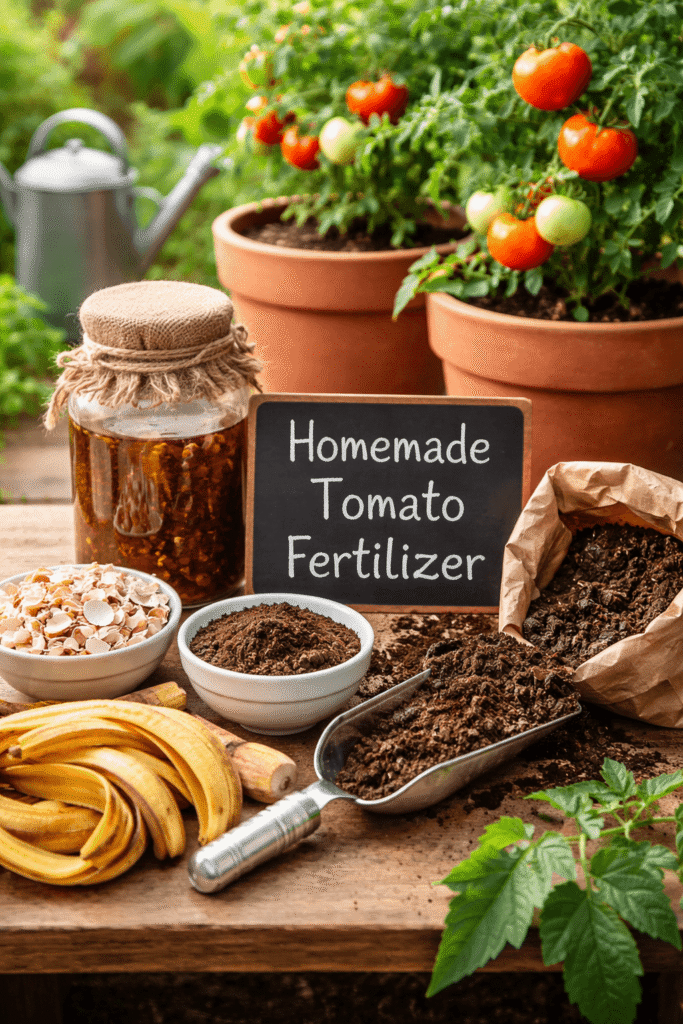
When a tomato plant grows in a container, it has nowhere else to go for nutrients.
Every time you water, you flush some of those nutrients out of the bottom of the pot. As a result, you need to replace them far more often than most guides suggest.
I feed my container tomatoes every seven to ten days once they start flowering. For this, I rely almost entirely on homemade options.
Compost Tea: My Favourite Liquid Feed
The most useful homemade fertilizer I have found for potted tomatoes is compost tea.
To make it, fill a five-gallon bucket one third of the way with finished compost. Then, top it off with water and let it sit for 24 to 48 hours.
Stir it a few times while it soaks. After that, strain out the solids.
What is left is a rich, brown liquid full of good microbes, nitrogen, potassium, and phosphorus.
Pour this onto the soil around the base of each plant, but try not to splash the leaves.
The results I have seen from compost tea are better than most products I have tried over the years.
Banana Peel Feed for Strong Fruit Growth
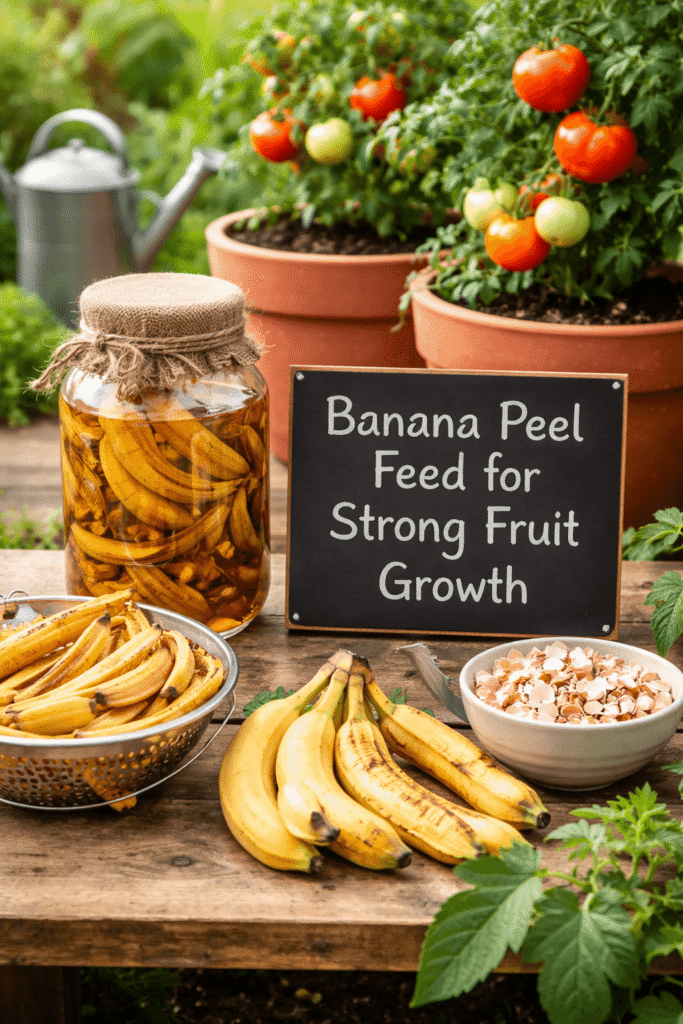
Once my tomatoes start setting fruit, I switch to a banana peel feed. This helps boost potassium at the right time.
Potassium supports fruit growth, disease resistance, and overall plant strength, so getting it right at this stage matters a lot.
I collect banana peels during the week and chop them roughly. Then, I soak them in a jar of water for two to three days.
The liquid that forms is pale yellow and smells faintly sweet. I mix it 50/50 with plain water before using it.
I do this once a week from the first flower right through to the end of harvest.
Eggshell Spray for Calcium
One problem I run into every season is blossom end rot.
This is the dark, sunken patch that forms on the bottom of the fruit, and it is caused by a lack of calcium.
It is very common in container tomatoes because the soil dries out fast. To fix this, I use an eggshell spray I have been making for years.
I save eggshells and dry them out in a low oven. Then, I grind them into a fine powder using a blender.
I mix one tablespoon of powder into a litre of water and shake it well. After that, I spray it onto the leaves and around the base of the plant.
Calcium absorbs through the leaves quite well. In fact, I have seen blossom end rot improve within a week of starting this spray.
Epsom Salt for Magnesium
Magnesium also gets used up fast in pots.
A shortage shows up as yellow patches between the leaf veins. The veins stay green while the rest of the leaf turns yellow.
To fix this, I mix one teaspoon of Epsom salt in a litre of water. Then, I apply it to the soil every two weeks.
Epsom salt is not a full fertilizer, so I only use it as a top-up. Still, it is cheap, easy to find, and works well for this issue.
Worm Castings: The Slow Release Option
If I had to pick just one thing to mix into my container soil, it would be worm castings.
They release nutrients slowly over several months. In addition, they improve the texture of the soil.
They are gentle enough that you cannot burn your plants with them.
I mix about 20 percent worm castings into my potting mix before planting. Then, I add a small handful on top of the soil every three to four weeks.
You can buy them or make your own at home if you have a worm bin.
How I Feed My Plants Through the Season
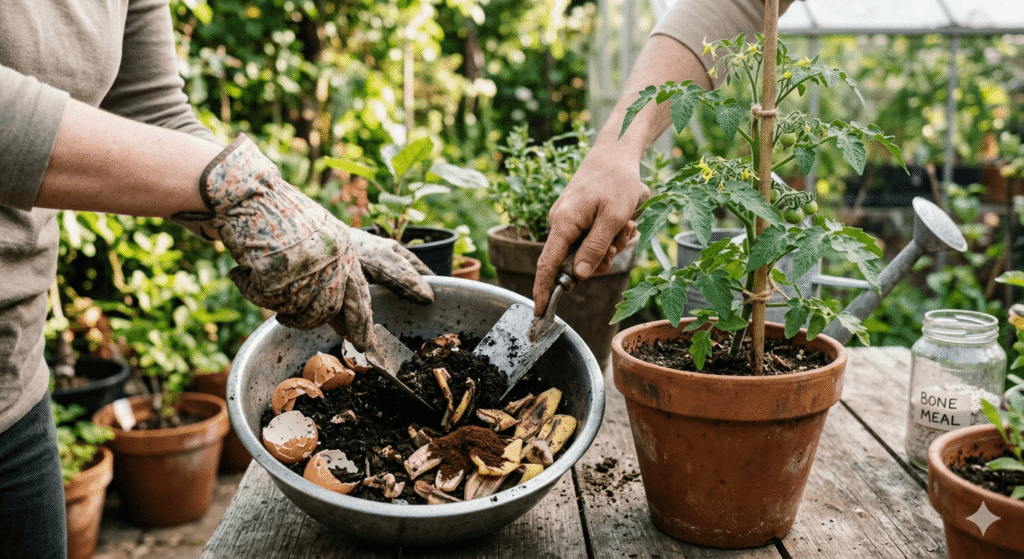
Early in the season, I focus on compost tea and worm castings. These help build strong roots and healthy leaves before flowering begins.
Once the flowers open, I bring in the banana peel feed and the eggshell spray. These support fruit growth and help prevent common problems.
I also use the Epsom salt mix every two weeks as a steady top-up throughout the season.
The key is being consistent, not perfect.
Missing one feeding will not ruin your crop. However, ignoring your plants for weeks at a time will cause real problems.
A Few Lessons I Learned the Hard Way
Never apply feed to dry soil.
Always water the plant first, then feed an hour or two later. Otherwise, you risk damaging the roots.
Also, more feed is not always better.
It is tempting to add extra compost tea or a stronger banana peel mix. However, too much feed leads to lots of leaves and very little fruit.
Stick to the schedule, trust the process, and your plants will do the rest.
Final Thoughts
Growing tomatoes in containers is one of the most rewarding things you can do as a gardener.
It does need more care than growing in the ground. However, once you have a simple feeding routine in place, it becomes easy to manage.
The cost savings compared to shop-bought fertilizers are also worth noting.
Everything in this article comes from years of testing in my own garden. These are the methods I still use every single season.
Start with compost tea. Then, add the banana peel feed once flowering begins.
Stay on top of calcium and magnesium. Do that, and you will have more tomatoes than you know what to do wit