
My Early Mistakes
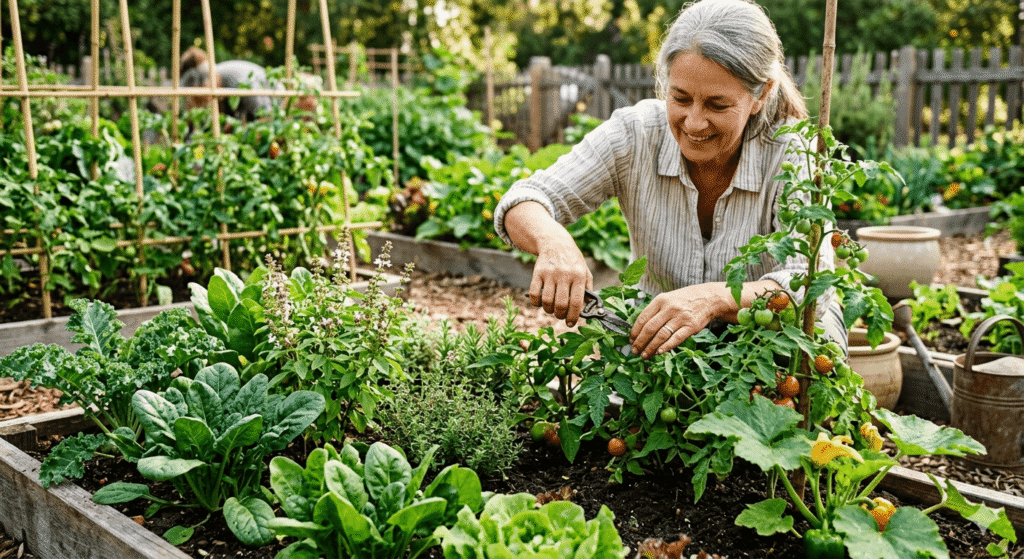
I killed a lot of plants before I figured this out.
Not from neglect. Not from overwatering.
It was from feeding them the wrong things. Also at the wrong time. And in the wrong amounts.
The moment I switched to homemade liquid fertilizer, everything changed.
My tomatoes started setting fruit earlier.
My herbs became fuller and more fragrant.
Even my houseplants improved. I had almost given up on them.
They began pushing out new leaves fast.
I want to share what I do now.
It took me far too long to learn it.
Why Liquid Fertilizer Works Faster Than Granular
First, you need to understand how plants feed.
Plants absorb nutrients through their roots in liquid form.
So, solid nutrients must break down in water first.
Granular fertilizer takes time. The soil has to do the work.
Liquid fertilizer skips this step.
It delivers nutrients instantly.
Roots can absorb them right away.
That is why you often see results in three to five days.
This helps when plants are under stress.
It also helps during fruiting and fast growth stages.
The Base Recipes I Actually Use
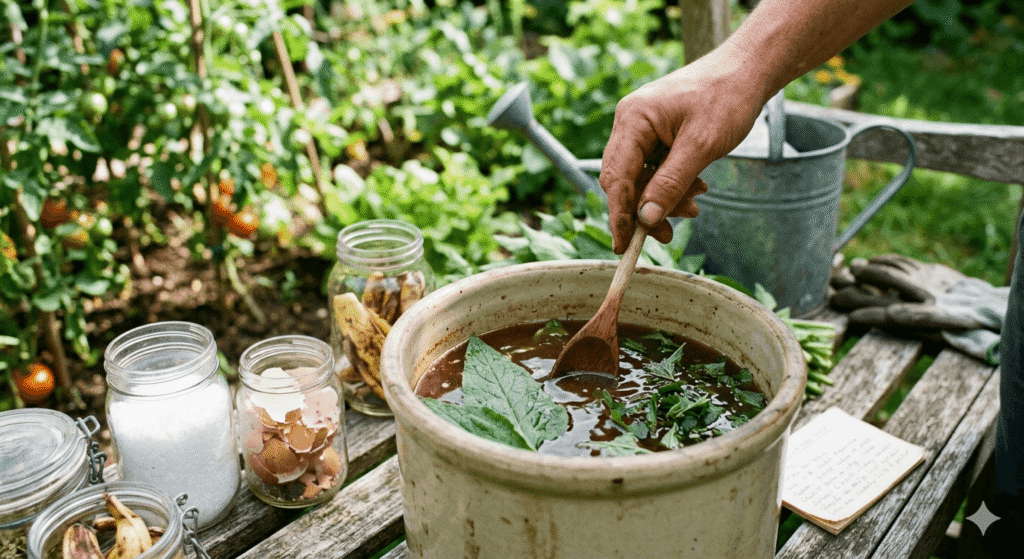
I use three main homemade formulas.
I switch them based on the season and plant needs.
Compost Tea
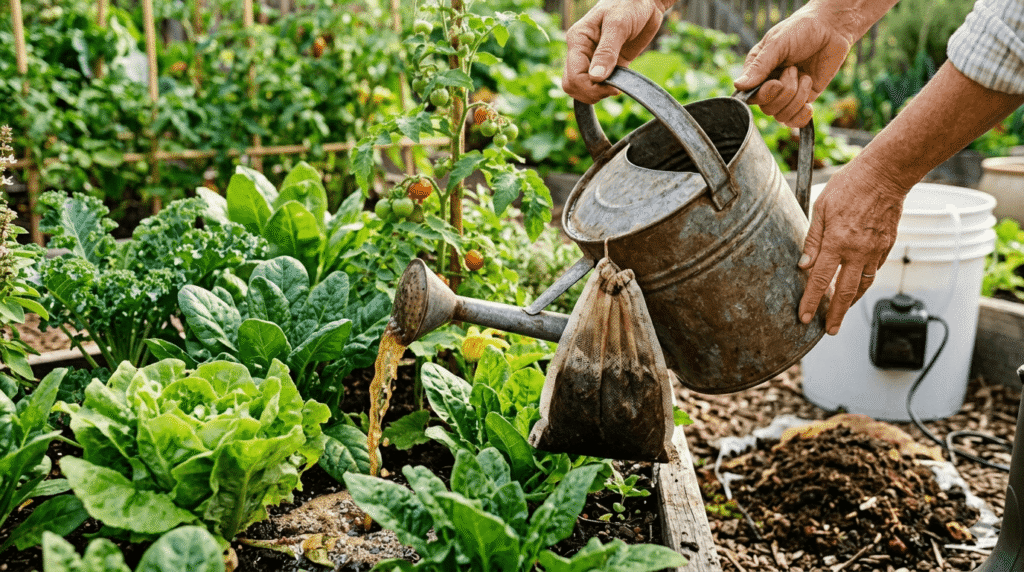
This is the one I use most.
I fill a five-gallon bucket one third with compost.
Then I add water to fill it.
I let it sit for 24 to 48 hours. I stir it sometimes.
For better results, I use an aquarium pump.
It adds oxygen and improves microbial activity.
The aerated version is better for soil health.
Before using, I strain the liquid.
Then I dilute it to a light amber color.
This is important for seedlings and sensitive plants.
Banana Peel Fertilizer
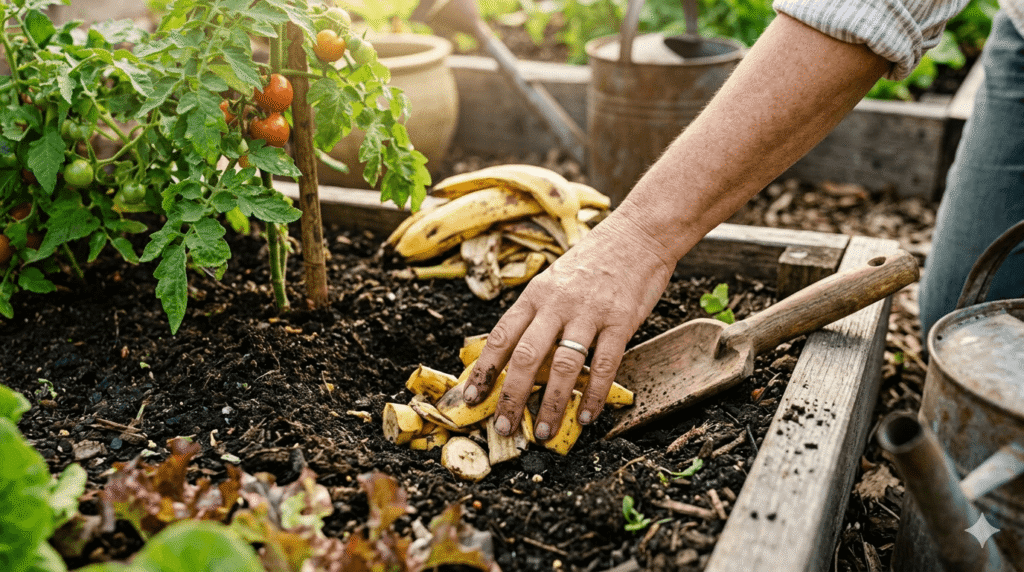
Banana peels are rich in potassium.
This helps roots grow strong. It also improves flowering.
I collect peels in a jar. Then I cover them with water.
I let them soak for three to four days.
After that, I strain the liquid.
Then I dilute it: one part liquid to four parts water.
I use it before flowering starts.
It helps improve bloom production.
Weed Tea
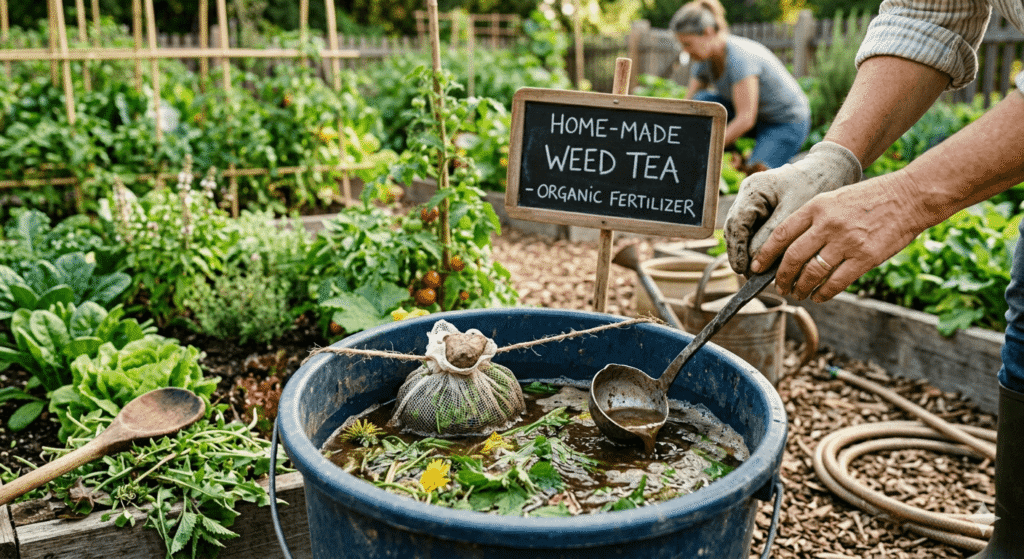
This is one of the strongest options.
Weeds like nettles, comfrey, and clover are rich in nutrients.
They pull minerals from deep soil layers.
I fill a bucket with fresh weeds.
Then I keep them underwater with a rock.
I add water and let it ferment for two to three weeks.
The smell is strong, so I cover it loosely.
When ready, I dilute it.
I use one part tea to ten parts water.
Do not skip dilution. It is very strong.
How I Apply It
I apply liquid fertilizer in the early morning.
The soil is cooler. The sun is not strong yet.
This helps reduce evaporation.
I apply it directly to the soil.
I do not spray leaves unless needed.
For foliar feeding, I use a weaker mix.
I apply it in the evening.
This prevents leaf burn from sunlight.
I fertilize once a week during active growth.
Then I reduce it in late summer.
The Mistakes I Made Early On
I thought more fertilizer meant faster growth.
That was wrong.
Too much fertilizer causes problems.
It pushes leaf growth but weakens roots and fruit.
In some cases, it burns the plant.
I also made another mistake.
I applied fertilizer to dry soil.
Now I water first with plain water.
Then I add the fertilizer solution.
This improves nutrient absorption.
I have had no burn issues since.
What I Watch For After Feeding
After one week, I check the plants.
Healthy growth looks darker green.
It also grows faster.
If leaves look pale or yellow, something is wrong.
I adjust the recipe or frequency.
If plants grow leaves but no flowers, I reduce nitrogen.
Then I increase potassium and phosphorus.
Plants always show signs.
You just need to observe them.
A Note on Water Quality
Tap water may contain chlorine.
This can harm beneficial microbes.
I let tap water sit for 24 hours before using it.
For fermented fertilizers, this matters less.
Time usually removes most chlorine.
If possible, I use rainwater or well water.
Final Thoughts
I have used homemade liquid fertilizers for years.
I would not go back to store products only.
The results are consistent.
The cost is very low.
Also, it feels rewarding to make your own fertilizer.
If you are starting, use compost tea first.
It is simple, safe, and effective.
It also improves soil health over time.