
I remember the first time a student asked me this question during a soil science field session. We were crouched over a freshly dug soil profile in a community garden, and she pointed at the dark, crumbly earth and asked, “So is this stuff alive or not?” I paused, smiled, and said, “That’s honestly one of the best questions you can ask about soil.”
The answer isn’t clean. And after spending over a decade studying soil ecology, conducting field research, and working with farmers to restore degraded land, I’ve come to appreciate that the question itself reveals something important soil doesn’t fit neatly into our categories. It’s both, and understanding why changes the way you look at the ground forever.
The First Time I Really Saw Soil
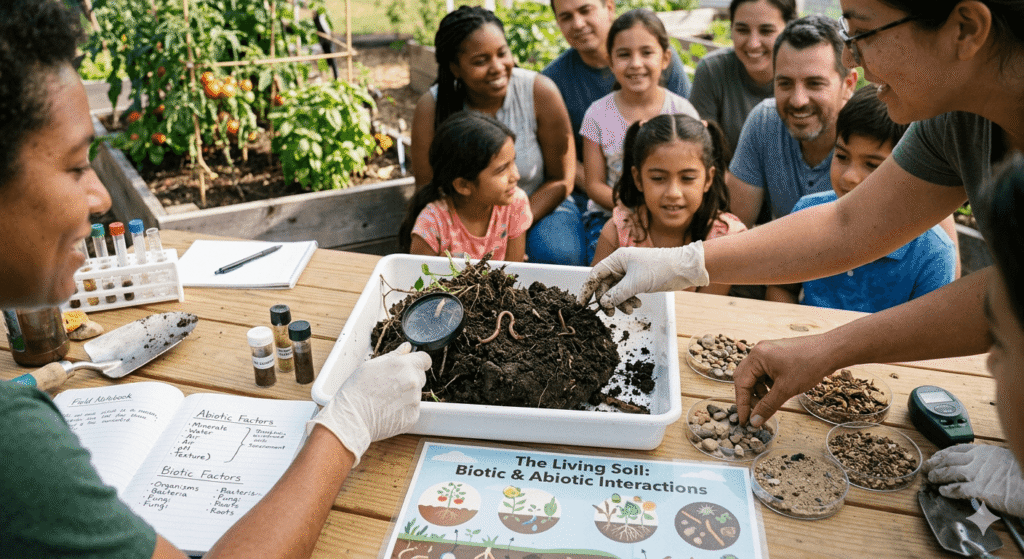
Early in my career, I was trained to think of soil primarily in physical and chemical terms texture, pH, cation exchange capacity, bulk density.
These are the abiotic dimensions of soil: the minerals, water, air pockets, and organic compounds that form its skeleton.
In the lab, you can measure these things with precision, and for a while, that felt like understanding soil.
Then I spent a summer doing field work in the Pacific Northwest, sampling soils from old-growth forests.
When I pulled cores from the ground and examined them under a hand lens, I was struck by how busy everything was.
Fungal hyphae threading through aggregates like white lace.
Earthworm channels lined with dark castings. The smell alone that rich, earthy petrichor is actually produced by bacteria called actinomycetes releasing a compound called geosmin.
The soil wasn’t just a medium. It was a metropolis.
That experience reframed everything for me.
The abiotic components weren’t separate from the biology they were in constant conversation with it.
Breaking It Down: The Abiotic Side
When I explain soil to non-scientists, I usually start here because it’s the most tangible.
Pick up a handful of healthy garden soil and the physical stuff is what you’re literally holding.
The mineral particles sand, silt, and clay determine texture and structure.
Clay-heavy soils hold nutrients and water tenaciously but can suffocate roots if compacted. Sandy soils drain fast and warm up quickly, but they’re nutritionally stingy without amendment.
Water and air occupy the pore spaces between those particles, and getting that balance right is everything. I’ve worked with farmers who unknowingly destroyed years of soil development by over-tilling, collapsing the pore structure that took microbial communities decades to build. The abiotic architecture matters enormously.
pH is another abiotic factor I find myself talking about constantly. In one restoration project I led, we were trying to reestablish native prairie species on former agricultural land.
The plants weren’t establishing, and after testing, we found the soil pH was sitting around 5.2 too acidic for most of our target species. No amount of biotic intervention would fix that until we corrected the chemistry first. The abiotic conditions set the stage.
The Living Half: Where Soil Gets Remarkable
Here’s where I get genuinely excited, even after all these years. A single teaspoon of healthy soil contains more microorganisms than there are people on Earth. Bacteria, fungi, protozoa, nematodes and above them in scale, arthropods, earthworms, beetle larvae, ants. This is the biotic dimension, and it’s staggering in its complexity.
The relationship that fascinates me most professionally is mycorrhizal symbiosis. Roughly 90% of plant species form partnerships with mycorrhizal fungi, which extend the plant’s effective root reach by orders of magnitude.
I’ve seen this play out in practical terms during reforestation work seedlings inoculated with the right fungal partners establish faster and survive drought stress far better than uninoculated controls.
The fungi are getting carbon from the plant; the plant is getting phosphorus and water access from the fungi.
Neither party is the same without the other.
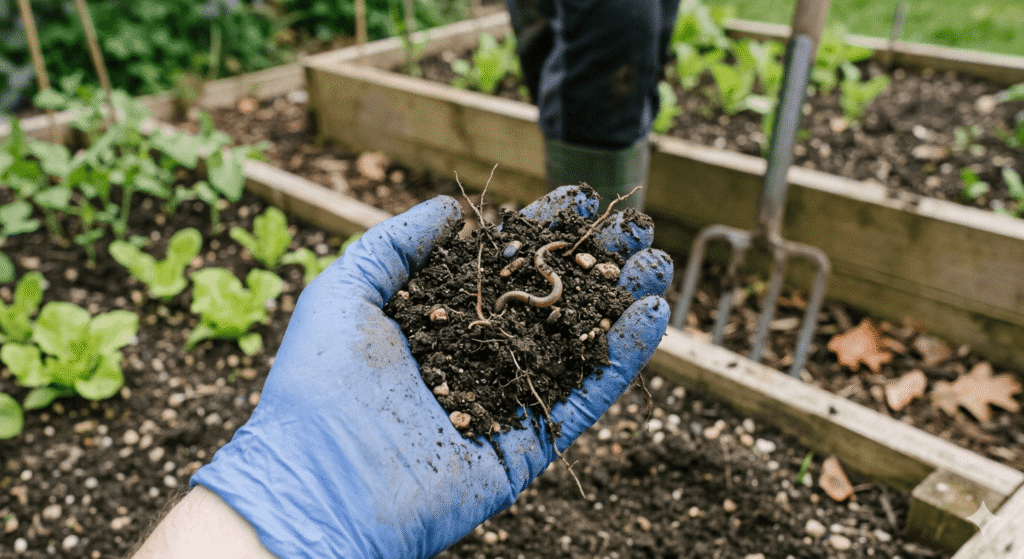
Earthworms are another organism I’ve developed deep respect for. On a degraded agricultural plot I worked with in the Midwest, earthworm populations had crashed due to years of pesticide use and compaction. The soil had become structurally inert hard, poorly drained, low in organic matter. When we introduced regenerative practices and allowed earthworm populations to recover, the change in soil structure over three years was visible to the naked eye. They are engineers of the abiotic environment, which is exactly the point.
Why the Distinction Matters Practically
I’ve had this debate with colleagues who argue the abiotic/biotic framing is too academic to be useful in the field. I disagree.
Understanding which dimension is limiting in any given soil situation tells you where to intervene.
If a farmer’s soil has excellent biological diversity but a severe calcium deficiency an abiotic problem no amount of compost application will fully solve it.
Conversely, if the mineral structure is sound but the soil has been sterilized by fumigants or repeated chemical inputs, restoring the biology is the priority. Conflating the two leads to interventions that miss the mark.
The most degraded soils I’ve encountered have failed on both fronts simultaneously. Rebuilding them requires addressing the abiotic foundation pH, mineral balance, structure while simultaneously reintroducing the biological communities that make those abiotic resources accessible to plants. It’s not sequential; it’s parallel.
What This Means If You’re Working With Soil at Any Scale
You don’t need a soil science degree to apply this thinking. Whether you’re managing a backyard garden or a hundred-acre farm, asking “what’s the abiotic situation here, and what’s the biotic situation here?” is a powerful diagnostic habit.
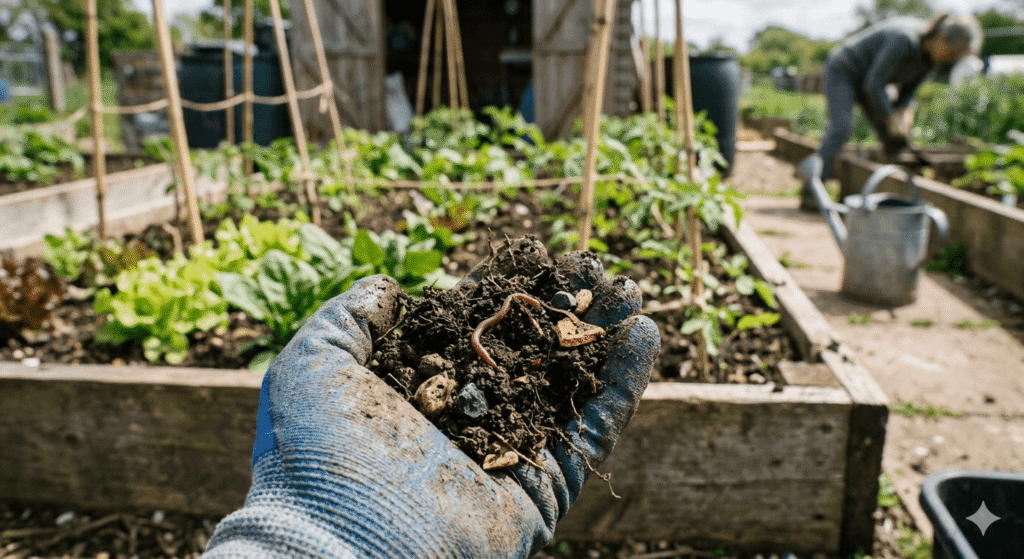
Test your pH and mineral levels that’s the abiotic audit. Then look for biological signs: earthworm presence, fungal threads in your compost, the smell of healthy microbial activity, plant vigor. These two assessments together give you a much clearer picture than either one alone.
Soil that looks dark, crumbles loosely, and smells earthy is almost always telling you that the abiotic and biotic dimensions are working in sync. Soil that’s pale, compacted, or odorless is often a system that’s lost its biological vitality, its physical integrity, or both.
The Short Answer, Informed by the Long Experience
Soil is neither strictly abiotic nor strictly biotic. It is a living system built on a non-living framework the minerals and chemistry providing the structure, and the organisms providing the function.
Remove either dimension and you don’t have soil anymore.
You have dirt, or you have an aquarium, but not the remarkable, self-sustaining, plant-supporting medium that makes terrestrial life possible.
That question my student asked over that soil profile? I told her: “It’s both. And the fact that it’s both is the most important thing about it.” She nodded slowly, turned the soil over in her hand, and I could see it the moment the ground started looking different to her.
That’s what understanding soil does. It changes what you see when you look down.