
Best Fertilizer for Monstera (2026): 5 Tested Picks That Actually Work
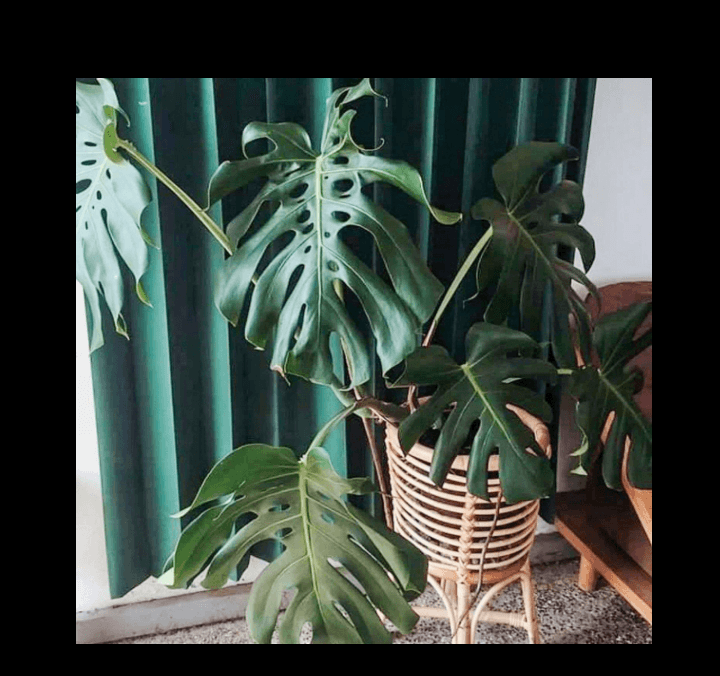
I burned the roots of my first monstera with the wrong fertilizer. I under-fed the second into sad, small leaves. My third monstera is now 4 feet wide, producing split leaves nearly every month. The only thing I changed? I actually learned what this plant needs — and stopped guessing.
Here is the truth most articles skip: monstera is not a heavy feeder. Hit it with too much concentrated fertilizer and you get root burn, salt buildup, and yellowing leaves. Use the right product at the right dilution on the right schedule, and this plant practically takes care of itself.
This guide covers what works, what does not, and why. I have tested over a dozen products across three plants and several years.
⚡ Quick Picks — Best Fertilizer for Monstera
Why Monstera Fertilizer Deserves More Thought Than You’re Giving It
In the wild, monsteras grow on the forest floor of Central America — climbing up trees, rooting in nutrient-poor volcanic soil, getting slow, gentle nutrition from decomposing leaf litter. That origin story matters for how you feed them at home.
The biggest mistake I see in plant communities is treating monstera like a tomato. More fertilizer does not mean faster growth here. It means salt buildup, root damage, and yellowing leaves that make you add even more fertilizer. It is a bad cycle I have personally been in.
Monsteras are hemiepiphytes — they root in low-nutrient soil and get steady, slow nutrition from organic matter. Their ideal fertilizer schedule mimics this: consistent and dilute, not sporadic and heavy.
What NPK Numbers Mean for Monstera
Every fertilizer label shows an NPK ratio. Here is what those numbers mean for this specific plant:
- N (Nitrogen) — Drives leaf growth and deep green color. Monsteras are foliage plants so nitrogen matters, but too much gives soft, floppy leaves and stunted fenestrations (the holes).
- P (Phosphorus) — Supports root development and cellular energy. Monstera rarely flowers indoors, so high-phosphorus bloom formulas are not what you need.
- K (Potassium) — Critical for vascular health — how water and nutrients move through stems. Often ignored, but I notice real differences in stem thickness when potassium is adequate. If you want to understand how potassium works in depth, this guide on potassium fertilizer for plants breaks it down well.
The sweet spot: a balanced to slightly nitrogen-forward ratio — something like 3-1-2 or 5-2-3. Avoid high-phosphorus bloom boosters and anything with extremely high nitrogen like 30-10-10.
Top 5 Best Fertilizers for Monstera (Tested & Reviewed)
1. Miracle-Gro Indoor Plant Food Liquid
🥇 Best Overall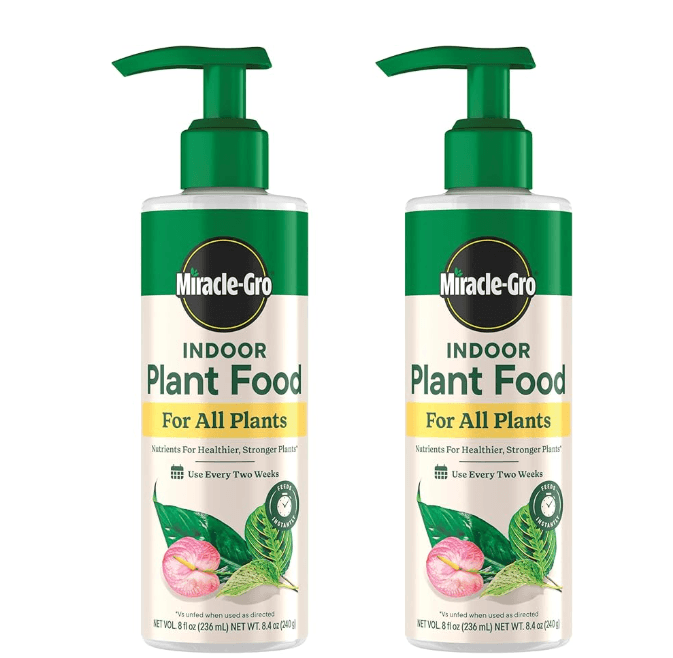
This is what I now keep on my watering shelf for everyday monstera care. The pump bottle makes dosing completely foolproof — just one pump per 8oz of water, every two weeks during the growing season. No measuring, no math, no risk of accidentally doubling the dose.
The 1-1-1 ratio is gentle by design, which makes it one of the hardest indoor plant fertilizers to over-apply. For a monstera that is growing steadily in moderate light, this is genuinely all it needs. The formula works instantly — no waiting for it to break down — and I have never seen any salt crust on my soil surface using it.
Check Price on Amazon →- Pump bottle — no measuring needed
- Very low burn risk
- Works instantly, no wait time
- Great for beginners
- Works for all indoor plants
- Low NPK for fast-growing plants
- Not organic
- Smaller bottle size
2. Espoma Organic Indoor! Liquid Plant Food 2-2-2
🥈 Best Organic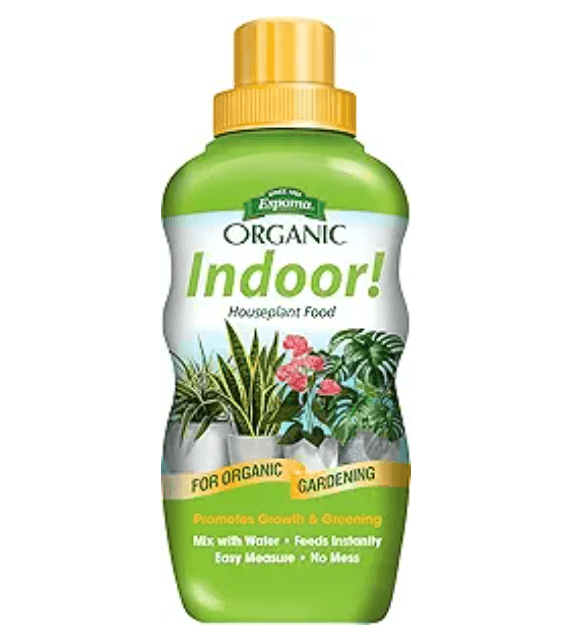
If you have pets or kids around your plants, or you are just starting out and afraid of burning your plant, this is the one to buy. The 2-2-2 ratio is gentle enough that over-application is nearly impossible. It feeds the soil microbiome rather than just the plant directly, and over time that shows in root health.
The tradeoff is slower visible results. Give it a full growing season and the improvement is real.
Check Price on Amazon →- Organic and pet-safe
- Nearly impossible to overdo
- Improves soil biology
- Affordable (~$10)
- Slower visible results
- Lower nutrient concentration
- Mild smell
3. Jack’s Classic All Purpose 20-20-20
🥉 Best Budget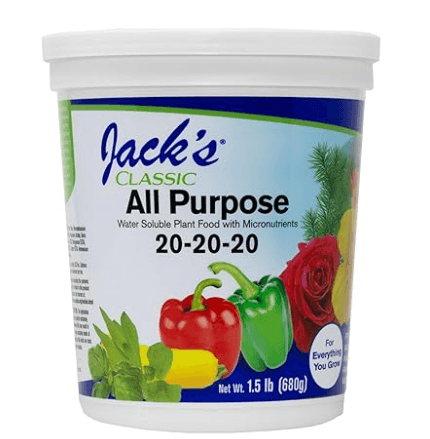
This only works well if you dilute it seriously — to ⅛ of the label rate or less. At full strength, it burned the leaf tips of my first monstera badly. When I figured out the right dilution, it became a reliable, affordable option.
A 1.5lb bag costs around $15 and lasts an absurdly long time at low dilution rates.
Check Price on Amazon →- Very affordable (~$15/1.5lb)
- Widely available everywhere
- Effective when diluted properly
- Long shelf life
- High burn risk if not diluted
- Requires careful measuring
- Can cause salt buildup
4. Fiddle Leaf Fig Food 3-1-2 (Works Perfectly for Monsteras)
Best for Fenestrations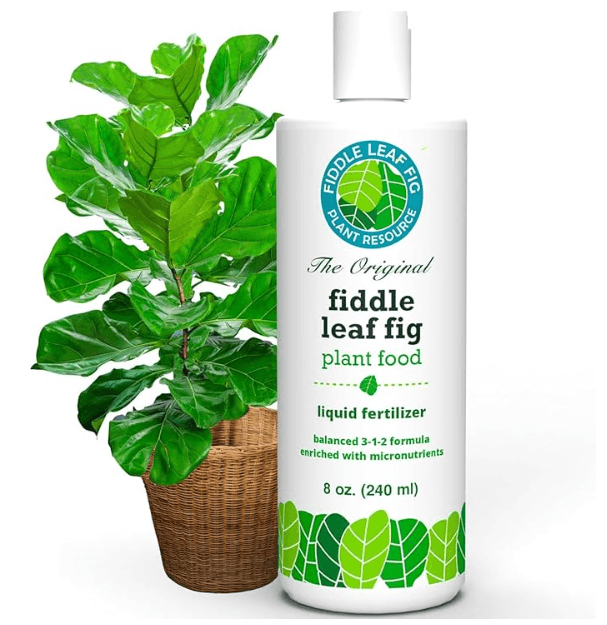
I know it says “Fiddle Leaf Fig” on the bottle. Ignore that. The 3-1-2 NPK ratio is nearly ideal for monsteras — nitrogen-leaning without being excessive, and the potassium level supports strong vascular development. I switched to this specifically to encourage bigger, more fenestrated leaves.
Results took about two full leaf cycles to show, but they did show. My monstera started producing noticeably more deeply split leaves in the second half of the growing season.
Check Price on Amazon →- 3-1-2 ratio ideal for aroids
- Very easy to use
- Encourages fenestrations
- Low burn risk
- Slightly pricier (~$16)
- Results take 2+ leaf cycles
- Not marketed for monstera
5. Osmocote Plus Smart-Release Plant Food
Best Slow-Release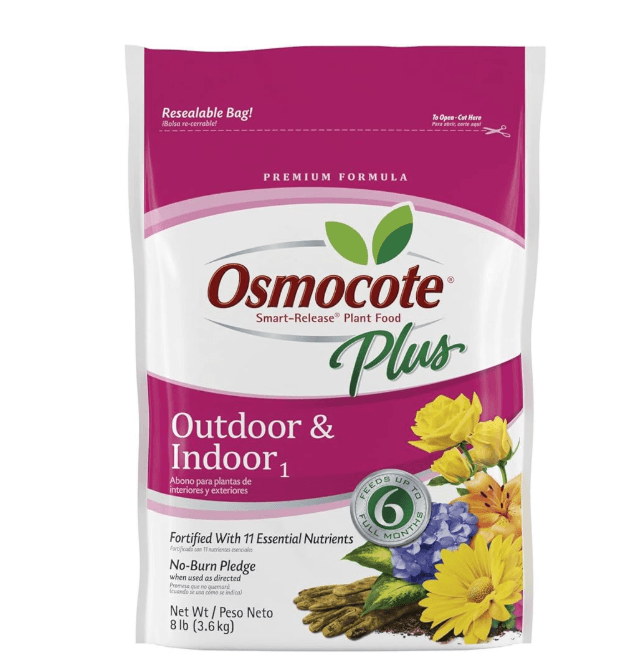
This is the set-it-and-forget-it option. Osmocote Plus coated granules release nutrients slowly over up to 6 months, triggered by soil moisture and temperature. Just sprinkle a small amount on top of the soil at the start of the growing season and let it work quietly in the background.
It is fortified with 11 essential nutrients, not just NPK, which is rare for a slow-release formula. I use it as a base layer in spring and pair it with a liquid feed every 4 weeks for the best results. The No-Burn Pledge on the label holds true as long as you do not over-apply.
Check Price on Amazon →- Feeds up to 6 months
- 11 essential nutrients
- No-burn pledge
- Zero daily effort
- Indoor & outdoor use
- Stop in winter (still releases)
- Less control than liquid
- Not organic
How to Fertilize Monstera: Step-by-Step Schedule
5 Fertilizer Mistakes That Are Hurting Your Monstera

Mistake 1: Fertilizing to Fix Yellow Leaves
When I saw yellow leaves I added more fertilizer. That made things worse. Yellow leaves on monstera are almost never a nutrient deficiency — they are usually caused by overwatering, underwatering, or too little light. Adding fertilizer to a stressed plant is like giving a sick person food they cannot digest.
Mistake 2: Using Full-Strength Liquid Fertilizer
I did this with a popular 10-10-10 product. Within two weeks the leaf tips were brown and crispy. I thought it was underwatering and added more water — which sped up the salt burn. Treat every label dose as a ceiling, not a target. Start at 25% strength and work up slowly.
Mistake 3: Fertilizing Right After Repotting
Fresh potting mix contains enough pre-added fertilizer for 3–6 months. Adding more immediately creates excess. After repotting, I wait at least 8 weeks before resuming any fertilizer schedule.
Never fertilize a newly repotted plant. The roots are stressed and the fresh mix already has nutrients. Wait 6–8 weeks before resuming your feeding schedule.
Mistake 4: Using Bloom or Tomato Fertilizers
High-phosphorus fertilizers shift the plant’s energy away from leaf production. For months after I used a bloom booster by mistake, my monstera produced noticeably smaller leaves. Stick to balanced or nitrogen-forward formulas only.
Mistake 5: Fertilizing in Winter
This one is subtle — the plant does not immediately show damage. Salts accumulate all winter, and when spring arrives, you have badly burned roots just as the plant tries to grow. I stopped winter feeding three years ago and my monsteras come out of dormancy noticeably faster and healthier every spring. The University of Maryland Extension has a useful guide on fertilizing houseplants that confirms why dormancy-period feeding causes more harm than good.
Brown crispy leaf tips · White crust on top of soil · Wilting despite moist soil · Mushy brown roots · Sudden leaf drop. If you see these, stop fertilizing immediately and flush the soil three times with clean water over one week.
Fertilizer Comparison Chart
| Product | NPK | Type | Beginner Safe | Burn Risk | Price | Rating |
|---|---|---|---|---|---|---|
| Miracle-Gro Indoor | 1-1-1 | Liquid Pump | ✓✓ | Very Low | $ (~$12/8oz) | |
| Espoma Indoor! | 2-2-2 | Organic Liquid | ✓✓ | Very Low | $ (~$10/8oz) | |
| Jack’s Classic | 20-20-20 | Water Soluble | ✗ | High | $ (~$15/1.5lb) | |
| Fiddle Leaf Fig Food | 3-1-2 | Liquid | ✓ | Very Low | $$ (~$16/8oz) | |
| Osmocote Plus | 15-9-12 | Slow-Release | ✓ | Low | $$ (~$20/8lb) | |
| Osmocote Plus | 15-9-12 | Slow Release | ✓ | Medium | $$ (~$12/8oz) |
Advanced Tips Most Articles Don’t Tell You
Add Calcium and Magnesium Separately
Most fertilizers focus on NPK but monsteras regularly show calcium and magnesium deficiencies. Calcium deficiency makes new leaves emerge wrinkled or deformed. Magnesium deficiency shows as yellowing between the veins of older leaves. I add a small amount of Cal-Mag supplement to my water once a month during growing season — it eliminated the leaf deformation I was seeing for two years. For a full overview of calcium sources and why they matter, this guide on the best sources of calcium for plants is worth reading. The Royal Horticultural Society also covers calcium deficiency in houseplants with solid diagnostic guidance.
Match Feed Frequency to Light Level
A monstera in bright indirect light 2 feet from a south-facing window metabolizes nutrients faster than the same plant in a medium-light corner. In lower light, feed half as often. The plant is not growing quickly, and nutrients that sit in the soil just cause salt stress.
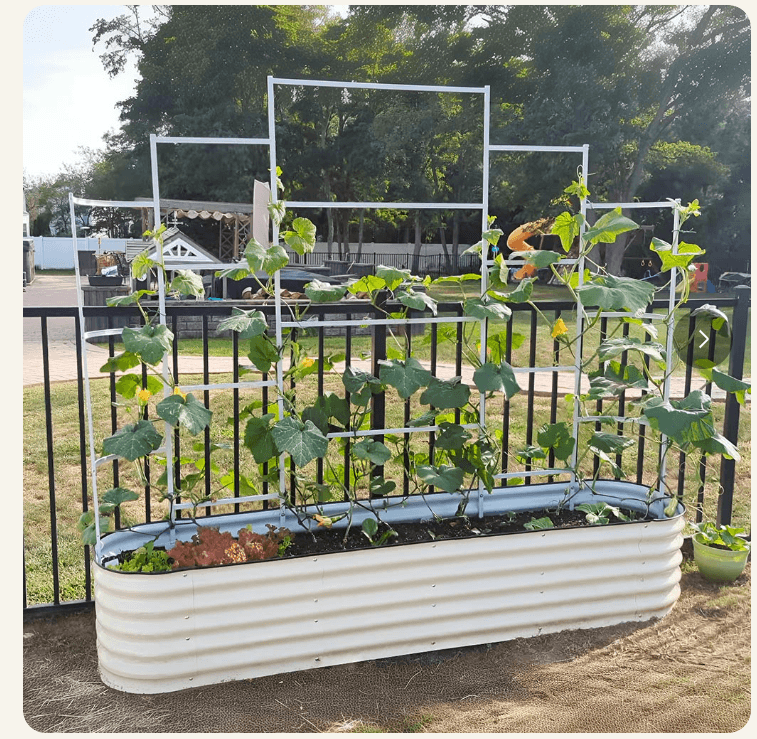
If your monstera has sparked a bigger gardening habit, moving some of that energy outdoors is a natural next step. A sturdy wall trellis gives climbing plants like vines and beans the vertical support monstera gets for free from a tree in the wild.
Check Price on Vegega →Wait Until a New Leaf Fully Opens
When a new leaf is unfurling, I skip fertilizing that week. The plant is directing enormous energy into that new leaf, and a fertilizer flush can brown the tips before it even fully opens. Wait until it hardens off — usually 5–7 days after opening.
Photograph each new leaf as it fully emerges. Over one full growing season you will see whether your fertilizer approach is actually working — leaves should get progressively larger and more fenestrated. This beats any week-to-week guessing.
What You’ll Actually Spend Per Year
Budget approach (~$15/year): Worm castings + Jack’s Classic at ⅛ dilution. Effective but requires careful dilution every time you water.
Mid-range approach (~$15–20/year): Dyna-Gro Grow (lasts 2+ years at diluted rates) + Cal-Mag supplement. This is what I use. It works exceptionally well and is genuinely affordable over time.
Premium approach (~$35–45/year): Specialty aroid fertilizer + worm castings top dressing + Cal-Mag. Completely effective, but not necessary for beautiful plants. Some growers also add a monthly dose of seaweed fertilizer, which acts as a biostimulant rather than a direct nutrient source — worth reading about if you want to go further.
The $15 budget approach with consistent application and good light will grow a better monstera than an expensive fertilizer used inconsistently. The routine matters more than the price tag.
Frequently Asked Questions
The Bottom Line
After years of trial and error, my conclusion is simple: consistency with a diluted, balanced liquid fertilizer during the growing season beats any complicated or expensive approach.
Pick a product with a roughly balanced NPK — Dyna-Gro, Espoma, or even diluted Jack’s Classic — apply it at half strength every 2–4 weeks from spring through late summer, and stop completely in winter. That covers 90% of what you need.
The other 10% is light. No fertilizer replaces bright indirect light. Get the light right, and the fertilizer does its job. Keep the plant in a dark corner, and the best product in the world will not move the needle.