
Acid Fertilizer for Blueberry Bushes in Pots: What Actually Works in 2026
A hands-on guide with real mistakes, honest results, and the pH tips most fertilizer articles leave out.
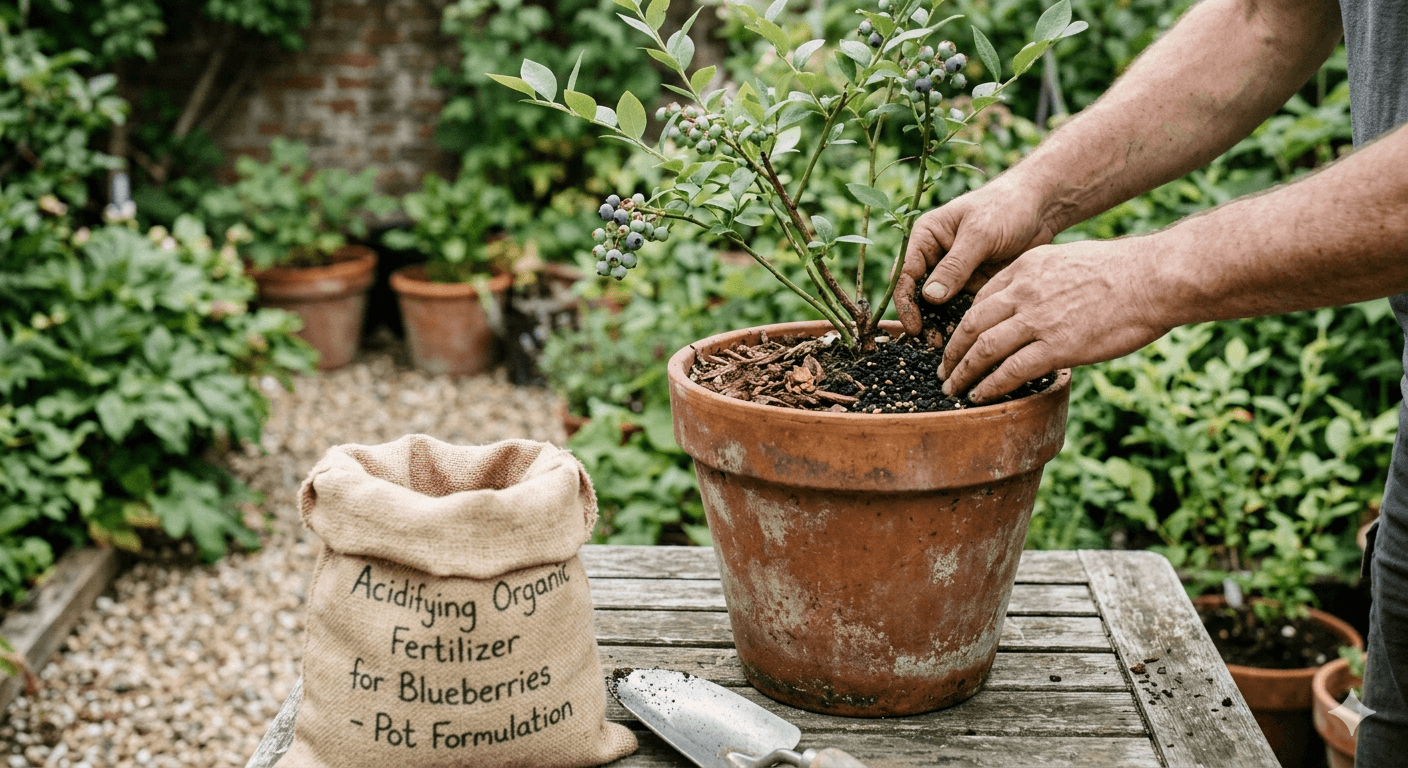
Table of Contents
Quick Summary
- Blueberries need soil pH between 4.5 and 5.5 — this is much more acidic than most plants
- Use a fertilizer labeled “for acid-loving plants” or containing ammonium sulfate
- Start feeding in early spring when new growth appears
- Never use standard balanced fertilizers — they raise pH over time
- Test your pot soil pH before every feeding season — it drifts more than you expect
- Liquid feeds give you faster control than granules in container growing
I killed my first two blueberry plants in pots before I understood what was actually going wrong. They were not overwatered. They were not underwatered. The leaves just kept going yellow and the berries were tiny, then nonexistent.
The problem turned out to be pH. And the second problem was that the fertilizer I was using was making it worse. Once I switched to a proper acid fertilizer for my blueberry bushes in pots and got the pH dialed in, everything changed. Plants that had looked sad for two years suddenly pushed out strong new growth and set fruit properly.
This guide covers exactly what I learned, in the order you need to know it.
Why Blueberries Are So Demanding About Acidity
Most fruits grow fine in soil with a pH between 6.0 and 7.0. Blueberries are genuinely different. They want pH between 4.5 and 5.5. That is significantly more acidic than even strawberries or raspberries.
The reason is not random. Blueberries evolved in naturally acidic soils, like bogs and pine forests. Their roots have a specific relationship with soil fungi that only thrives in low-pH conditions. Without that relationship, the plant cannot absorb iron, manganese, or zinc properly, even if those nutrients are physically present in the soil. This same pH-driven nutrient lockout is what turns hydrangea flowers from blue to pink — if you grow both plants, the guide on keeping hydrangeas blue with the right fertilizer explains the shared chemistry.
This is why the leaves go yellow between the veins — a symptom called iron chlorosis. The plant is starving for iron, not because the iron is gone, but because high pH has locked it away from the roots.
| Plant Type | Ideal pH Range | Blueberry Compatible? |
|---|---|---|
| Most vegetables | 6.0 – 7.0 | No — too alkaline |
| Strawberries | 5.5 – 6.5 | Borderline — still too high |
| Azaleas / Rhododendrons | 4.5 – 6.0 | Yes — ideal companions |
| Blueberries | 4.5 – 5.5 | Yes — this is their zone |
| Potting mix (generic) | 6.0 – 7.0 | No — needs acidifying |
How to Read a Fertilizer Label for Acid-Loving Plants
Walk into any garden center and you will see fertilizers labeled for “acid-loving plants.” But the label on the front is marketing. You need to look at the actual nutrient panel.
Every fertilizer shows three numbers: N-P-K. That is nitrogen, phosphorus, and potassium. For blueberries in containers, you want nitrogen to come from ammonium rather than nitrate sources.
Why Ammonium Nitrogen Matters
There are two main forms of nitrogen used in fertilizers: ammonium and nitrate. Ammonium-based fertilizers actually acidify the soil as they break down. Nitrate-based fertilizers raise soil pH over time.
Most standard balanced fertilizers use nitrate nitrogen. They will work against your pH goals every time you apply them. Look for fertilizers containing ammonium sulfate, ammonium phosphate, or urea. These acidify the growing medium as the nitrogen becomes available to the plant.
| Ingredient to Look For | Effect on Soil pH | Good for Blueberries? |
|---|---|---|
| Ammonium sulfate | Lowers pH | Yes — excellent |
| Ammonium phosphate | Slightly lowers pH | Yes |
| Urea | Mildly acidifying | Yes, acceptable |
| Calcium nitrate | Raises pH | Avoid |
| Potassium nitrate | Raises pH slightly | Avoid during fruiting |
| Sulfur (elemental) | Strongly lowers pH | Yes — for soil amendment |
The Best Acid Fertilizer Options for Blueberries in Pots
I have tried more fertilizers on my potted blueberries than I would like to admit. Here is an honest breakdown of what actually performed and what was a waste of money.
Granular Acid-Loving Plant Fertilizers
This is my go-to starting point. Pure nitrogen in ammonium form. It feeds the plant and acidifies the medium at the same time. You need to pair it with a potassium and trace mineral source, but for sheer pH management and nitrogen delivery in pots, nothing beats the cost-to-performance ratio here. Apply sparingly — it is concentrated and easy to overapply.
A popular organic option that genuinely works for blueberries. For a clear comparison of organic vs synthetic inputs across different container plants, our guide on organic vs synthetic fertilizer for potted plants is worth reading first. It contains feather meal, bone meal, and sulfur. The slow release is a benefit in containers because you avoid sudden nitrogen spikes. My only gripe is the nitrogen level is low, so you need more volume than other products. Good for the organic grower who does not mind slower results. For a full breakdown of how slow-release granules compare against liquid feeds in containers, see my guide on slow-release vs liquid fertilizer for potted plants.
High nitrogen with ammonium sources. Works well for blueberries during the vegetative growth phase in spring. It is too nitrogen-heavy for fruiting season — the high N will push leaves at the expense of berries. I use this in early spring only, then switch to a more balanced formula come June.
These vary wildly in quality. Some are genuinely ammonium-based and fine. Others use nitrate nitrogen with sulfur coating just to market themselves as “acid.” Always check the ingredient list before buying. If you cannot see the nitrogen source listed, skip it.
Liquid Fertilizers for Faster Control
In containers specifically, I now lean toward liquid fertilizers more than granules — and this is especially true for blueberries. When iron chlorosis hits a potted plant, you need to act within days, not weeks. A liquid drench gets absorbed much faster than a granule that still needs to break down. I explained this response-time gap in detail in my comparison of fertilizer spikes vs liquid feeds for container plants.
I use a diluted iron chelate solution combined with a low-pH liquid fertilizer when I see any yellowing starting. Within five to seven days the new leaves are usually a healthy dark green again. Granules simply cannot respond that fast.
How to Apply Acid Fertilizer to Potted Blueberries: Step by Step
Application method matters as much as product choice. I have burned plants by applying the right fertilizer the wrong way. Here is the sequence I follow now.
Before You Apply
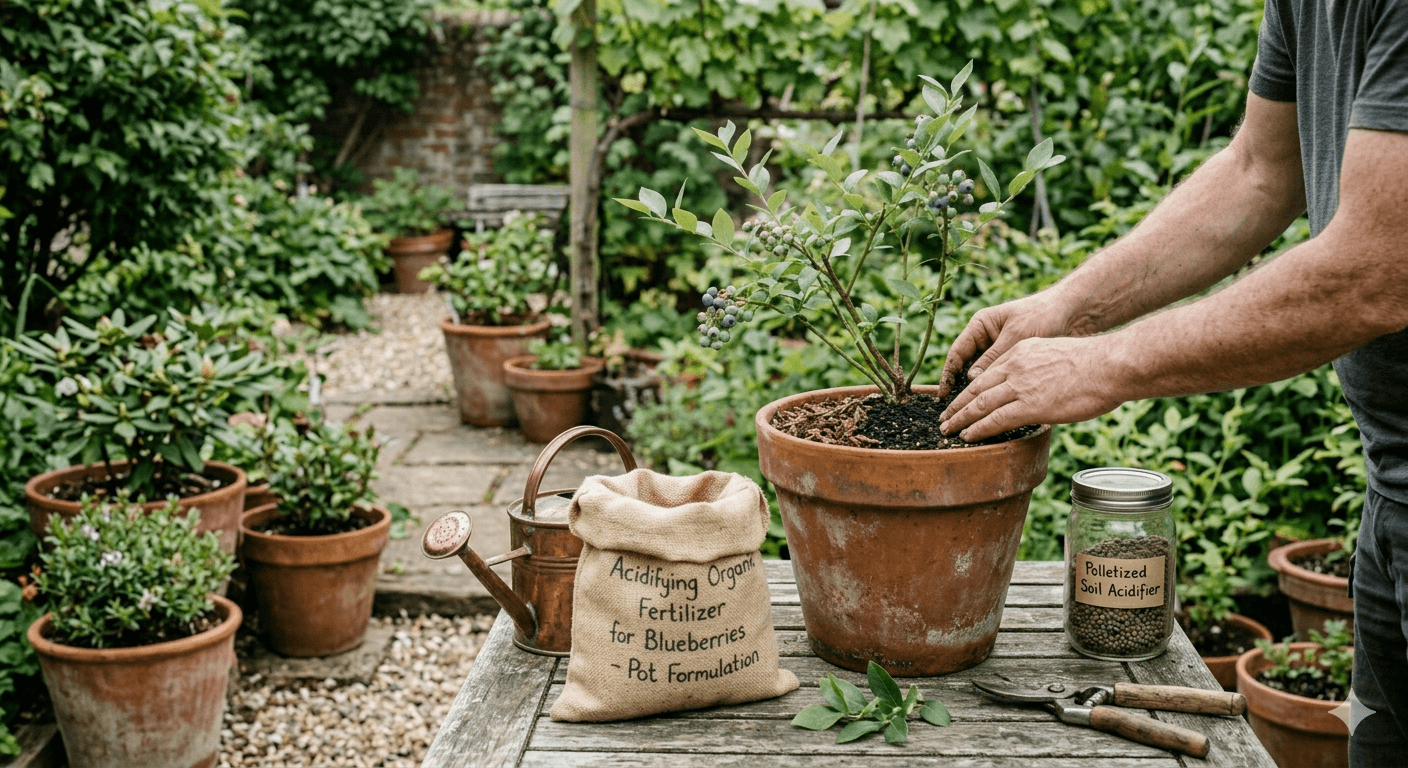
Before anything else, check the soil pH. I use a basic digital meter — they cost about ten dollars and last for years. If the pH is above 5.5, address the pH first before adding more fertilizer. Adding nutrients to high-pH soil is like pouring money into a blocked drain.
Never apply fertilizer to dry soil. Dry roots concentrate fertilizer salts at the root tips and cause burn. Water the pot until you see drainage, then wait 20 to 30 minutes before applying your feed. The University of Illinois Extension blueberry care guide flags this as one of the most common and avoidable causes of root damage in pot-grown plants.
Container plants are more sensitive than in-ground plants because salts cannot escape the confined root zone. I always start at half rate for the first two applications of any new product, then increase if the plant responds well. Blueberries are particularly sensitive to over-fertilizing.
During and After Application
For granules, scatter them across the whole pot surface and keep them away from the main stem. For liquids, apply to the whole soil surface slowly so it soaks in rather than running straight out of drainage holes.
After applying granules, give the pot another gentle watering. This moves the fertilizer down into the root zone and prevents the granules from sitting dry on the surface where they can burn if they touch the stem.
Container soil accumulates fertilizer salts over time. Once a month during the growing season, I water the pot slowly and heavily — until I have pushed about double the pot’s volume of water through it. This clears out salt buildup and keeps the soil from becoming toxic to the roots.
Testing and Fixing Soil pH in Pots
You cannot manage what you do not measure. This is especially true for blueberries. I test my potted blueberries twice a year: once in early spring before feeding starts, and once in midsummer. If you want to go deeper on feeding frequency for container-grown plants specifically, the Plantura guide on feeding blueberries is one of the most thorough breakdowns I have found on timing by growing method.
How to Test Correctly
Push the probe of your pH meter about two inches into the moist soil. Do not test dry soil — you will get wildly inaccurate readings. Take readings from three different spots in the pot and average them. A single reading can be misleading if there are pockets of different pH in the medium.
How to Lower pH That Has Crept Too High
If your pH has gone above 5.5, there are two main approaches:
| Method | Speed | How to Use | My Rating |
|---|---|---|---|
| Elemental sulfur | Slow (weeks to months) | Work into top inch of soil — soil bacteria convert it to sulfuric acid gradually | |
| Ammonium sulfate drench | Moderate (days to weeks) | Dissolve in water and apply as a drench — acidifies quickly and feeds nitrogen | |
| Acidified water (pH-adjusted) | Fast (immediate effect on water pH) | Add citric acid or white vinegar to water to bring water pH to 5.5 before watering | |
| Repot with ericaceous compost | Immediate (for new soil) | Replace the potting mix with a purpose-made acidic ericaceous blend |
Mistakes That Seriously Harm Potted Blueberries
These are the errors I see most often, and most of them I have made myself at least once.
Generic potting soil is pH 6.0 to 7.0. Plant a blueberry in it and you are starting in the wrong place before you even begin feeding. Always use ericaceous or acidic compost, or amend regular mix heavily with sulfur and pine bark.
Tap water in most areas is pH 7.0 or above. Over months of watering, this gradually raises your soil pH no matter what you do with fertilizer. Test your tap water. If it is above 7.0, consider acidifying it or collecting rainwater instead.
Blueberries should stop receiving nitrogen fertilizer by late summer. Late feeding pushes soft new growth that does not harden before frost. I lost an entire plant this way after it pushed a flush of new growth in September and then got hit by an early frost.
High nitrogen during berry ripening gives you larger leaves and smaller fruit. The plant puts its energy into vegetative growth rather than swelling the berries. Cut nitrogen during fruiting and increase potassium instead.
Fertilizer salt buildup in containers is real and cumulative. I once had a plant that looked progressively worse despite perfect watering and feeding — turned out to be salt toxicity from two years without flushing. The roots looked like they had been chemically damaged.
It does not. Even ericaceous compost drifts toward neutral over time, especially with regular watering. You need to actively maintain pH through your feeding choices, not just rely on the starting medium.
Signs Your Blueberry Is Finally Responding Well
When everything is right, blueberries in pots are genuinely gratifying to grow. Here is what healthy and happy looks like:
- New leaves emerge a healthy, deep green rather than pale yellow or lime green
- The plant pushes consistent new growth in spring — multiple strong shoots rather than one or two weak ones
- Flower buds form on last year’s wood in early spring without dropping prematurely
- Developing berries plump up evenly and do not drop before ripening
- Leaves stay green throughout the growing season — yellowing between veins means pH has crept up
- The autumn leaf color (red and orange) is vivid — stressed plants often skip this and just brown and drop
Full Season Feeding Schedule for Potted Blueberries
This is the schedule I follow for my containers, refined over several growing seasons. Adjust timing by a few weeks based on your climate.
Spring: Building the Plant Up
As buds start to show movement, apply a diluted ammonium sulfate feed at half strength. Soil temperature should be above about 7°C (45°F) for roots to absorb it effectively. Do not feed into frozen or very cold soil — the plant cannot use it and it just acidifies the medium without benefit.
Switch to your main acid fertilizer for blueberry plants. Apply every three to four weeks for granules, or every two weeks for liquid feeds at half strength. This is when the plant is building its canopy and setting the structure for fruiting.
Summer: Shifting to Fruit
Once flowers open, back off nitrogen slightly and look for a feed with higher potassium. Something like 5-5-15 or a dedicated berry feed works well here. Potassium helps cell wall development and makes berries plumper and better flavored. The same principle of shifting nutrients at fruit-set is covered in depth in our guide on using a bloom booster at the right stage of growth.
Keep potassium inputs steady. Do not apply high nitrogen now — it will push soft growth at the expense of the fruit. This is also when I do my second pH test of the year and correct if needed before the season ends.
Late Season: Winding Down Safely
The plant needs to harden off its new growth before winter. Stop all nitrogen feeding by the end of August in most climates. You can continue with a very low potassium and phosphorus feed to help root hardening, but no nitrogen.
The plant is dormant. Do not feed. Make sure drainage is excellent and the pot does not sit in standing water over winter, as waterlogged frozen roots are the most common way to lose a potted blueberry over winter.
The Bottom Line
Getting acid fertilizer right for blueberry bushes in pots comes down to three things: the right pH, the right nitrogen source, and consistent monitoring. The plants will reward you when you get this right.
You do not need the most expensive fertilizer on the shelf. You need the right chemistry. Ammonium-based nitrogen, consistent potassium, and active pH management will outperform any fancy product applied to alkaline soil.
- Target soil pH: 4.5 to 5.5 — test it, do not guess
- Choose ammonium-based nitrogen — avoid nitrate sources
- Flush your pots monthly to prevent salt buildup
- Liquid feeds give faster control than granules in containers
- Stop nitrogen by late August to let the plant harden for winter
- Chelated iron on hand — use it fast when you see yellowing