
Fertilizer Spikes vs Liquid Fertilizer for Indoor Plants: What I Wish I Knew Before I Killed My First Monstera
A two-season comparison with real mistakes, honest results, and the tips most care guides leave out.
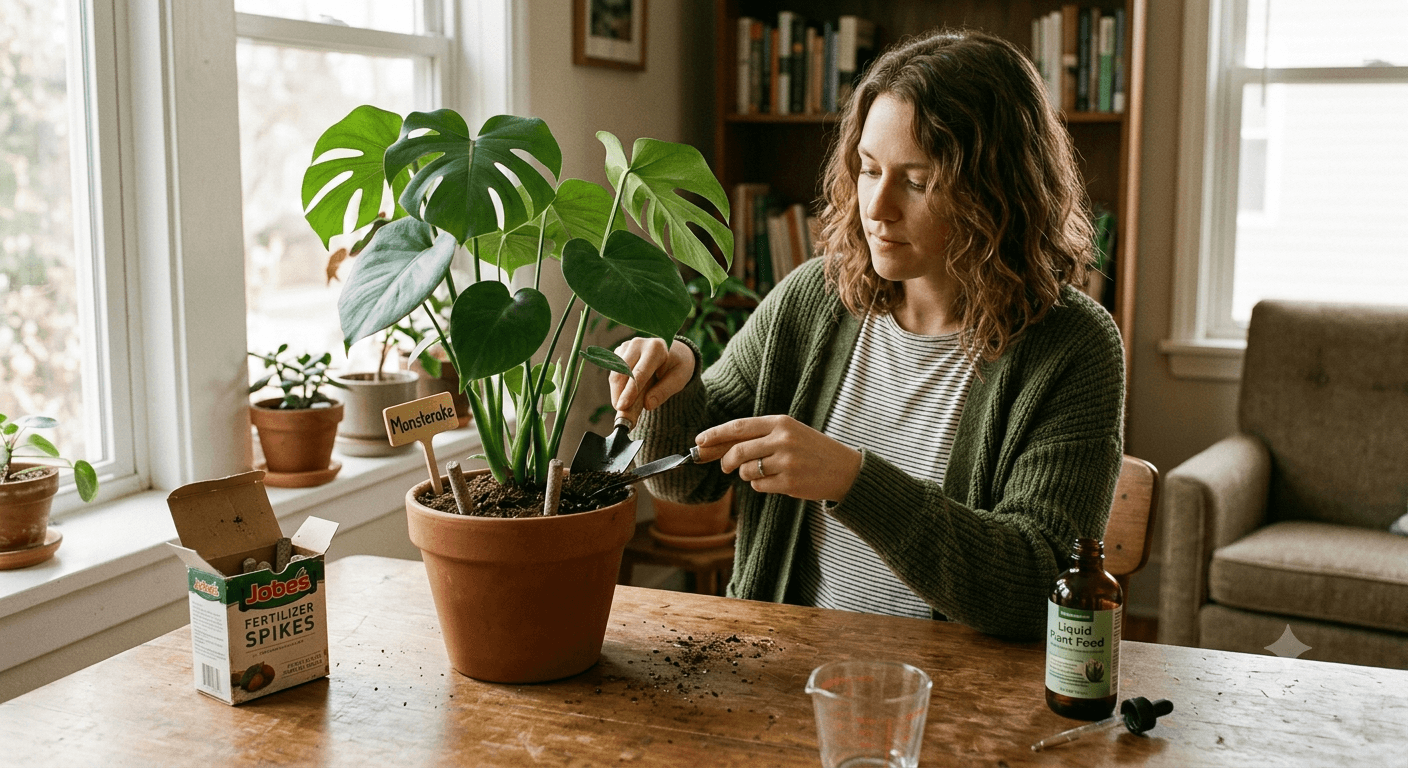
I lost a beautiful monstera to over-fertilization three years ago. Not from neglect. From trying too hard.
I had just discovered fertilizer spikes and thought I was being clever. Poke them in, forget about them, plants thrive. Easy. Except my monstera’s leaves started yellowing at the edges, the roots rotted near the spikes, and within two months the whole plant was done.
That mistake sent me down a rabbit hole. I tested both methods across a dozen different indoor plants over two growing seasons. Pothos, peace lilies, snake plants, fiddle-leaf figs, orchids — the works.
What I found surprised me. The answer to the fertilizer spikes vs liquid fertilizer question is not as simple as most articles make it sound.
Here is everything I learned, including the mistakes that cost me time, money, and more than a few plants I really loved.
What Are Fertilizer Spikes, Really?
Fertilizer spikes are compressed sticks of slow-release nutrients. You push them into the soil near the root zone, and they break down gradually over weeks or months as you water.
The main brands you will see are Jobe’s, Miracle-Gro, and a few house-brand options at garden centers. They come pre-measured for pot sizes, which is genuinely useful.
The idea is passive feeding. You do not have to think about it. You water normally, the spike dissolves slowly, and the plant feeds.
That uneven distribution is the root of most spike-related problems — literally and figuratively. The University of Minnesota Extension’s guide on fertilizing houseplants echoes this, noting that nutrient concentration and soil volume are critical factors most home growers overlook.
What Is Liquid Fertilizer and How Does It Actually Work?
Liquid fertilizer comes in two main forms: concentrated liquid you dilute with water, and water-soluble granules or powder you mix yourself.
When you apply it, the nutrients spread evenly through the entire root zone with each watering. Every root gets access to roughly the same concentration of nutrients at the same time.
The most common types for indoor plants are balanced NPK formulas like 10-10-10 or 20-20-20, bloom boosters higher in phosphorus, and specialized mixes for orchids or succulents.
Liquid fertilizer works fast. You will often see a response within one to two weeks. That speed is a double-edged sword though, which I will get into below.
Fertilizer Spikes vs Liquid Fertilizer: The Real Comparison
Here is what I actually observed over two growing seasons — not what the packaging claims.
| Category | Fertilizer Spikes | Liquid Fertilizer | Winner |
|---|---|---|---|
| Ease of use | Push in once, forget for months | Mix and apply every 2 weeks | Spikes |
| Nutrient distribution | Concentrated around spike only | Even coverage across all roots | Liquid |
| Control & adjustability | Hard to remove once placed | Adjust dose anytime | Liquid |
| Speed of results | 3–6 weeks to see uptake | Visible response in 1–2 weeks | Liquid |
| Burn risk | Localized near spike | Whole-pot if overdosed | Tie |
| Cost | $8–$12 per pack | $15–$30, lasts 12+ months | Liquid (long-term) |
Ease of Use
Spikes win here, no question. You push them in once every one to three months and you are done. If you travel frequently, forget to fertilize consistently, or have a large collection you do not want to monitor closely, spikes remove the mental load entirely.
Liquid fertilizer requires you to mix, measure, and apply on a schedule. Every two weeks during the growing season for most plants. Miss a few applications and you fall behind. Apply too strong a concentration and you burn the roots.
Nutrient Distribution
Liquid fertilizer wins by a wide margin. Every part of the root system receives nutrition. Full control over concentration is always in your hands. Dosing adjusts based on how the plant looks, and flushing the soil is straightforward if something goes wrong.
With spikes, you are committed to wherever you placed them. If you placed them wrong — too close to the stem, too near a sensitive root cluster — you can cause localized nutrient burn before you even realize there is a problem.
I started noticing root damage from spikes specifically in smaller pots. A six-inch pot does not have enough soil volume to dilute the concentration effectively. A twelve-inch pot handles spikes much better.
Control and Adjustability
Liquid fertilizer gives you far more control. Half-dosing works well for sensitive plants. During heavy growing phases, increase the strength as needed. Switching formulas based on whether a plant is vegetating or trying to flower is simple. In winter, when many houseplants go semi-dormant, stopping entirely is the smart move.
With spikes, once they are in the soil, you cannot easily remove them. If your plant starts showing stress, you are somewhat stuck waiting for the spike to deplete. Flushing with water helps but does not fully neutralize the issue quickly.
The Mistakes I Made (So You Do Not Have To)
-
1Using spikes in small pots Anything under eight inches in diameter is risky territory for spikes. The soil volume cannot buffer the concentration properly. I burned the roots of a four-inch peace lily this way. It recovered, but it took months.
-
2Fertilizing a stressed plant A plant already struggling from root rot, extreme dryness, or a recent repot does not need fertilizer. It needs stability first. Adding fertilizer to a stressed plant is like force-feeding someone who is already sick. Wait until a plant shows new growth before resuming any feeding program.
-
3Fertilizing in winter Most indoor plants slow down significantly between November and February. Their nutrient needs drop dramatically. Continuing at the same rate as summer is a fast track to salt accumulation and root damage. I cut back to once a month with half-strength liquid fertilizer in winter, or skip entirely for plants that go truly dormant. The Royal Horticultural Society’s plant feeding guide recommends stopping entirely for most houseplants from late autumn through late winter.
-
4Never flushing the soil If you use liquid fertilizer regularly, salt builds up in the soil over time even if you are dosing correctly. Every two to three months, run plain water through the pot slowly until it drains freely for several minutes. You can tell when a plant needs it because you start to see white crusty deposits on the soil surface or around the drainage hole.
-
5Using the wrong NPK ratio High nitrogen promotes leafy growth. High phosphorus supports roots and flowering. Using a bloom booster on a foliage plant will give you a plant that barely grows new leaves. Using a high-nitrogen formula on a plant you want to bloom will give you a lush, leafy plant that refuses to flower. Read our full guide to understanding NPK ratios before buying your next fertilizer.
When Spikes Actually Make Sense
I want to be fair to spikes because they genuinely have a place.
Large potted trees and shrubs benefit from spikes because the soil volume is high enough to prevent localized concentration issues. My indoor citrus tree does well with spikes placed evenly around the outer edge of the pot, away from the trunk.

This is the one I actually reach for once a plant graduates to a big pot. It’s formulated for trees and shrubs specifically, not a generic all-purpose blend, which matters once the soil volume gets this large.

This is what actually turned my citrus tree around, not a fertilizer change. The stand adjusts tall enough to sit next to a full-size potted tree, and running it through the darker months made a bigger visible difference than anything I did with feeding.
Plants in self-watering pots or wicking systems sometimes respond better to spikes because the bottom-up watering pattern does not evenly distribute liquid fertilizer the same way.

This is the exact setup I mean by a self-watering pot. The side window shows the reservoir level so you’re never guessing, and the bottom-up watering is why I stopped fighting with liquid fertilizer on this plant and switched it to a spike instead.
Spikes are also genuinely useful as a seasonal backup if you know you are going to be away for six weeks or more and your plants will be on minimal care.
When Liquid Fertilizer Is Non-Negotiable
If you are serious about getting your plants to their peak, liquid is the way to go.
Propagations and seedlings need gentle, precise nutrition. Liquid diluted to quarter strength is far safer than any spike. Plants recovering from pests, root rot, or repotting stress need controlled, adjustable feeding. Liquid gives you that.
Orchids, carnivorous plants, and other specialists often need very specific formulas that simply are not available in spike form. Any plant showing deficiency symptoms needs fast-acting nutrition. Liquid gets there in days. Spikes take weeks.
Advanced Tips Most Articles Skip
Use worm castings as a slow-release base. Adding a small amount to your potting mix when you repot provides gentle, long-term nutrition without the salt accumulation risk of synthetic fertilizers. According to The Old Farmer’s Almanac’s houseplant fertilizing advice, organic amendments worked into the potting mix at repotting time remain one of the most underrated strategies for sustained plant health.
Watch the water quality. Tap water with high chlorine or fluoride content can interfere with nutrient uptake and cause tip burn that looks like fertilizer damage. Let tap water sit overnight before using it, or switch to filtered water.
Rotate your fertilizer occasionally. If you have been using the same formula for more than a year, consider switching to something with a slightly different micronutrient profile. Trace elements like iron, magnesium, and calcium can become depleted in ways a standard NPK formula does not address.
The leaf is your report card. Pale green or yellow older leaves usually mean nitrogen deficiency. Purple or dark coloration on leaf undersides can mean phosphorus issues. Brown leaf edges from the tip inward are often salt burn, not deficiency. Learning to read these signs will make your fertilization decisions much more precise.
My Honest Verdict
For most people with a small to medium indoor plant collection and any real investment in their plants doing well, liquid fertilizer is the better choice. The control it gives you is worth the minor additional effort.
That said, spikes have legitimate uses in large pots, as a travel solution, and for robust plants that do not require much precision.
The worst outcome is treating either method as foolproof. Plants will always communicate what they need. Your job is to learn to read them.
Frequently Asked Questions
Can I use both fertilizer spikes and liquid fertilizer at the same time?
You can, but be very careful. This is a common cause of over-fertilization. If you use spikes, reduce your liquid applications significantly or skip them during the spike’s active period. More is almost never better with fertilization.
How do I know if I have over-fertilized my plant?
The most common signs are brown or crispy leaf tips and edges, sudden wilting despite adequate moisture, white crusty buildup on the soil surface, and yellowing that starts at the leaf margins. If you suspect over-fertilization, flush the soil thoroughly with plain water immediately.
Do fertilizer spikes work for all indoor plants?
No. Avoid spikes for orchids, cacti and succulents in small pots, carnivorous plants, and seedlings. These either need specialized formulas, have sensitive roots, or are in containers too small to safely dilute the concentration.
How often should I fertilize indoor plants with liquid fertilizer?
During the active growing season — typically spring through early fall — every two weeks at the recommended strength works well for most plants. In winter, reduce to once a month at half strength, or stop entirely for plants that slow down significantly.
Are organic fertilizers better than synthetic ones for indoor plants?
Neither is strictly better. Organic fertilizers release more slowly, improve soil biology over time, and carry much lower risk of burning roots. Synthetic fertilizers work faster and allow more precise control. Many experienced growers prefer a combination: organic amendments worked into the soil at repotting, with occasional synthetic liquid feeding for targeted nutrition during peak growth.