
Compost for Raised Bed Garden: What I Use, How Much I Add, and the Mistake That Killed My Tomatoes
This post contains affiliate links. If you buy through them, TerraFertilizer may earn a small commission at no extra cost to you.
My first raised bed looked perfect.
Fresh cedar boards, dark fluffy soil, and a truckload of “premium” compost I was proud of.
Six weeks later, my tomato leaves were curling inward like little fists.
The peppers stopped growing and the beans came up twisted.
It took me two seasons to figure out the problem was the compost itself.
If you are trying to pick the right compost for raised bed garden setups, this guide will save you from what I went through.
It covers the types, the mix, how much to buy, real costs, and the hidden risk almost nobody warns you about.
Quick Answer
The best compost for a raised bed garden is a blend of two finished composts, usually leaf compost plus a tested manure compost, making up about 40 percent of your soil mix.
Mix it with about 40 percent topsoil and 20 percent perlite or fine bark.
Never fill a bed with compost alone, and always run a simple bean test on manure based compost before planting tomatoes, peppers, or beans.
After the first year, add 1 to 2 inches of compost on top every fall.
Key Takeaways
- A 4 by 8 foot bed, 12 inches deep, needs about 13 cubic feet of compost.
- Bulk compost costs roughly a third of what bags cost for the same bed.
- Herbicide residue in manure compost is the most common hidden cause of curled tomato leaves.
- Good compost smells earthy, crumbles in your hand, and is never hot inside.
- Leave yearly compost on top instead of digging it in.
Why Compost Matters More in a Raised Bed Than in the Ground
A raised bed is basically a big container.
Your plants cannot send roots deep into native soil to find food and water.
Whatever you put in that box is almost everything they get.
In a regular garden, poor soil is a slow problem.
In a raised bed, poor soil shows up fast.
Compost does three jobs inside a bed:
- Slow feeding: it releases nutrients over the whole season.
- Water holding: it soaks up moisture like a sponge, so the bed does not dry out by noon in July.
- Living soil: it keeps the mix loose and full of the fungi and microbes roots depend on.
Raised beds also drain faster than ground soil.
That is great in spring, but in summer it means nutrients wash out quicker.
Good compost is what holds everything together.
My First Year: What I Got Wrong
I built two 4 by 8 foot beds, each 12 inches deep.
I thought more compost meant better results, so I filled them almost entirely with bulk compost from a local supplier.
It was cheap and it smelled like a forest floor.
Here is what happened.
The soil sank almost four inches by midsummer.
The plants grew tons of leaves but fewer fruits.
And the curled tomato leaves turned out to be herbicide residue from manure that went into that compost.
I did not even know that was possible.
In year two I changed my mix, tested every load, and the difference was honestly shocking.
Same beds, same seeds, about double the harvest.
If you have not built your beds yet, start with my guide on how to build a raised garden bed, then come back here for the soil.
How to Choose Compost for a Raised Bed Garden
Not all compost is the same.
The word “compost” on a bag can mean anything from rotted leaves to processed city waste.
Bagged compost vs bulk compost
Bagged compost is easy and fairly consistent.
You can read the ingredients and carry it home in your car.
The downside is cost, because filling even one bed with bags adds up fast.
Bulk compost comes by the cubic yard from landscape suppliers or city composting programs.
It is much cheaper per cubic foot, but quality changes from one load to the next.
I use bulk for filling new beds and bags for small top ups.
Types of compost and what each one is good for
Leaf compost (leaf mold): My favorite for structure. It holds water beautifully and is very gentle, but it is low in nutrients.
Manure based compost: Rich and great for heavy feeders like tomatoes and squash. It is also the type most likely to carry herbicide residue.
Mushroom compost: Spent material from mushroom farms. Nice texture, but it can be high in salts. I only use it in small amounts.
Worm castings: The best quality per scoop. Too expensive to fill a bed, but amazing in planting holes.
Municipal compost: Made from city yard waste. Often cheap or free. Some is excellent, some has bits of plastic in it.
Homemade compost: You control the ingredients, but most people cannot make enough to fill a new bed.
| Compost type | Nutrients | Water holding | Risk level | Best use |
|---|---|---|---|---|
| Leaf compost | Low | Very high | Low | Base of the mix |
| Manure compost | High | Medium | Medium to high (herbicides) | Heavy feeders, after testing |
| Mushroom compost | Medium | Medium | Moderate (salts) | Small amounts only |
| Worm castings | High | High | Very low | Planting holes, top dressing |
| Municipal compost | Medium | Medium | Varies | Filling large beds cheaply |
| Homemade | Varies | High | Low if you know your inputs | Yearly top ups |
How to tell good compost from bad compost
I check every load with my hands and nose before it goes anywhere near a bed.
| Check | Good compost | Bad compost |
|---|---|---|
| Smell | Earthy, like a forest floor | Sour, rotten eggs, or ammonia |
| Color | Dark brown to almost black | Light brown with visible straw or chunks |
| Texture | Crumbly, breaks apart easily | Slimy, sticky, or full of big wood pieces |
| Temperature | Same as the air around it | Warm or hot when you dig in |
| Contents | No recognizable scraps | Plastic, glass, eggshell chunks, food bits |
| Moisture | Like a wrung out sponge | Dripping wet or dusty dry |
Some bagged products labeled “compost” are mostly ground bark or forest products with little real compost in them.
If the bag feels light and woody, read the ingredients closely.
Woody material can tie up nitrogen while it breaks down, and your seedlings will turn pale.
Blend at least two types of compost.
Every compost has a weakness, and mixing them covers the gaps.
How Much Compost to Put in a Raised Bed
This is the question I get most, and the answer surprised me.
Do not fill a raised bed with only compost.
Pure compost is too rich, it shrinks a lot, and it can stay soggy in wet weather.
The mix I use now
- Topsoil (40%): screened topsoil or garden soil
- Compost (40%): ideally two types blended
- Drainage (20%): perlite, pumice, or fine pine bark for air
Some gardeners swear by one third compost, one third peat or coconut coir, and one third vermiculite.
It works, but it is expensive and settles more than people expect.
The soil based mix is cheaper and holds nutrients better over the years.
If your beds are deep, 18 inches or more, fill the bottom with plain topsoil and keep the richest mix in the top 8 to 10 inches where most roots live.
For a full breakdown of every ingredient, see my guide to the best soil for raised garden beds.
How to calculate the volume
Multiply length by width by depth, all in feet.
A 4 by 8 foot bed that is 1 foot deep holds 32 cubic feet.
One cubic yard equals 27 cubic feet, so that bed needs a little over one cubic yard of total mix.
At 40 percent compost, that is about 13 cubic feet of compost.
Add 10 to 15 percent extra because everything settles.
I learned that one the hard way when I had to buy more halfway through the season.
| Bed size | Total mix needed | Compost needed (40%) |
|---|---|---|
| 4 x 4 ft, 12 in deep | 16 cubic feet | About 6.5 cubic feet |
| 4 x 8 ft, 12 in deep | 32 cubic feet | About 13 cubic feet |
| 4 x 8 ft, 17 in deep | 45 cubic feet | About 18 cubic feet |
| 2 x 8 ft, 12 in deep | 16 cubic feet | About 6.5 cubic feet |
The Raised Beds I Fill With This Compost Mix
The bed matters more than people think when it comes to compost.
A taller bed holds more soil, so it stays moist longer and gives roots room to reach the richer layer.
It also means more compost to buy, so plan your budget around the height you pick.
My wooden beds are where I learned all of this, but my newer beds are metal kits from Vegega.
They do not rot, they do not bow, and the corrugated panels hold heavy wet compost without flexing.
These are the two sizes I would point a friend to.
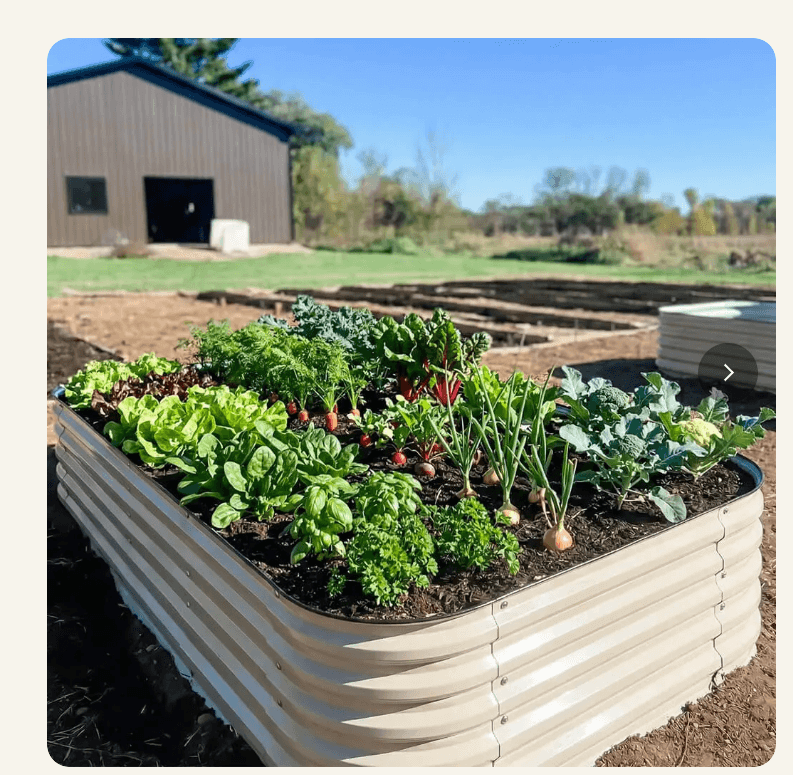
Vegega 17″ Tall 4×8 Metal Raised Garden Bed
| Size | 4 x 8 feet, 17 inches tall |
| Soil volume | About 45 cubic feet |
| Compost needed (40% mix) | About 18 cubic feet |
| Best for | Most vegetables, tomatoes, root crops |
Pros
- Deep enough for carrots and potatoes
- Holds moisture well with a compost mix
- No rot, no bowing like wood
- Fills at a reasonable cost with bulk soil
Cons
- Still need to bend to harvest
- Metal can warm the edges in hot climates
Verdict: The sweet spot for most gardeners. Deep enough for great roots, but not so deep that filling it with compost breaks your budget.
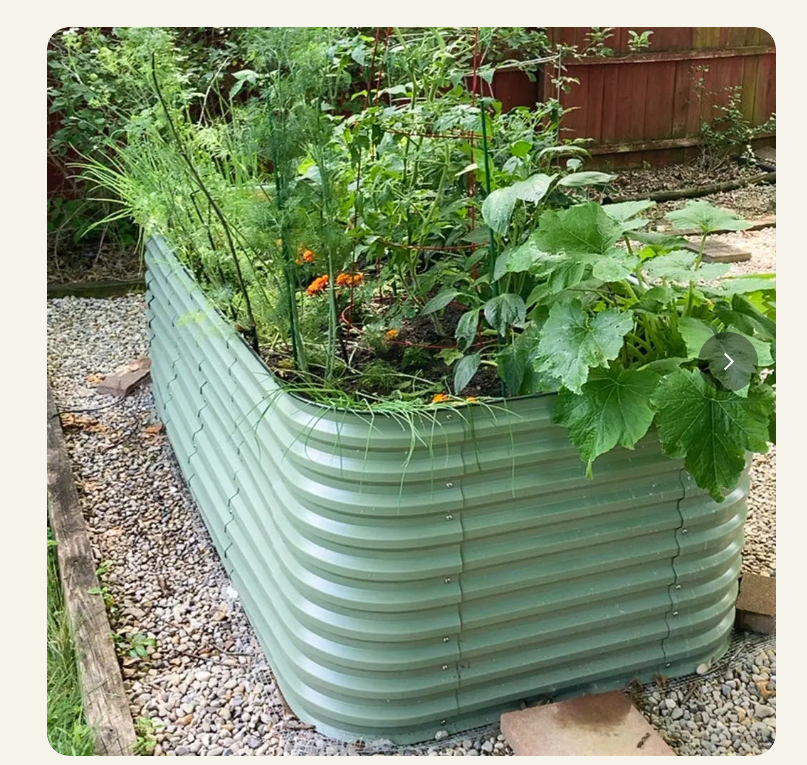
Vegega 32″ Tall 4×8 Metal Raised Garden Bed
| Size | 4 x 8 feet, 32 inches tall |
| Best for | Bad backs, knees, and anyone who hates kneeling |
| Compost tip | Fill the bottom half with logs, branches, and leaves, then keep the compost mix in the top 12 inches |
Pros
- Garden standing up, no kneeling
- Very deep root zone
- Great for heavy feeders like tomatoes and squash
Cons
- Needs a lot more fill material
- Settles more in the first year, plan to top up
Verdict: Worth every penny if bending hurts. Use cheap filler at the bottom so you only buy good compost for the top layer.
Comparing more sizes? I go deeper in my best 4×8 raised garden bed for vegetables guide.
Step by Step: Filling a New Raised Bed With Compost
-
Prepare the bottom
If you are building on grass, lay plain brown cardboard down first.
Remove tape and staples.
It smothers the grass and breaks down within a few months.
Skip landscape fabric, because it blocks worms and deep roots. More on this in what to put in the bottom of a raised garden bed.
-
Test your compost before it goes in
Run the bean test I explain in the risks section below.
Do it with every new bulk load, no exceptions.
-
Mix everything on a tarp
Layering soil and compost separately creates zones that drain differently.
I dump everything on a big tarp and turn it with a shovel until the color looks even.
-
Fill in stages and water each layer
Add about 4 inches, soak it, then add more.
This settles the soil now instead of in July.
-
Overfill slightly
Mound the mix an inch or two above the top edge.
It will drop.
-
Wait a week before planting
Let the bed settle and let the microbes wake up.
Top up any low spots, then plant.
Adding Compost to an Existing Raised Bed Every Year
Your plants pull nutrients out every season.
The soil also breaks down and sinks a little each year.
Here is my routine.
In fall, after I pull the spent plants, I spread 1 to 2 inches of compost across the top.
I do not dig it in.
Worms and rain pull it down over winter, and digging breaks up the soil structure that took a year to build.
In spring, I add a handful of worm castings to every planting hole.
For heavy feeders, I side dress with a little more compost around midsummer.
Growing a few tomatoes in containers too? My guide to the best homemade fertilizer for tomatoes in pots covers compost tea and worm castings in more detail.
Compost alone rarely gives tomatoes and peppers everything they need, so I also mix in a slow release organic fertilizer at planting.
If you prefer a balanced granular feed, my 13-13-13 fertilizer guide explains when it helps a vegetable bed and when it backfires.
If your bed has dropped more than a couple of inches, refill with compost mixed with topsoil, not pure compost.
Common Mistakes and Hidden Risks With Raised Bed Compost
These are the problems that cost me money, time, and plants.
Herbicide carryover: the one nobody warns you about
Some weed killers used on hay fields and pastures pass straight through animals and survive the composting process.
According to NC State Extension research on herbicide carryover, the main ones are picloram, clopyralid, and aminopyralid, and they can stay active in manure and compost for a surprisingly long time.
Tomatoes, peppers, potatoes, beans, peas, and lettuce are all sensitive.
The signs are cupped or twisted leaves, fern like new growth, and plants that just stall.
You cannot see it, smell it, or fix it quickly.
Fill three small pots with two parts compost and one part regular potting mix.
Fill three more pots with plain potting mix as a comparison.
Plant three bean or pea seeds in each pot.
Wait two to three weeks until each plant has three sets of true leaves.
If the compost pots show curled or deformed leaves, that load stays away from your vegetables.
The Oregon State Small Farms program recommends asking suppliers what the animals were fed and where the hay came from before you buy any manure product.
That one question has saved me from two bad loads since.
Using fresh manure
Fresh manure is not compost.
It can burn roots and carry pathogens.
If it still smells like manure, it is not ready.
Adding too much compost
Too much compost can build up phosphorus over the years and push leafy growth instead of fruit.
If your tomatoes look like jungle bushes with three tomatoes on them, this is a likely reason.
Using unfinished compost
Compost that is still breaking down can steal nitrogen from your plants.
Finished compost is dark, crumbly, and smells earthy, not sour or hot.
Going heavy on mushroom compost
I once used a lot of it in a lettuce bed and the leaf edges browned.
Keep it under about 20 percent of your mix.
Skipping a soil test
A basic test after your first season shows your pH and what you have too much or too little of.
It turns guessing into real decisions.
Composting treated grass clippings
If your lawn or your neighbor’s lawn gets a broadleaf weed killer, those clippings can carry the same herbicide problem into your homemade compost.
What to do if your bed is already contaminated
This was me in year one, so I know the sinking feeling.
Here is what actually helped.
- Switch crops for a season. Corn, onions, and most grasses tolerate these herbicides, so grow those while the soil recovers.
- Remove what you can. If the bed is new and the problem is obvious, scooping out the top layer and replacing it is often faster than waiting.
- Keep the soil active. Warm, moist, biologically active soil breaks these chemicals down faster than a dry pile does.
- Retest before replanting. Run the bean test on the bed soil itself before you plant sensitive crops again.
Do not add more manure compost to “dilute” it.
That is exactly how some gardeners make the problem last another year.
Troubleshooting: What Your Plants Are Telling You
Most compost problems show up in the leaves first.
This is the table I wish I had taped to my shed door in year one.
| What you see | Likely cause | What to do |
|---|---|---|
| Cupped, twisted, or fern like new leaves | Herbicide residue in manure compost | Stop adding that compost, bean test the bed, switch to tolerant crops |
| Pale yellow lower leaves | Low nitrogen or woody, unfinished compost | Add finished compost and a nitrogen rich organic fertilizer |
| Huge green plants, few flowers or fruits | Too much nitrogen rich compost | Skip compost next top up, use a lower nitrogen fertilizer for fruiting |
| Brown, crispy leaf edges on lettuce or beans | Salt buildup, often from mushroom compost | Water deeply a few times to flush salts, cut mushroom compost next year |
| Soil sank several inches | Too much compost in the original fill | Refill with a topsoil and compost blend, not pure compost |
| White fuzzy growth on the surface | Usually harmless fungi breaking down organic matter | Leave it alone, it is a sign of living soil |
| Bed stays soggy for days after rain | Too much compost or fine material, poor drainage | Mix in perlite, pumice, or coarse bark |
Costs and Realistic Expectations
Prices vary a lot by region, but here is roughly what I have paid.
| Option | Typical cost | Notes |
|---|---|---|
| Bagged compost (1 cubic foot) | $6 to $12 per bag | Easy and consistent, adds up fast |
| Bulk compost (1 cubic yard) | $30 to $60 | Plus delivery, often $50 to $100 |
| Municipal compost | Free to $25 per yard | Quality varies, always test it |
| Worm castings | $15 to $30 per small bag | Use sparingly |
| Bagged raised bed mix | $10 to $15 per bag | Convenient but pricey for big beds |
For one 4 by 8 foot bed, 12 inches deep:
- All bagged: around $250 to $400
- Bulk soil and compost blend: around $80 to $150 including delivery
If you have two or more beds, bulk almost always wins.
What to expect season by season
Year one: New beds often do great because fresh compost is full of nutrients.
Year two: Yields can dip if you did not top up in fall.
Year three and beyond: If you keep adding compost every year, the soil gets darker, softer, and easier to work.
That is when raised beds really start to pay off.
Insider Tips Most Compost Guides Skip
Ask the supplier what goes into their compost
If they cannot tell you the manure source or whether they test for herbicides, buy somewhere else.
Buy in fall, not spring
Suppliers are less busy, delivery is easier to book, and the compost has all winter to mellow in your beds.
Do the squeeze test
Grab a handful and squeeze.
It should feel like a wrung out sponge and crumble when you open your hand.
If water drips out, it is too wet and may have gone sour.
Mulch on top of your compost
A layer of straw or shredded leaves keeps compost from drying out and blocks weeds.
My watering dropped a lot once I started doing this.
Match the compost to the crop
Not every plant wants the same amount of food.
This is how I split my beds now.
| Crop group | Examples | Compost approach |
|---|---|---|
| Heavy feeders | Tomatoes, peppers, squash, cucumbers, corn | Richer manure blend, extra compost in each hole, side dress midsummer |
| Medium feeders | Lettuce, kale, spinach, chard, broccoli | Standard 40 percent mix, light top up only |
| Light feeders | Carrots, radishes, beets, onions | Gentle leaf compost, no fresh manure (it makes carrots fork and get hairy) |
| Herbs | Rosemary, thyme, oregano, sage | Less compost, more drainage, they taste stronger in leaner soil |
| Legumes | Beans, peas | Standard mix, they make some of their own nitrogen |
Growing tomatoes? My guide to the best raised garden bed for tomatoes covers depth and feeding for heavy feeders.
Keep a simple bed journal
I write down what compost went into which bed and what I planted.
When a bed underperforms, I can actually trace why.
My Yearly Raised Bed Compost Calendar
Timing matters as much as the compost itself.
This is the rhythm that works for my beds.
Early spring
Pull back mulch and check how much the bed settled.
Top up low spots with a topsoil and compost blend.
Planting time
Worm castings in every hole.
Slow release organic fertilizer for heavy feeders.
Midsummer
Side dress tomatoes, peppers, and squash with compost.
Refresh the mulch layer.
Fall
Pull spent plants and spread 1 to 2 inches of compost.
Buy and bean test next year’s bulk load.
Winter
Cover beds with shredded leaves.
Let worms and rain do the work.
Making Your Own Compost for Raised Beds
It is worth doing, but be realistic about it.
A home pile is great for yearly top ups, not for filling brand new beds.
One decent pile usually gives me enough finished compost for two or three beds each fall.
- Mix roughly one part greens (kitchen scraps, fresh clippings) with two to three parts browns (dry leaves, cardboard).
- Keep it as damp as a wrung out sponge.
- Turn it every week or two if you want it faster.
Got more scraps than your pile can handle? You can also turn them into organic liquid fertilizer at home and use it between compost top ups.
The EPA guide to composting at home is a solid starting point if you have never built a pile.
Compost vs Bagged Raised Bed Soil: Which Should You Buy?
| Your own compost blend | Bagged raised bed soil | |
|---|---|---|
| Cost per bed | Low with bulk | High |
| Control over ingredients | Full | Limited |
| Effort | Mixing and testing | Open and pour |
| Best for | Multiple or large beds | One small bed or a quick start |
For one small bed, bagged mix is fine.
For a 4×8 bed or more, mixing your own saves real money. If you are still choosing a bed, see my 4×8 raised garden bed for vegetables picks.
Frequently Asked Questions
Can I fill my raised bed with only compost?
You can, but I do not recommend it.
It shrinks a lot, can be too rich, and may stay soggy.
Blend it with topsoil and something for drainage.
What is the best compost for a raised vegetable bed?
A blend works best.
I use leaf compost for structure plus a tested manure compost for nutrients, with worm castings at planting.
How often should I add compost to a raised bed?
Once a year is enough for most gardens.
I add 1 to 2 inches every fall, plus a little extra for hungry crops in summer.
Is mushroom compost good for raised beds?
In small amounts, yes.
Keep it to about a fifth of your mix and go easy around lettuce, spinach, and beans.
Should I mix compost into the soil or leave it on top?
For yearly top ups, leave it on top.
For a brand new bed, mix everything evenly before filling.
How do I know if my compost has herbicides in it?
Run a bean or pea test in pots before using it.
Curled, cupped, or twisted new leaves are the warning sign.
Can I use free compost from the city?
Often yes, and it can be a great deal.
Look for plastic bits and run the bean test first.
Is compost the same as fertilizer?
Not really.
Compost improves soil structure and feeds slowly, but it is fairly low in nutrients.
Hungry crops usually need a fertilizer on top of compost to reach their full harvest.
I tested this on a tired raised bed in my 12-12-12 fertilizer review.
Can I put compost in a raised bed in winter?
Yes, fall and early winter are actually the best times.
The compost has months to settle and blend into the soil before spring planting.
How long does compost last in a raised bed?
Most of it breaks down within one to two seasons.
That is why the bed sinks and why a yearly top up keeps the soil healthy.
The Bottom Line
Good compost is the heart of a raised bed, but more is not automatically better.
- Blend at least two types of compost.
- Keep compost around 40 percent of your mix.
- Test every new load before it touches your vegetables.
- Top up 1 to 2 inches every fall.
That cheap bean test alone would have saved my whole first season.
If you are filling beds this year, order a small sample from your supplier first, run the test, and buy bulk once it passes.
Still need a bed that will not rot or bow under heavy compost? The Vegega 17 inch 4×8 metal bed is the one I recommend first.
Your plants will show you within weeks that it was worth it.