
Best Fertilizer for Peonies (2026): What Actually Worked in My Garden After Two Failed Seasons
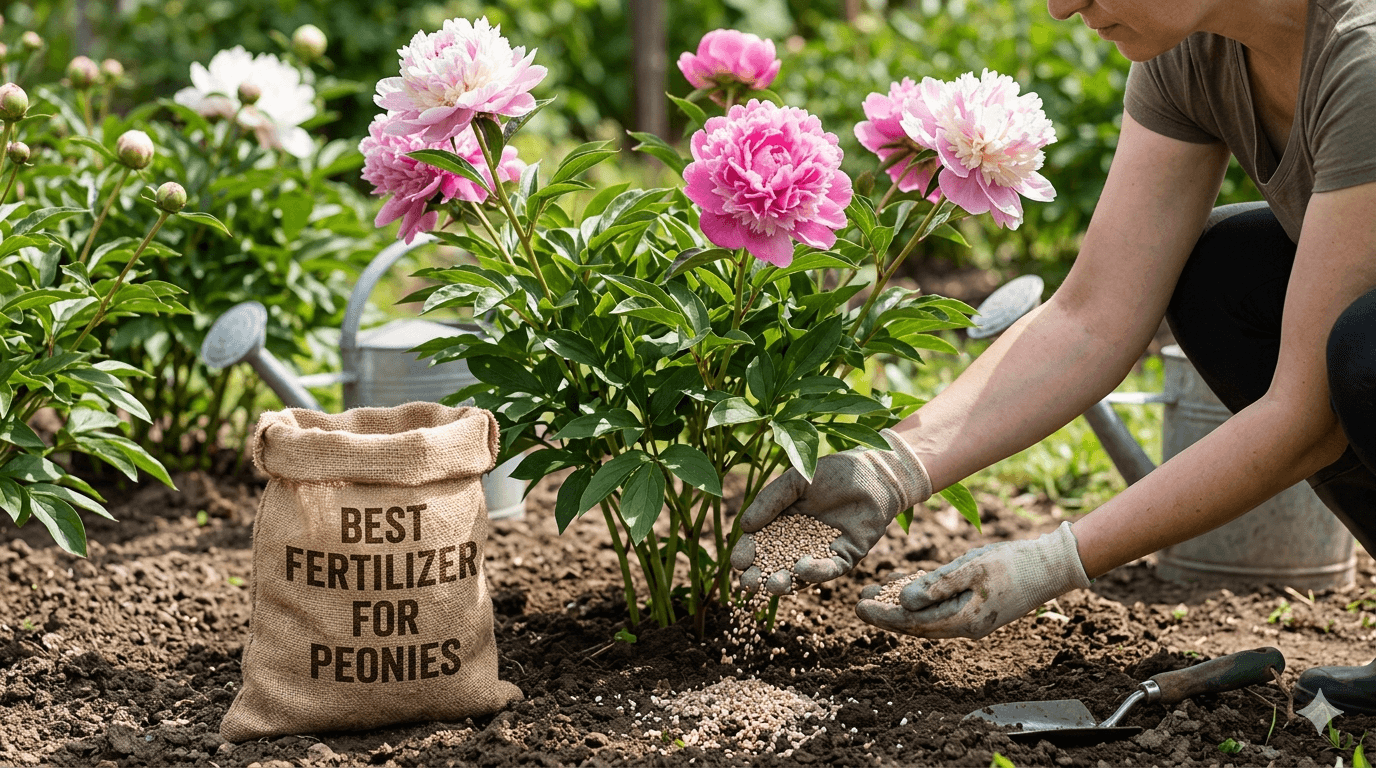
My peonies bloomed exactly once in three years. One sad, small flower. Then nothing. The fix turned out to be embarrassingly simple — and nobody told me.
I did everything the internet said. Full sun, consistent watering, proper spacing. I even talked to them, which I am not proud of.
The plants looked incredible. Enormous, bushy, deep green. Every spring I waited. Every spring, nothing.
Then in year three, a neighbor walked past my garden and said four words that changed everything: “Too much nitrogen, probably.”
She was right. I had been feeding my peonies the same general-purpose fertilizer I used on everything else in the garden. High nitrogen. Wrong formula. Wrong timing. It is the same trap many gardeners fall into with other sensitive plants — if you also grow calatheas, you will recognise the exact same problem in our guide to the best fertilizer for calathea.
Why This Mistake Is So Common
Peonies do not behave like most flowering plants. Where roses and dahlias respond well to balanced or nitrogen-forward feeding, peonies are phosphorus-hungry. Feed them too much nitrogen and they produce magnificent foliage and almost zero flowers.
Once I understood that and switched to the right formula at the right time, I got 23 blooms in a single season from the same plants that had given me one the year before.
Here is everything I learned, including the mistake that almost killed my oldest plant and the three products that finally turned things around.
Top 3 Best Fertilizers for Peonies (Quick Answer)
Why Peonies Are So Different to Fertilize
Most flowering plants want nitrogen. Peonies are the exception.
Too much nitrogen and you get enormous, lush, dark green leaves with zero flowers. The plant looks completely healthy. Vigorous, even. It just refuses to bloom. This confused me for an entire season because my peonies genuinely looked great.
What NPK Numbers Mean for Peonies
The three numbers on every fertilizer bag stand for Nitrogen, Phosphorus, and Potassium in that order.
For peonies, you want something like 5-10-10 or 10-20-20. The middle number — phosphorus — should be equal to or higher than the nitrogen number. Anything with a very high first number, like a standard lawn fertilizer at 30-10-10, will push all energy into leaves and suppress flowering almost completely.
This is exactly what I was doing. Two consecutive springs of 20-20-20 general-purpose fertilizer. The plants exploded in size. Not a single bloom. The same logic applies to other flowering plants — you can see how we handle NPK ratios for tropical species in our guide to fertilizing monstera.
The Best Fertilizer for Peonies: My Top Picks After Testing
Espoma Bulb-Tone 3-5-3 — Best Overall
Espoma Bulb-Tone (My Go-To for Most Growers)
Bulb-Tone has an NPK of 3-5-3, which sounds modest but works beautifully for peonies. The phosphorus-forward formula encourages root development and bud formation rather than vegetative growth.
Being an organic slow-release granular, it also improves soil biology over time — something that matters more for long-term peony health than most people realize. Salt buildup is essentially impossible with this formula. If you apply organic fertilizers across multiple plant types in your garden, our guide to fertilizing pothos covers how the same organic-first approach works equally well for other low-maintenance plants.
I apply it in early spring when the red shoots are just breaking through the soil, and again in early fall after the foliage dies back. That fall application is the one most guides skip entirely. It feeds the roots through winter and sets up the following season’s bloom in a way nothing else matches.
Dr. Earth Bud & Bloom 3-9-4 — Best for Stubborn Plants
Dr. Earth Bud & Bloom Booster
This is the one I reach for when a peony has underperformed for a full season. The phosphorus content at 9 — triple the nitrogen — is specifically designed to trigger flowering in stubborn plants.
Dr. Earth uses a probiotic formula with beneficial microbes that genuinely improves soil biology in the second and third season of use. More expensive than Bulb-Tone at around $20 for a 4-pound bag, but a bag lasts two full seasons with a typical planting of three to five peonies.
Jack’s Classic Blossom Booster 10-30-20 — Best Synthetic
Jack’s Classic Blossom Booster
This is the synthetic option I use when I want fast, visible results. The 10-30-20 ratio is one of the most phosphorus-intensive formulas available in a water-soluble format. It dissolves completely, hits the roots within days, and the bloom response is noticeably quicker than with organic granular options.
The trade-off is that it does nothing for soil biology and can contribute to salt buildup over time. Established peonies in good soil handle this well if you flush occasionally. In poor or compacted soil, stick with organics instead — the risk of root stress is not worth the faster results.
Worm Castings — Safest Option for Beginners
Worm Castings
If you have struggled with fertilizer burn or are dealing with peonies in containers, worm castings are the safest option available. The nutrient profile is gentle and slow-releasing. Phosphorus and potassium are both present in bioavailable forms. Salt buildup is essentially impossible.
The only downside is low concentration — worm castings work best as a soil amendment rather than a primary fertilizer in heavy clay or depleted soil. I mix a generous handful into the planting hole when dividing or transplanting, and top-dress established plants with about half a cup in early spring.
Side-by-Side Comparison Chart
| Product | NPK | Type | Best For | Price |
|---|---|---|---|---|
| Espoma Bulb-Tone | 3-5-3 | Organic granular | Most growers, spring + fall | ~$15 |
| Jobe’s Organics Bone Meal | 2-14-0 | Organic granular | Planting, non-blooming plants | ~$10 |
| Osmocote Smart-Release | 15-9-12 | Slow-release granular | Low-maintenance, set and forget | ~$12 |
The 3 Best Fertilizer Products for Peonies
These are the three most purchased, most recommended peony fertilizers — each chosen for a different grower type and a different problem to solve.
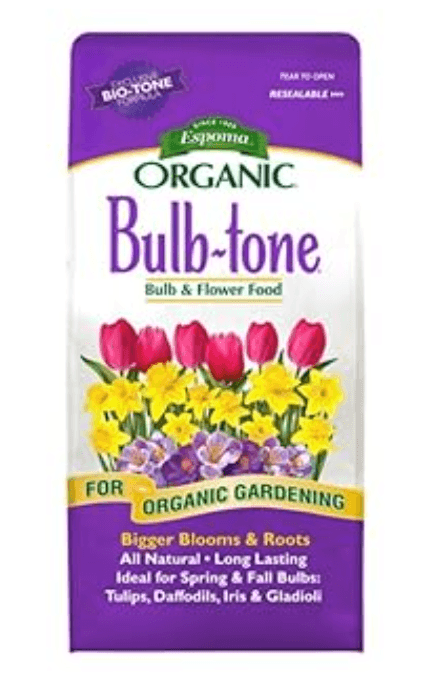
Bulb-Tone is the product that comes up again and again in every serious peony growing community. The 3-5-3 NPK is phosphorus-forward without being aggressive — enough nitrogen for healthy stems, enough phosphorus to drive bud formation, and enough potassium for bloom quality and disease resistance. Being fully organic, it builds the soil microbiome as much as it feeds the plant, which matters enormously for peonies in years two and three when blooms really hit their stride. Salt buildup is not a concern at any realistic application rate. Two handfuls per plant scattered in a ring around the drip line in early spring, and again in fall after foliage dies back. That fall application is what most growers miss — and it is the single change that improved my bloom count more than any product switch.
Targeted Phosphorus and Slow-Release Options
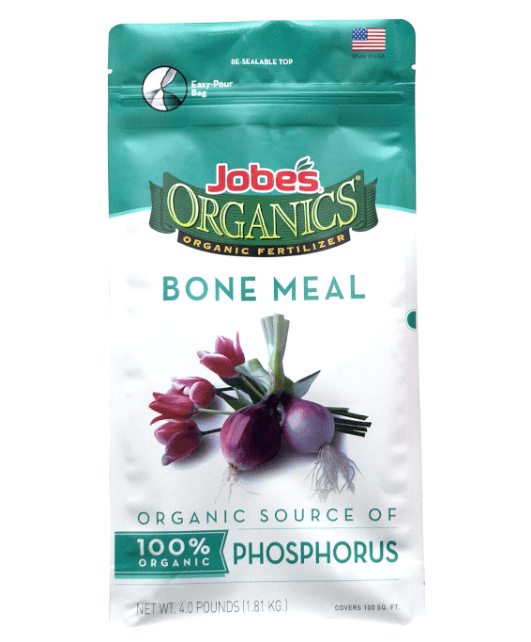
Bone meal is the product peony specialists have recommended for root establishment and bud formation for decades, and Jobe’s Organics version is the best-selling option on Amazon for good reason. At 2-14-0, the phosphorus content of 14 is dramatically higher than the nitrogen — this is a pure phosphorus supplement, not a complete fertilizer. That distinction matters. Bone meal is most effective mixed directly into the planting hole at establishment, giving newly planted or divided peonies an immediate phosphorus source as their roots reach out. For established plants, a handful worked into the soil around the drip line in early spring before bud development begins drives flower formation in a way that balanced fertilizers alone cannot match. It does not replace a complete fertilizer — pair it with Bulb-Tone for a full program — but as a targeted phosphorus boost it is the most cost-effective purchase you can make for non-blooming peonies.
Best Set-and-Forget Option
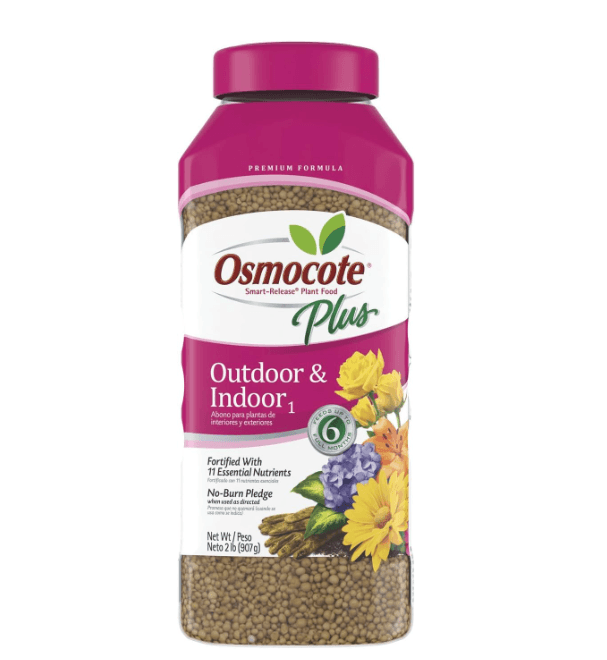
Osmocote is the fertilizer people reach for when they want reliable results without a complicated schedule. Each granule is coated in a resin shell that releases nutrients gradually every time you water, triggered by soil temperature and moisture. One application in early spring covers peonies for up to six months — through bud formation, flowering, and the critical post-bloom recovery period when roots rebuild their carbohydrate reserves. At 15-9-12, the nitrogen number is higher than I would normally recommend for peonies, which means application rate matters more here than with Bulb-Tone. Use half the recommended quantity and keep granules away from the crown. At that reduced rate the phosphorus and potassium delivery is well-suited for established peonies in decent soil, and the convenience factor is genuinely hard to argue with. Fourteen nutrients total including micronutrients, no measuring, no mixing, one application per season.
When to Fertilize Peonies (Timing Is Everything)
Getting the timing right matters as much as choosing the right product. Even the best fertilizer applied at the wrong moment can do more harm than good.
Early Spring: The Most Important Feed
The moment red or pink shoots push through the soil — usually March or April depending on your zone — is when peonies are most receptive to feeding. At this stage the plant is mobilizing energy stored in the roots to push new growth. A phosphorus-rich granular fertilizer applied now supports bud development for the season ahead.
After Blooming: The Forgotten Feed
Most gardeners stop feeding after the flowers fade. That is a mistake I made for two full seasons.
The six to eight weeks after blooming are when peonies rebuild their root carbohydrate reserves. A light application of a balanced or slightly phosphorus-forward fertilizer during this window gives the plant resources to store over winter and produce better blooms the following year.
Fall: The Overlooked Secret That Changed Everything for Me
After the foliage dies back and you cut the stems to the ground, apply a granular organic fertilizer like Bulb-Tone around the root zone. The nutrients break down slowly over winter and are ready for the roots to absorb the moment the soil warms in spring. This single change — adding a fall feed — made more difference to my bloom count than any product switch I made.
5 Mistakes That Ruin Peony Blooms
Mistake 1: Using Lawn Fertilizer
Lawn fertilizers are nitrogen-dominant — often 30-10-10 or higher. Applied to peonies, they produce massive vegetative growth and suppress flowering almost completely. If you have used lawn fertilizer on your peonies in the past year, switch to a phosphorus-forward formula and give the plant one full growing season to reset. Most peonies recover and bloom normally the following year. If you want to go fully natural instead, our guide on how to make organic liquid fertilizer at home covers several DIY low-nitrogen options that are much safer for flowering perennials.
Mistake 2: Planting Too Deep
This is not technically a fertilizer mistake, but it causes the same symptom — beautiful leaves, no flowers — and gets blamed on nutrition constantly. Peony eyes should be no more than one to two inches below the soil surface. Deeper than that and the plant simply will not bloom, regardless of what you feed it. Check depth before changing your fertilizer program.
Mistake 3: Fertilizing Right at the Crown
Applying granular fertilizer directly on top of the crown, where the stems emerge, can burn the tissue and introduce pathogens that cause botrytis blight. Always apply fertilizer in a ring around the plant, keeping a six-inch gap between the fertilizer and the stems. Scatter wide, not close.
Mistake 4: Expecting Results in Year One
Peonies are slow to establish. A newly planted peony often produces nothing in year one and a modest showing in year two. Year three is typically when they hit their stride. No fertilizer will change this timeline significantly. Patience is genuinely part of the program with these plants.
Mistake 5: Over-Fertilizing to Compensate for No Blooms
When peonies fail to flower, the instinct is to feed more. More fertilizer is almost always the wrong answer. Over-fertilizing causes root burn, disrupts soil biology, and can push the plant into a stress response that further suppresses flowering. If your peonies are not blooming, the answer is almost never more fertilizer — it is usually depth, light, or the wrong formula.
What NPK Actually Means for the Best Peony Fertilizer
Understanding NPK takes the guesswork out of choosing a fertilizer. Research from the University of Florida confirms that phosphorus is the limiting nutrient for flowering in most ornamental perennials, making it the single most important number to watch on a peony fertilizer label.
| Nutrient | Role | For Peonies |
|---|---|---|
| N — Nitrogen | Leaf and stem growth | Low to moderate. Too much suppresses flowering completely. |
| P — Phosphorus | Root development, bud formation | High. The most critical nutrient for getting peonies to bloom. |
| K — Potassium | Overall health, bloom quality | Moderate to high. Larger flowers, stronger stems, better disease resistance. |
An NPK where phosphorus equals or exceeds nitrogen is the sweet spot — something like 5-10-5, 3-9-4, or 10-30-20. This principle holds across most flowering perennials. Our monstera fertilizer guide covers the same NPK logic for tropical aroids if you want to go deeper on how these ratios work across different plant types.
Organic vs Synthetic Fertilizer for Peonies
Both approaches work well when applied correctly. The right choice depends on your soil, your goals, and how much time you want to invest.
Organic fertilizers like Espoma Bulb-Tone, worm castings, and bone meal release nutrients slowly and improve soil structure over time. They are very forgiving, difficult to over-apply, and build long-term plant health. One downside is slower results — a response may not be visible until the second season. According to the Royal Horticultural Society, organic slow-release feeds better match the natural nutrient uptake rhythm of established perennials like peonies.
Synthetic fertilizers like Jack’s Classic Blossom Booster deliver nutrients immediately and give precise control over what the plant receives. Better for a quick correction but they do nothing for soil biology. University of Maryland Extension notes that over-fertilizing with synthetics is one of the leading causes of perennial decline in home gardens.
Most home gardeners will get the best long-term results from organic slow-release granulars. A targeted synthetic formula like Jack’s Blossom Booster can speed up a correction when dealing with a specific deficiency or a stubborn non-blooming plant. You can also explore our full category of organic fertilizer guides for more options across different plant types.
Realistic Costs: What to Budget
Fertilizing a typical home planting of three to five peonies costs between $15 and $40 per year depending on the products you choose.
| Product | Cost | Coverage | How Long It Lasts |
|---|---|---|---|
| Espoma Bulb-Tone | ~$15 | 5 large peonies | Full year (2 applications) |
| Dr. Earth Bud & Bloom | ~$20 | 3–5 peonies | 2 full seasons |
| Jack’s Classic Blossom Booster | ~$16 | Many applications | 2–3 seasons at low dose |
| Bone meal supplement | ~$8 | Planting amendment | One-time at planting |
You do not need to spend a lot to get peonies blooming well. Consistent use of an inexpensive phosphorus-forward organic formula, applied at the right times, outperforms expensive products used incorrectly every single time. Browse our full plant fertilizer guides if you want to build a complete feeding program for everything in your garden.
Advanced Tips Most Articles Skip
The Takeaway
The best fertilizer for peonies is one that prioritizes phosphorus over nitrogen, applied at the right times — early spring, after blooming, and in fall.
Espoma Bulb-Tone is the product I recommend to most gardeners. Affordable, nearly impossible to over-apply, and it delivers consistent results over multiple seasons. For a struggling plant that has not bloomed in years, Dr. Earth Bud and Bloom Booster with its high phosphorus content is worth the extra investment for one to two seasons.
The most important lesson from three frustrating years: peonies do not need more feeding — they need the right feeding. A small, well-timed application of the correct formula will always outperform a heavy dose of the wrong one.