
Vegega Raised Beds Review: What Nobody Tells You Before You Order
Real prices, the steel thickness question, the warranty fine print, and the setup mistakes that cost me a weekend.
Key Takeaways
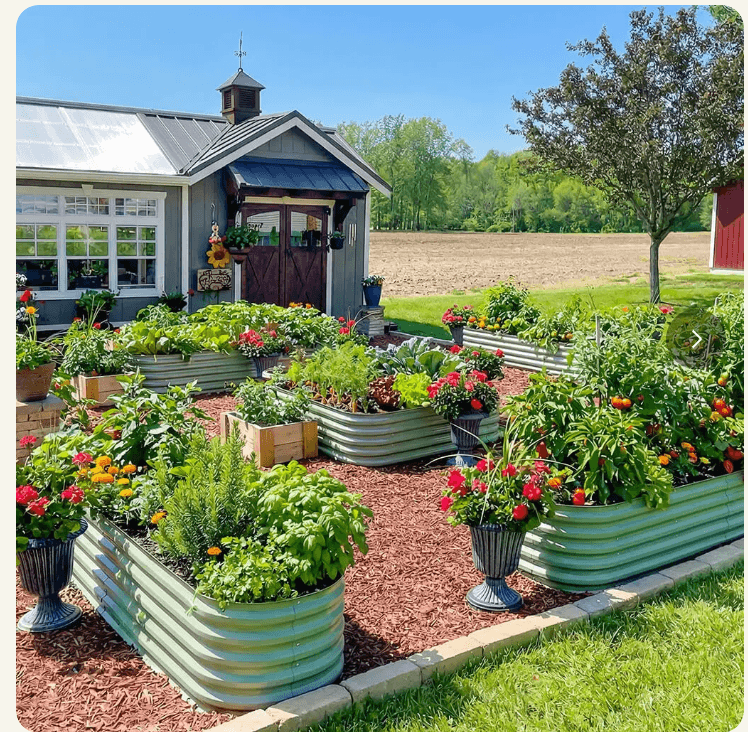
- Vegega beds use 0.6mm steel with a zinc aluminum magnesium coating under a paint layer. The coating is the real selling point, not the thickness.
- The 17 inch 8×2 bed is the sweet spot for most vegetable gardens. Around 166 to 176 dollars before discounts.
- The 3 year warranty does not cover cosmetic scratches, fading, or damage from improper assembly. Photograph everything when the box arrives.
- Soil will cost you almost as much as the bed. Plan for it before you click buy.
- Personal returns are accepted for 90 days, but you pay return shipping on a heavy box. Pick your size carefully.
The box showed up with one corner crushed in.
My first thought was that I had just wasted 170 dollars on a dented metal bed.
That moment ended up teaching me more about Vegega than any product page ever did.
So this Vegega raised beds review is not a spec sheet copy and paste.
It is what I learned from buying, building, filling, and growing in these beds, plus what I found digging through their warranty policy and hundreds of owner reviews.
If you are close to ordering, this will save you money and at least one frustrating afternoon.
Why I Looked at Vegega in the First Place
I had already gone through cedar beds that rotted from the bottom up.
When I started shopping for metal, two names kept coming up everywhere: Vego Garden and Vegega.
They look almost identical in photos.
Same modular round corner panels, same rubber edging on top, same color options.
The difference that pushed me toward Vegega was simple: price.
One owner review I read put it bluntly, saying the price of one competing unit bought them two Vegega beds.
That is a bit of an exaggeration in most sizes, but Vegega is usually noticeably cheaper for the same footprint.
The question I had was whether cheaper meant thinner, weaker, or shorter lived.
That is exactly what the rest of this review answers.
Vegega Raised Beds Review: Build Quality Up Close
The steel is thinner than you might expect
Here is something most reviews skip.
Vegega panels are 0.6mm thick.
That works out to roughly 24 gauge steel.
If you read my guide to the best metal raised garden bed for vegetables, you know I usually push people toward thicker steel.
So I was skeptical.
What changed my mind is how the panels are built.
The steel is corrugated, which adds a lot of stiffness compared to a flat sheet of the same thickness.
The kit also includes bracing rods across the middle that stop the long sides from bowing out once the soil is in.
Once mine was filled, I could lean my full weight on the rim without the wall flexing.
The coating is the real story
Vegega uses three layers.
A steel core for strength.
A zinc aluminum magnesium coating for rust protection.
And a paint layer on top for UV and moisture.
The middle layer is what matters.
Zinc aluminum magnesium steel (often called ZAM) holds up much better than basic galvanized steel, especially at cut edges where cheap beds usually start rusting first.
Vegega claims it outlasts standard galvanized steel by about four times.
I cannot verify that exact number, and you should treat any brand’s lifespan claim with some caution.
But the material itself is a real step up from what you find on bargain marketplace beds.
Edges, screws, and the small stuff
Rubber edging runs along the full top rim, so you are not resting your arms on a raw metal lip.
The screws are stainless steel, which matters because hardware is often the first thing to rust on cheaper kits.
The kit for the 17 inch 8×2 bed comes with 48 screw sets plus 2 spares.
Two spares is not many.
A few owners mention coming up short on hardware and having to grab bolts from a local store, though Vegega support reportedly refunded them without a fight.
Every panel also ships with a protective plastic film.
Some people find peeling it annoying.
I was glad it was there, because the panel in that crushed corner of my box had zero scratches under the film.
The Vegega Models I Would Actually Consider
Vegega sells a lot of shapes.
Rings, moons, castles, U shapes, tiered cascades.
Most of those are about looks.
For growing food, these four are the ones worth your money.
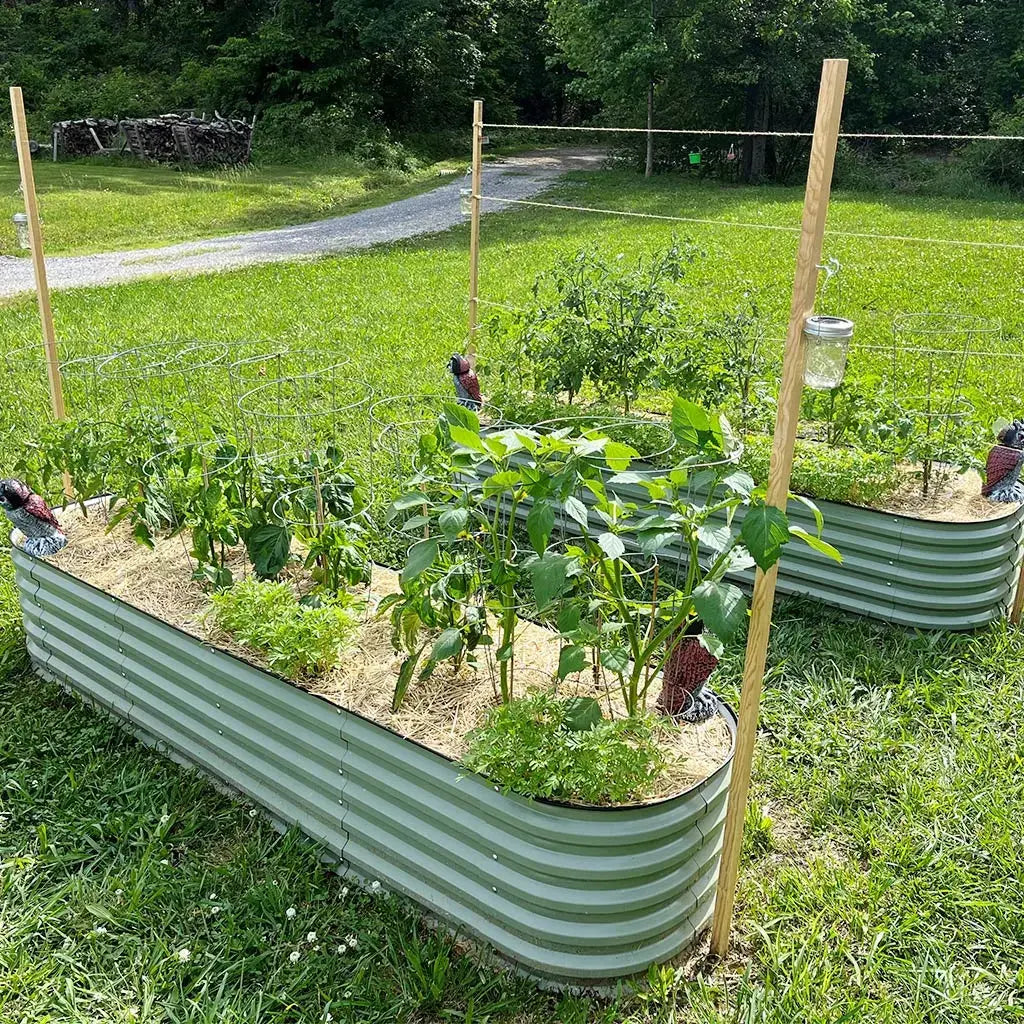
17″ Tall 8×2 Modular Raised Garden Bed (Vegega)
| Price checked | $165.90 to $175.90 depending on color |
| Height | 17 inches |
| Layouts | 9 in 1 (8×2, 6.5×3.5, 5×5 and more) |
| Panel | 0.6mm ZAM coated steel |
| Weight empty | About 36.5 lbs |
| Assembly | About 45 minutes (closer to 75 for me) |
What I Like
- 17 inches is deep enough for tomatoes, carrots, and potatoes
- 9 layouts means you can reshape it if you move
- Most reviewed Vegega model, with over 500 reviews and about 91 percent five stars
- 2 foot width lets you reach the middle from both sides without stepping in
Watch Out For
- The 45 minute assembly time assumes you have done this before
- Only 2 spare screw sets
- Orange and grey are usually 10 dollars cheaper than the other colors
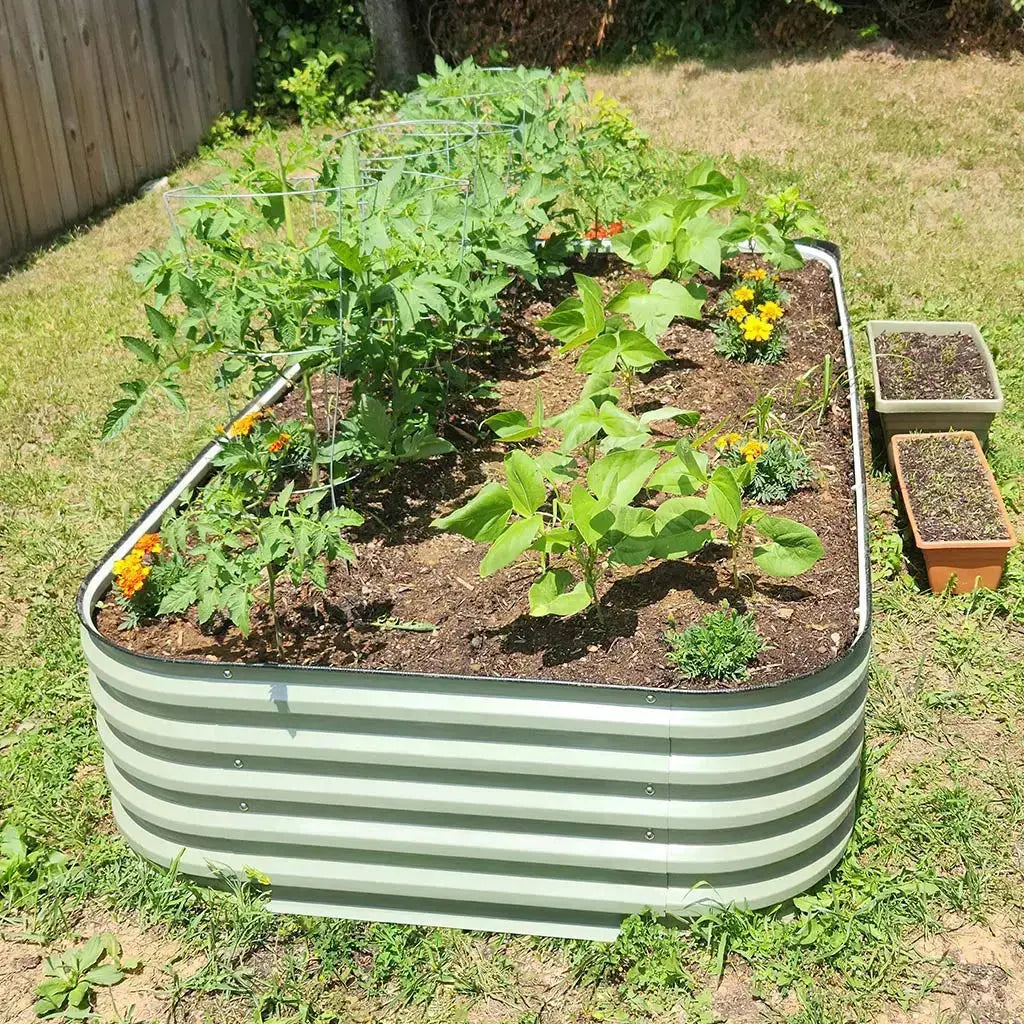
17″ Tall 8×4 Modular Raised Garden Bed (Vegega)
| Price checked | $199.95 |
| Height | 17 inches |
| Layouts | 10 in 1 |
| Panel | 0.6mm ZAM coated steel |
| Best for | Families growing most of their summer vegetables |
What I Like
- Double the growing space of the 8×2 for only about 25 dollars more
- Classic 4×8 footprint fits most square foot gardening plans
- Great value per square foot in the whole lineup
Watch Out For
- Needs a lot of soil. Budget for it seriously
- 4 feet wide is a stretch to reach the center for shorter gardeners

32″ Tall 42″ Round Raised Garden Bed (Vegega)
| Price checked | $179.95 |
| Height | 32 inches (waist high) |
| Diameter | 42 inches |
| Weight empty | About 13.3 lbs |
| Assembly | About 30 minutes |
What I Like
- No bending at all to plant, weed, or harvest
- Fastest Vegega bed to put together
- Deep enough for anything, including small fruit trees
Watch Out For
- Filling 32 inches of depth gets expensive fast unless you use the layering trick below
- Fewer reviews than the 17 inch models, so less long term data
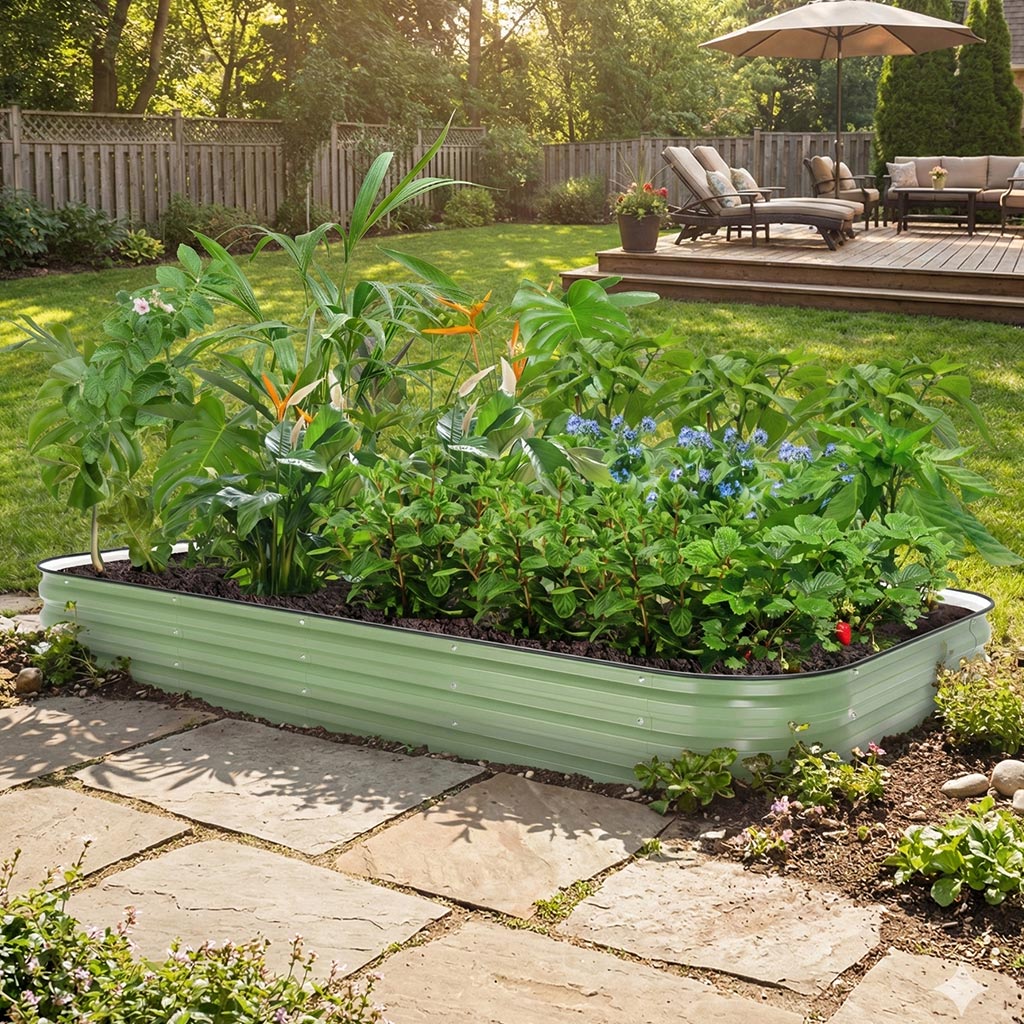
11″ Tall 8×4 Raised Garden Bed (Vegega)
| Price checked | $179.90 |
| Height | 11 inches |
| Layouts | 10 in 1 |
| Best for | Lettuce, herbs, strawberries, flowers, beds on top of good native soil |
What I Like
- Much less soil to fill
- Low profile looks clean in a front yard
Watch Out For
- Too shallow for tomatoes or root crops over hard clay
- Costs almost the same as the 17 inch 8×4, which gives you far more depth
Growing tomatoes mainly? I tested five of these for that exact job in my best raised garden bed for tomatoes breakdown.
How to Set Up a Vegega Bed Without Repeating My Mistakes
- Open the box outside and photograph it before you touch anything. Shipping damage claims need photos of the box, the label, and the damaged part. Vegega says to keep the shipping box too. I almost threw mine in the recycling before I remembered.
- Wear gloves. The rubber edging covers the top rim, but the panel edges and bolt ends inside are sharp during assembly.
- Loosely attach everything first, then tighten. If you fully tighten each bolt as you go, the last panel will not line up. Snug everything, square the bed, then tighten all the way around.
- Install the bracing rods before you add soil. They stop the long sides from bulging. Skipping them is the most common reason people say their bed bowed out.
- Level the ground. The bed will sit on a slope, but water will collect on the low side and you will see uneven growth all season.
- Add hardware cloth on the bottom if you have gophers or voles. The bed is open bottom, which is great for drainage and terrible if something digs up from below.
- Fill to about 80 to 90 percent, not to the brim. Leave room for mulch and for compost top ups each spring.
- Water deeply and let it settle for a few days before planting. A freshly filled bed can drop several inches after the first good soak.
Common Mistakes and Hidden Risks
Ignoring the warranty fine print
Vegega gives a 3 year limited warranty on the beds.
That sounds solid, and for real defects it is.
But it does not cover cosmetic changes like fading or surface scratches.
It does not cover damage from improper assembly.
And it does not cover damage from corrosive chemicals or conditions outside normal use.
That last one matters if you plan to dump fresh manure or strong acidic amendments right against the walls.
The warranty is also only for the original buyer, so it does not transfer if you sell the house.
Assuming free returns
Returns are accepted for 90 days.
But if you return for personal reasons, you pay the return shipping and the packaging must be undamaged.
On a box this size, that can eat a big chunk of your refund.
Measure your space twice before you order.
Underestimating soil volume
This is the number one surprise for first time buyers.
A 17 inch 8×2 bed needs around 20 cubic feet of material to fill to 85 percent.
A 17 inch 8×4 needs about double that.
People order the bed, then stand in the garden center doing math in shock.
Planting right against the wall in hot climates
Metal walls do warm the outer edge of the soil in full summer sun.
Deep roots are fine.
Shallow seedlings planted tight to the wall can struggle.
Leave a few inches of gap and mulch that edge.
What a Vegega Bed Really Costs
Here are realistic numbers based on prices I checked in October 2026.
| Item | Typical cost | Notes |
|---|---|---|
| 17″ 8×2 bed | $166 to $176 | Orange and grey are usually cheapest |
| 17″ 8×4 bed | About $200 | Best value per square foot |
| 32″ round bed | About $180 | Light to ship, heavy to fill |
| Soil and compost for 17″ 8×2 | $70 to $140 | Bagged costs more than bulk delivery |
| Hardware cloth (optional) | $20 to $40 | Only if you have burrowing pests |
| Wall trellis add on | About $120 | Nice, not essential |
| Cover system add on | About $170 | Bed not included |
| Shipping | Free | Contiguous U.S. only, by FedEx |
So a realistic first bed, filled and ready to plant, lands somewhere between 240 and 320 dollars.
That is more than a cheap marketplace bed.
It is less than most premium brands, and you are not replacing rotten boards in three years.
Insider Tips Most Reviews Miss
Fill the bottom half with wood, not bagged soil. Logs, sticks, and dry leaves in the bottom layer (the hugelkultur method) cut your soil bill dramatically and slowly break down into rich organic matter. This is the single biggest money saver for the 32 inch beds.
Buy the 9 in 1 even if you only want one shape. The extra layouts are free flexibility. If you move or redesign your yard, you can rebuild it as a square instead of buying a new bed.
Feed a new bed lightly the first season. Fresh bagged mixes often contain starter nutrients already. Overfeeding a brand new bed is a common way to get leafy plants with very little fruit. The University of Maryland Extension guide to fertilizing vegetable gardens is a good reference for how much each crop actually needs, and my notes on balanced 13-13-13 fertilizer cover when an all purpose feed makes sense.
Choose lighter colors in hot regions. White and grey reflect more sun than night blue or moss green. It is a small difference at the root zone, but in a hot climate every bit helps.
Check bolts after the first heavy rain. Soil settles and shifts. A quick quarter turn on each bolt after the first soak keeps the panels tight for the rest of the season.
Vegega vs Vego Garden vs Cheap Marketplace Beds
| Factor | Vegega | Vego Garden | Cheap marketplace bed |
|---|---|---|---|
| Coating | ZAM steel plus paint | ZAM steel plus paint | Often thin galvanizing, rating rarely listed |
| Panel thickness | 0.6mm | Similar range | Often thinner, rarely stated |
| Price for a 17″ 8×2 style bed | About $166 to $176 | Usually higher | $60 to $120 |
| Warranty | 3 years limited | Varies by product | Often none |
| Returns | 90 days, buyer pays for personal returns | Varies | Depends on seller |
| Expected lifespan | Many years with normal care | Many years with normal care | 2 to 4 years is common |
Vegega and Vego Garden are close enough in design that you could mix them in the same garden.
The deciding factor for most people is simply which one is on sale when they are ready to buy.
Against cheap marketplace beds, it is not close.
The coating alone is worth the difference.
Vegega Raised Beds Review FAQ
Are Vegega raised beds safe for growing vegetables?
Yes. The panels are coated steel with a paint layer on top, which is the same general approach used by most premium metal bed brands. If you want extra peace of mind, you can line the inner walls, but most growers do not.
Do Vegega beds rust?
The zinc aluminum magnesium coating is built to resist rust even where the paint gets scratched. Owners commonly report no rust after a full year or more. No metal bed is truly rust proof forever, so check seams each spring.
How long does assembly take?
Vegega lists about 45 minutes for the 17 inch 8×2 and about 30 minutes for the 32 inch round. For a first build with one person, plan on an hour or a bit more.
Is Vegega cheaper than Vego Garden?
In most comparable sizes, yes. The design is very similar, so many buyers choose Vegega for the lower price and get a comparable bed.
What happens if my bed arrives damaged?
Keep the box, take photos of the packaging, label, and damaged parts, and email Vegega support with your order details. Serious damage is eligible for a free return or exchange.
Which Vegega height should I choose?
17 inches for most vegetables. 32 inches if bending is hard for you. 11 inches only for shallow crops or if your native soil underneath is already good.
The Bottom Line
Vegega raised beds are not the thickest metal beds you can buy.
They do not need to be.
The coating is better than most beds in this price range, the bracing keeps them rigid, and the price leaves room in your budget for good soil.
Know the warranty limits.
Photograph the box before you open it.
Budget for soil before you check out.
Do those three things and the 17 inch 8×2 is one of the easiest garden upgrades you can make this season.
See Today’s Price on the 17″ 8×2 Bed
This post contains affiliate links. If you buy through them, TerraFertilizer may earn a commission at no extra cost to you. Prices were checked in October 2026 and can change.