
Best Raised Garden Bed for Back Pain: The Design That Actually Stops the Ache
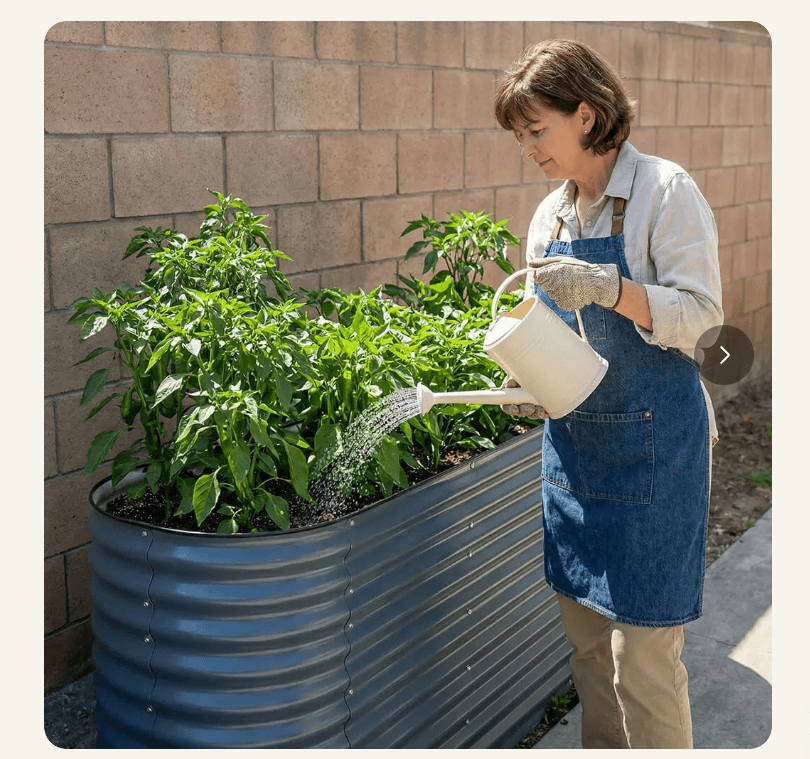
You do not need an X-ray to know when gardening has crossed a line. One afternoon of weeding at ground level and you are straightening up in stages, one hand braced on your knee, wondering if the tomatoes are worth it. Most raised beds sold online do not actually fix this. A bed that tops out at 12 or 17 inches still puts the bottom half of the soil out of comfortable reach, so you end up folding forward anyway, just a little less far than before.
The best raised garden bed for back pain is not defined by height alone. It is the combination of height, width, and structure that lets you plant, weed, and harvest without your spine ever bending forward from the hip.
This guide covers what actually changes the equation for a bad back, not just the word “ergonomic” printed on a box. We will get into the height and width math that matters, the difference between a raised bed and an elevated one (these are not the same thing, and mixing them up is the most common mistake I see), what the setup process itself does to your back if you rush it, and where a tall box bed stops being the right answer. If depth for specific crops is your bigger concern, our raised garden bed guide for tomatoes compares several beds by soil volume instead.
Quick Picks — Best Raised Garden Beds for Back Pain
Why Height Alone Does Not Fix a Bad Back
A lot of beds marketed as ergonomic are really just tall boxes. Height helps, but it only solves half the problem. The other half is reach.
If a bed is 32 inches tall but 4 feet wide, you still have to lean over the lip to work the middle of it. That puts your spine right back into a forward-flexed position, just starting from a higher point. It is better than a ground-level bed, but it is not the fix people expect when they buy a tall one.
Iowa State University Extension puts comfortable one-sided reach at roughly 2 feet. That number should drive your width decision, not the size that looks most impressive in a product photo. An 8 foot by 2 foot bed lets you stand at the edge and touch every inch of soil without leaning your torso forward at all.
Box Beds vs. Elevated Leg Beds: The Difference That Actually Matters
This is where most “best raised bed for back pain” lists get sloppy. They lump two different designs into one category.
A box bed sits directly on the ground. The walls are tall, so the soil surface ends up near waist height, but there is no open space underneath. You stand at it, feet on the ground, working over the top edge.
An elevated bed sits on legs, like a table. There is open space underneath the planting surface, which matters if you need to sit on a stool while you work, or if you use a wheelchair and need to roll in close.
If your back pain lets you stand for stretches of time but not bend forward, a box bed like the ones below solves that completely, and gives you more growing depth per dollar. If standing itself is what wears you out, or you need knee clearance, you want the elevated leg style instead, even though it usually holds less soil. Buying height when what you actually needed was clearance is the single most common mistake in this whole category.
Why Width Matters As Much As Height for Back Pain
Picture reaching for a weed in the center of a 4 foot wide bed versus a 2 foot wide one.
In the wide bed, you lean your upper body forward and hold that position while you pull. That is the exact motion that flares up a lower back after five or ten minutes of repetition.
In a 2 foot wide bed, your feet stay planted and your arm does the reaching, not your spine. Over an hour of weeding, that difference adds up fast.
If you want more total growing space, go longer, not wider. An 8×2 bed and a 4×4 bed hold roughly the same soil volume, but only one of them keeps every inch within arm’s reach.
The Best Raised Garden Beds for Back Pain, Compared
1. Vegega 32″ Tall 8′ x 2′ Metal Raised Garden Bed (9-in-1)
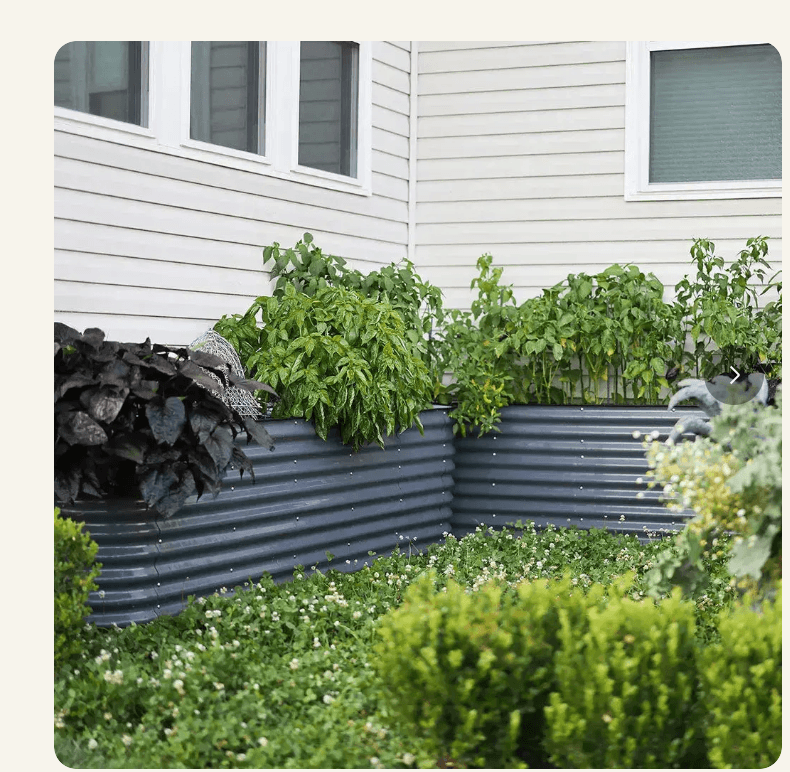
| Height | 32 inches |
| Footprint | 8 ft x 2 ft |
| Material | Zn-Al-Mg steel |
| Assembly | Bracing rods included |
| Price | $289.95 |
The 2 foot width is the whole point here. It matches the arm’s reach math almost exactly, so nothing in this bed is out of comfortable range from either long side. The steel panels are rigid enough that you can lean a hand on the edge for balance while you work, which matters more than people expect once a back is already sensitive.
The 9-in-1 panel system also means you are not locked into a straight rectangle forever. If you eventually decide you want to work from three sides instead of two, the same panels can reconfigure into a U-shape, which shortens the reach even further.
Pros
- 2 foot width keeps every inch within arm’s reach, no leaning
- Waist height removes forward bending almost entirely
- Rigid steel panels do not flex when you lean on the edge
- Panels can reconfigure into a U-shape later for even shorter reach
Cons
- Sits on the ground, no knee clearance for seated or wheelchair use
- Empty kit weighs about 66 lbs, plan for a second set of hands
- Needs every bracing rod installed or the walls bow under wet soil
2. Vegega 32″ Tall 42″ Round Metal Raised Garden Bed
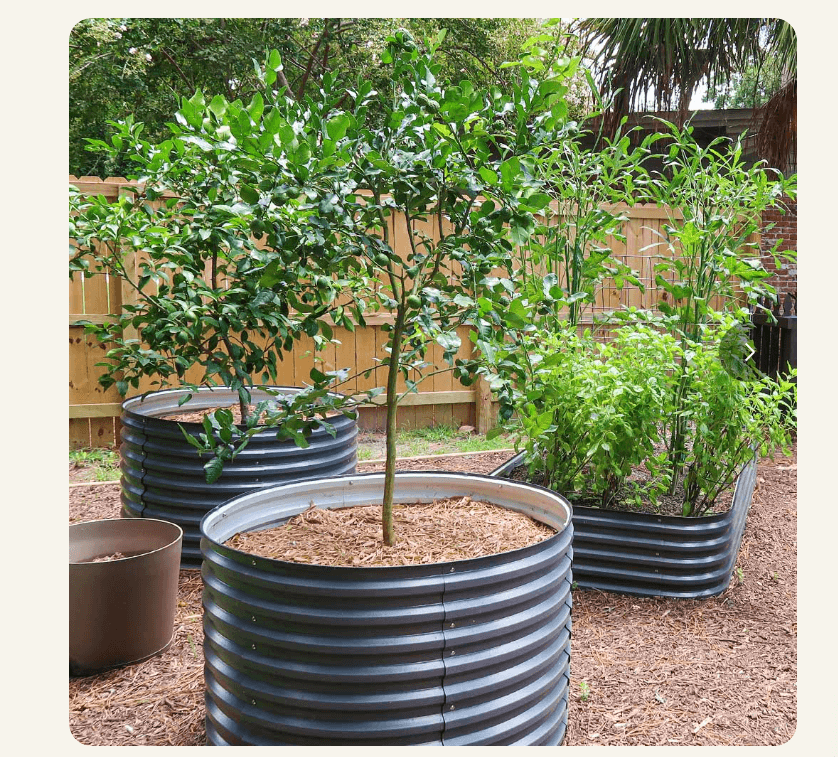
| Height | 32 inches |
| Footprint | 42 in round |
| Material | Galvanized steel |
| Price | $179.95 |
Same waist-height relief as the 8×2 bed, in a shape with no corners to overreach into. Every point on the rim sits at the same easy distance, which is a small detail until you notice how much of your reaching in a rectangular bed happens at the corners.
It is also the lighter, cheaper option if assembling an 8 foot kit solo, with a sensitive back, sounds like more than you want to take on this season.
Pros
- No corners, so reach distance is the same all the way around
- Lower price and lighter to position empty
- Compact enough for a patio, so tool and hose trips stay short
Cons
- Smaller growing space, better as a second bed than your only one
- Tall, narrow shape catches wind, anchor it in exposed spots
3. Vegega 32″ Tall 6.5′ x 2′ Metal Raised Garden Bed (6-in-1)
| Height | 32 inches |
| Footprint | 6.5 ft x 2 ft |
| Material | Zn-Al-Mg steel |
| Price | $259.95 |
Same 2 foot width as the 8×2, just a foot and a half shorter. Vegega markets this size directly at gardeners with back pain, and the math backs it up: you still never lean past 2 feet from either long side, but the smaller footprint fits yards where a straight 8 foot run does not.
It is the size I would point toward if the 8×2 feels like slightly more bed than your yard, or your budget, can comfortably fit.
Pros
- Same 2 foot no-lean width as the larger bed, in a shorter run
- Fits yards and side spaces where 8 feet will not
- Same Zn-Al-Mg steel and bracing rod system as the 8×2
Cons
- Less total soil volume than the 8×2 for a similar price per square foot
- Still sits on the ground, no knee clearance
4. Vegega 32″ Tall 5′ x 2′ Metal Raised Garden Bed (4-in-1)
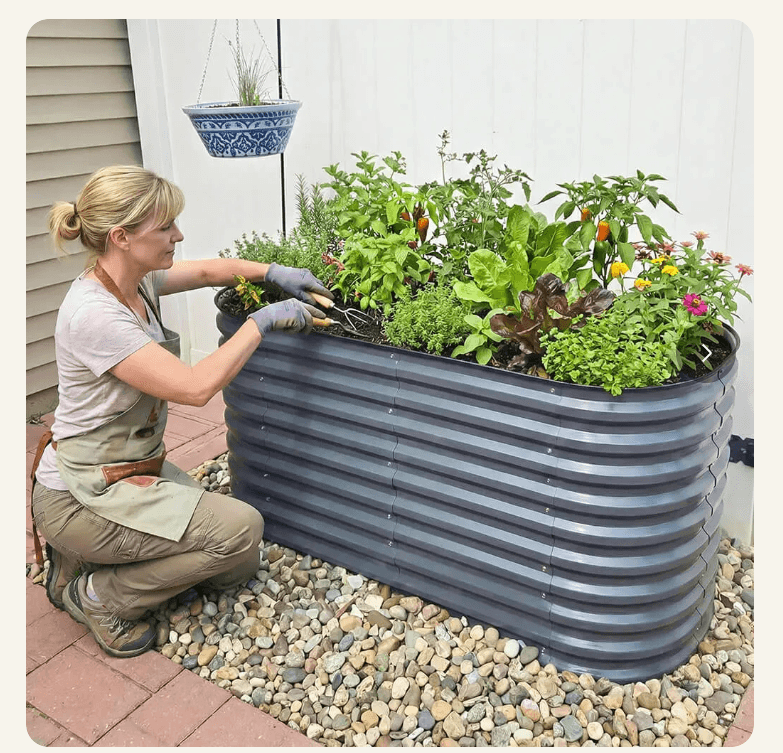
| Height | 32 inches |
| Footprint | 5 ft x 2 ft |
| Material | Zn-Al-Mg steel |
| Price | From $209.95 |
This is the size for a side yard, a narrow strip along a fence, or a spot where 6.5 or 8 feet simply will not fit. Same waist height, same 2 foot width, just shorter.
Because it is short enough to reach end to end from one spot, some gardeners with more limited standing time choose this size specifically so they can tend the whole bed without walking back and forth along an 8 foot run.
Pros
- Fits tight side yards and narrow strips
- Short enough to reach the far end without much walking
- Lower price and lighter to carry and place
Cons
- Least growing space of the lineup, expect to want a second bed eventually
- Still a ground-sitting box, no knee clearance
5. Vegega 32″ Tall 8′ x 4′ Metal Raised Garden Bed (10-in-1)
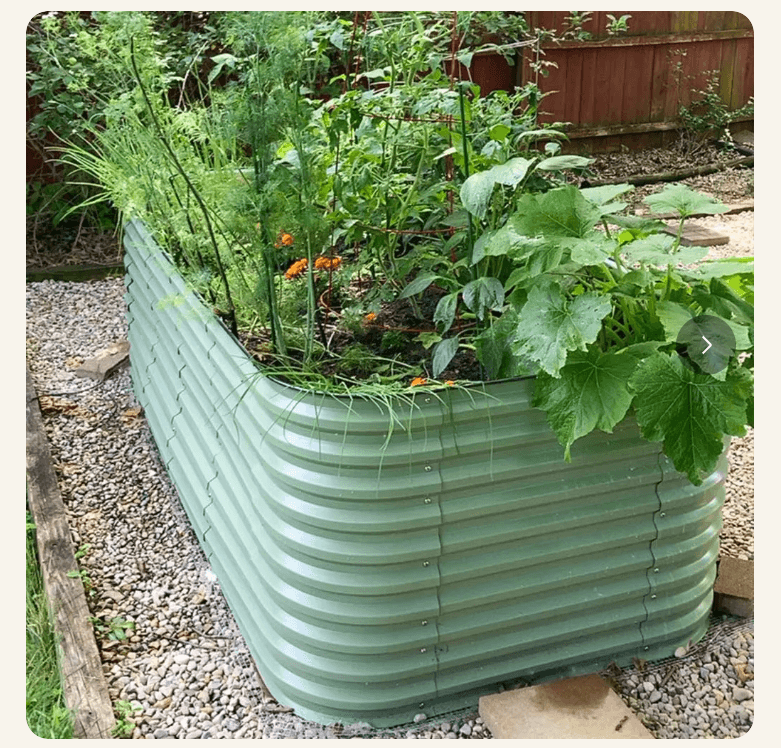
| Height | 32 inches |
| Footprint | 8 ft x 4 ft |
| Material | Zn-Al-Mg steel |
| Price | $339.95 |
Double the growing space of the 8×2, and it still respects the 2 foot reach rule, but only if you set it up right. At 4 feet wide, you need to be able to walk around it and work from both long sides, each one reaching only to the center. Push this bed against a fence or wall and you lose that math completely, and you are back to leaning.
Vegega markets this size directly at gardeners managing back pain who still want serious growing volume, and it is the only bed here where that claim only holds up with open access on both sides.
Pros
- Twice the soil volume of the 8×2, same waist height
- Still keeps every inch within 2 feet of reach, from either long side
- Same Zn-Al-Mg steel and long-rated coating as the rest of the line
Cons
- Only works for back pain if placed with walking room on both long sides
- Heaviest kit to assemble and fill, budget more help and more soil
Setting Up a Bed So It Actually Protects Your Back
- Pick the final spot before you order anything. A filled 8×2 bed commonly weighs 800 to 1,200 pounds, so it is not moving again once it is full. Deciding the spot last, after soil is already in, is how people end up shoveling it back out.
- Get a second person for assembly, not just for lifting. Bolting panels together happens close to the ground before the bed is standing upright, which is its own bout of bending. Do it in two shorter sessions with a break between rather than one long push.
- Level the ground first. Checking level means kneeling down repeatedly, so a foam kneeling pad here is worth the five dollars.
- Install every bracing rod that comes in the box. Skipping even one is the biggest reason beds bow out of shape after their first season of wet soil.
- Fill with a plan, not by lifting bags one at a time. This is the step that puts more backs out than the actual gardening does. A 40 pound bag lifted forty separate times is real work. Order bulk soil delivered by the truckload and shovel it in with short scoops instead, or use a wheelbarrow for multiple small loads rather than carrying bags by hand.
- Water deeply once it is filled. This settles the soil so you are not topping it off from a bag two weeks later.
- Mulch the top. Taller beds expose more side wall to sun and wind, so they dry out faster, and a slightly thicker mulch layer keeps watering frequency reasonable.
Feeding the Bed Once It’s Filled
Once the bed is filled, watered, and mulched, give the soil about a week to settle before you plant anything. When you do feed it, a balanced 13-13-13 fertilizer is a solid way to condition new, unamended soil before roots go in the ground. If tomatoes are the main crop, feeding needs shift once flowering starts, which our guide to fertilizing tomatoes in containers covers in more detail, since a filled raised bed behaves a lot like a large container nutrient-wise. For an organic liquid option once plants are flowering, our review of FoxFarm Big Bloom covers how it performs specifically on tomatoes and peppers.
Mistakes That Bring the Pain Right Back
Mistake 1: Buying Wide Instead of Long
A wider bed looks like more garden for the money, but anything past 2 feet of one-sided reach means leaning over the lip to work the middle. That is the exact motion a tall bed is supposed to remove. Go longer, not wider, if you want more space.
Mistake 2: Lifting Soil Bags Instead of Using a Wheelbarrow or Bulk Delivery
The bed can be perfectly sized and you can still strain your back on day one, purely from the fill process. Bagged soil feels manageable one bag at a time, but forty trips add up. Bulk delivery or a wheelbarrow with smaller loads solves this before it becomes a problem.
Mistake 3: Skipping the Bracing Rods
Wet soil is heavy, and 32 inches of it puts real outward pressure on the side panels. A bed without every rod installed will bow at the middle within a season, even if it looks fine on day one.
Mistake 4: Still Reaching Into the Bed Like It Is Ground Level
Old habits are strong. People buy the right bed and then catch themselves bending forward out of muscle memory anyway, especially when reaching for something in a corner. It takes a few weeks of conscious effort to actually stand up straight and let the bed do its job.
Mistake 5: Assuming You Will Never Need to Sit Again
A tall bed removes most bending, but detail work like starting seeds or thinning seedlings is still easier done seated. Keeping a garden stool nearby is not a sign the bed failed. It is just a different task.
Comparison Chart
| Product | Footprint | Best For | Price |
|---|---|---|---|
| Vegega 32″ 8×2 (9-in-1) | 8 ft x 2 ft | Full growing space, standing gardeners | $289.95 |
| Vegega 32″ Round | 42 in round | Small patios, solo assembly | $179.95 |
| Vegega 32″ 6.5×2 (6-in-1) | 6.5 ft x 2 ft | Tighter yards, same no-lean width | $259.95 |
| Vegega 32″ 5×2 (4-in-1) | 5 ft x 2 ft | Narrow side yards | From $209.95 |
| Vegega 32″ 8×4 (10-in-1) | 8 ft x 4 ft | Big harvests, needs both-side access | $339.95 |
What It Actually Costs
Budget approach: The round bed, filled mostly with delivered bulk topsoil and the layering method below to cut soil volume.
Mid-range approach: The 8×2 bed, filled with bulk topsoil and compost, plus a basic kneeling pad and garden stool for detail work. This is the setup I would point a friend toward first.
Lower-effort approach: The 8×2 bed paired with a self-watering base, so watering never becomes a bending or hose-dragging task of its own.
| Item | Typical Cost |
|---|---|
| 32″ 8×2 raised bed kit | $260 to $340 |
| Soil and amendments, bulk delivered | $120 to $260 |
| Kneeling pad and garden stool | $25 to $60 |
| Optional self-watering base | $100 to $145 |
| Optional cover system | $60 to $150 |
| Realistic total, bed plus soil only | $380 to $600 |
Posture Habits That Matter As Much As the Bed Itself
The bed changes the geometry. It does not change what your body does once you are standing there. A few habits from physical therapy guidance for gardeners carry more weight than most product descriptions let on.
The Break Habit That Actually Works
Hinge Health’s guidance for yard work points to alternating tasks rather than pushing through one motion for an hour straight. Weed for fifteen minutes, then switch to watering or pruning, something that uses your body differently, before going back. A standing back extension between tasks, just a gentle lean backward for a few seconds, resets the spine after any stretch of forward-leaning work.
Keep the Load Close, Not Just Light
A full watering can or a tray of seedlings held at arm’s length puts far more strain on your lower back than the same weight held close to your body. This matters just as much at a 32 inch bed as it does on the ground. Bend your knees for anything heavy, keep it tucked in near your torso, and let your legs do the lifting.
Use Long-Handled Tools Even at the Right Height
A bed sized to your reach still has corners and far edges. A long-handled cultivator or weeder adds a foot or two of range without asking your spine to make up the difference.
This section covers general ergonomic habits, not medical advice. If pain is severe, sudden, or does not improve with rest, talk to a doctor or physical therapist before continuing.
Is a Tall Box Bed Always the Right Choice for Back Pain?
Not always, and it is worth being honest about that before you buy anything.
If you need to garden from a wheelchair, or if standing itself is what wears you out rather than bending, a ground-level box bed does not give you what you need, no matter how tall it is. What you actually want in that case is an elevated bed on legs with open space underneath, sometimes called a tabletop bed, usually built in the 24 to 30 inch range so a seated gardener can reach across it comfortably. We are working on a dedicated wheelchair accessible raised garden bed guide covering that category specifically.
If your mobility concerns are more about aging joints in general than back pain specifically, our 32 inch raised garden bed guide for seniors covers the same height range from that angle instead.
Frequently Asked Questions
Somewhere between 28 and 32 inches works for most standing adults. That puts the soil surface close to waist height, which removes bending from the hip almost entirely.
24 inches noticeably reduces bending compared to a ground-level bed, but you will still bend slightly to reach the bottom of the soil. 30 to 32 inches removes that motion almost completely for most standing adults.
It depends on whether standing or bending is your bigger issue. Elevated leg beds give knee clearance for seated or wheelchair gardening. Box beds like the ones above give more growing depth for standing gardeners who mainly need to stop bending.
Yes, usually during setup. Lifting soil bags, bending to bolt panels near the ground, and reaching too far across a bed that is too wide can all cause strain even in a well-designed bed.
An 8×2 bed filled with soil commonly weighs 800 to 1,200 pounds, so the finished bed itself is not something you lift. The risk is entirely in the fill process, which is why bulk delivery or a wheelbarrow matters more than the bed’s design.
Not specialized ones, but long-handled versions of your usual tools cut down on reaching, and a garden stool covers the seated detail work that even a tall bed does not eliminate.
The Bottom Line
Height gets the attention, but width and structure are what actually decide whether your back thanks you or punishes you three weeks in.
Keep the reach to about 2 feet from any side you work from, get every bracing rod installed, and fill it with a delivery truck instead of forty trips to the car for soil bags.
Of the five beds compared here, the Vegega 8×2 is still the one to buy first if you can manage the assembly and have the space for it. Go round or 5×2 if space or a solo setup says otherwise, size up to the 6.5×2 if a straight 8 foot run does not fit, and only reach for the 8×4 if you can walk both long sides. All five hold the same no-bend height. The difference between them is entirely footprint.